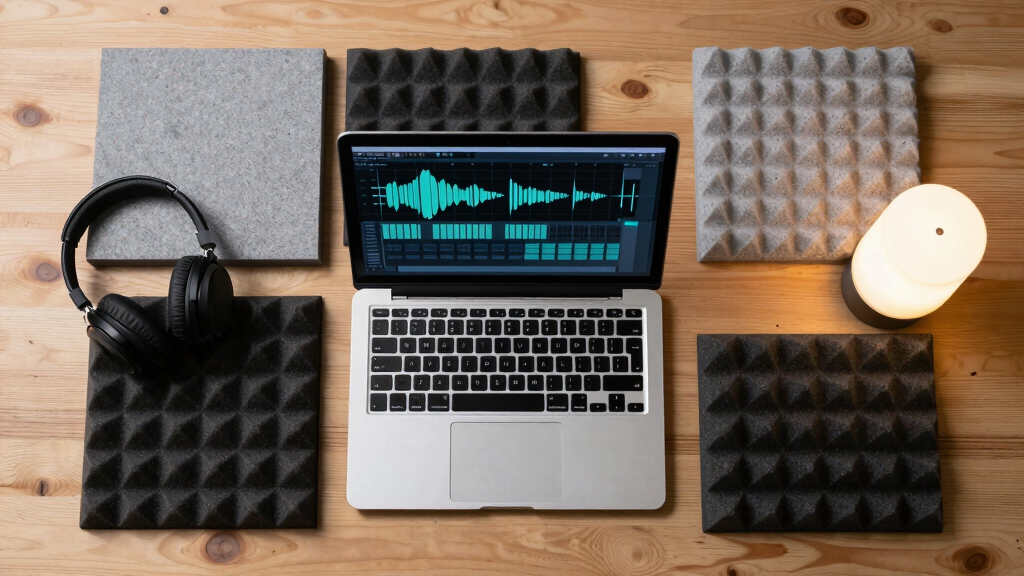

📊 Full opportunity report: Acoustic Dampening, Placement, and the “Rig in the Closet” Setup on ThorstenMeyerAI.com — validation score, market gap, and execution plan.

Get hardware and tech essentials delivered free with Prime
- Fast, free delivery on millions of items
- Prime Video, Amazon Music and more included
- Member-only deals all year
TL;DR
Placing AI workstations in separate rooms or closets significantly reduces noise. Proper ventilation is essential to prevent heat buildup in enclosed setups. Acoustic foam alone is less effective than strategic placement.
Placing high-power AI workstations in separate rooms or closets, combined with proper ventilation, is the most effective way to reduce noise and heat issues, according to recent expert guidance.
Recent advice from Thorsten Meyer emphasizes that the most impactful method to reduce noise from AI workstations is to physically move the machine away from the user, such as into another room or closet. This approach eliminates airborne and structure-borne noise transmission, making acoustic foam treatments largely unnecessary for noise control.
However, placing a powerful, heat-generating machine in an enclosed space requires careful ventilation. Sealed closets or cabinets must include active airflow solutions—passive vents, exhaust fans, or purpose-built soundproof cabinets with temperature control—to prevent heat buildup that can cause thermal throttling and increased fan noise.
Experts highlight that acoustic foam and barriers are less effective than strategic placement and proper ventilation, especially since noise reaches ears through airborne and structure-borne pathways. Using rubber feet or anti-vibration pads can also mitigate structure-borne hums at minimal cost.
Acoustic dampening
& the rig in the closet.
The most powerful noise fix isn’t a material — it’s a floor plan. A rig you can’t hear because it’s in another room beats any amount of foam. Tap the approaches in Part 1 to see what actually works.
(another room)
(levers 1–4)
(door / barrier)
(acoustic foam)
Contain the noise, not the heat
Why Proper Placement and Ventilation Are Critical
Effective noise reduction for AI workstations hinges on physical separation from the user, which is often more effective than acoustic treatments alone. Proper ventilation in enclosed setups prevents heat-related performance issues, ensuring the machine runs quietly and efficiently over long periods. These insights are crucial for anyone deploying high-power AI rigs in shared or noise-sensitive environments, enabling quieter workspaces without sacrificing performance.As an affiliate, we earn on qualifying purchases.
High-Power AI Workstations and Noise Challenges
AI workstations with high-performance GPUs and CPUs generate significant heat and noise. Traditional solutions focus on acoustic foam and barriers, but recent guidance emphasizes the importance of physical separation and ventilation. Moving rigs into separate rooms or closets, paired with proper airflow, has become the recommended approach for effective noise and heat management, especially as hardware continues to grow more powerful and louder."The most effective way to reduce noise is to put distance between you and the source, such as in another room or closet. Acoustic foam alone won't solve the problem."
— Thorsten Meyer
As an affiliate, we earn on qualifying purchases.
Unresolved Aspects of Closet-Based Setups
It is not yet clear how different enclosure designs or ventilation configurations perform in long-term, high-load scenarios. The optimal balance between noise suppression and heat dissipation in various room sizes and environments remains under study. Additionally, the cost-effectiveness of purpose-built soundproof cabinets versus DIY solutions varies based on hardware and space constraints.As an affiliate, we earn on qualifying purchases.
Next Steps for Implementing Quiet AI Workstations
Users should evaluate their workspace for potential room or closet placement options, ensuring adequate ventilation if enclosed. Further research and development of affordable, effective soundproof cabinets with integrated cooling are expected to improve solutions. Testing different airflow configurations will help refine best practices for maintaining performance and silence over extended periods.As an affiliate, we earn on qualifying purchases.
Key Questions
Is acoustic foam effective for reducing noise from AI workstations?
Acoustic foam primarily absorbs sound reflections within a room but does not block airborne or structure-borne noise. Placement and barriers are more effective for noise reduction.
Can I put my AI workstation in a closet without overheating?
Yes, but only if the closet has proper ventilation—passive vents, exhaust fans, or specialized soundproof cabinets with airflow management—to prevent heat buildup and thermal throttling.
What is the best way to minimize noise without relocating my machine?
Combining acoustic treatment with vibration isolation and strategic placement—such as placing the machine on anti-vibration pads—can reduce noise, but physical separation remains the most effective method.
Are purpose-built soundproof cabinets worth the investment?
They can be effective for high-power, noise-sensitive environments, as they combine soundproofing with active cooling, but they are more expensive than DIY solutions.
How does heat affect noise levels in enclosed setups?
Heat buildup causes fans to run at higher speeds, increasing noise. Proper ventilation and airflow management are essential to keep temperatures and noise levels in check.
Source: ThorstenMeyerAI.com
Columbus Day / Indigenous Peoples' Day Picks
long weekend sales
As an affiliate, we earn on qualifying purchases.