
🔍 Read the full analysis: From A Vibe-Coding Session To A Reliable PDF Editor on ThorstenMeyerAI.com

Get hardware and tech essentials delivered free with Prime
- Fast, free delivery on millions of items
- Prime Video, Amazon Music and more included
- Member-only deals all year
TL;DR
Thorsten Meyer says an AI coding agent produced the first working version of Docestra, a local PDF editor, on Nov. 6, 2026. Over the following six days, testing real files and independent AI review exposed problems with saving, encrypted documents and redaction; Meyer says version 1.5.1 had 745 unit tests. The private tool is not available to download, and its developer reports no measured time or cost savings.
Thorsten Meyer says an AI coding agent built the first working version of Docestra, a local PDF editor, on Nov. 6, 2026, but tests on real documents exposed defects that took six days to address. In an account published Nov. 13, Meyer describes fixes involving saved annotations, encrypted PDFs and redaction, offering a case study in the work required to make AI-generated software more dependable.
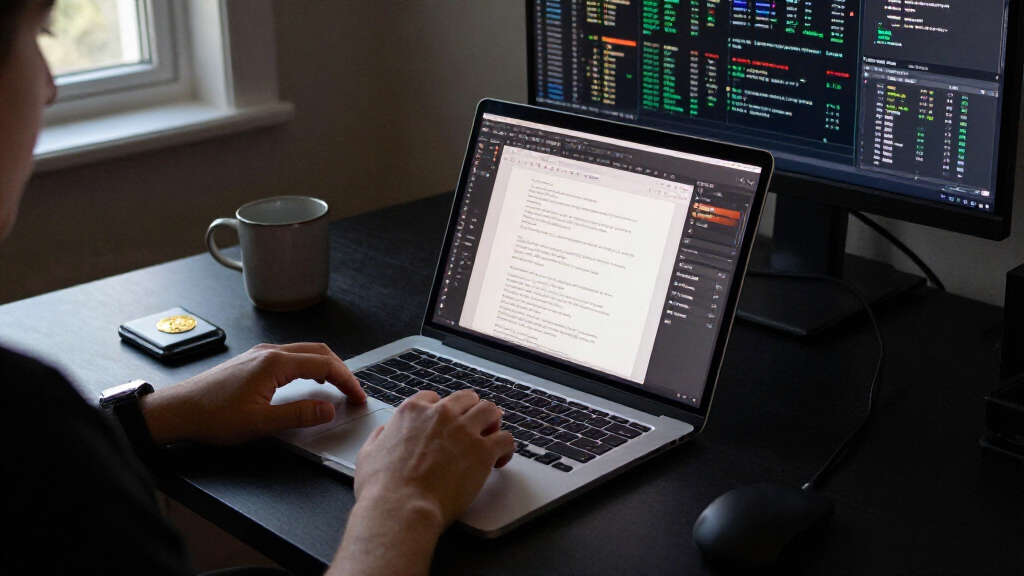
Meyer says the initial version could open PDFs, add highlights and notes, draw, sign and fill forms, rearrange pages, and save files. The app was built as a TypeScript local web app running in a browser on his Mac; he says documents stay on the machine. Anthropic’s Claude Code, running Claude Opus, generated the code, while OpenAI’s Codex reviewed it from the start.
A robustness run across 930 real PDFs found that saving some files could produce a broken cross-reference table, causing markups to disappear from the saved document. Meyer says he changed the save process to avoid compressed object streams. Testing also found that 52 of 69 encrypted PDFs did not permit annotations under their authors’ restrictions, while the library could not re-encrypt edited files. His response was to require confirmation before unlocking and to save an unprotected copy without overwriting the original.
Redaction required a more substantial redesign. The first version’s “white-out” tool merely covered text, leaving the underlying content in the PDF. Meyer says an independent AI review identified 14 issues in the first review and 13 in the second of an initial real-redaction approach. He then switched to converting redacted pages into images, marking out the selected pixels and adding a searchable text layer that omits text touching a redaction. In a test on 917 PDFs, Meyer reports zero leaks. He does not provide details of the test methodology in the supplied account.
Docestra · Nov 6–13, 2026
From one prompt to a tool I can rely on
What the first version gave me, what real files broke, and what it took to fix it, from my project log.
What the tool rests on (schematic)
Built bottom up. The top layer is a plan, not a finished feature.
What happened, by date
- Nov 6One-sentence brief; first working version committed the same evening
- Nov 6Test over 930 real PDFs finds a save bug that dropped markups
- Nov 752 of 69 encrypted PDFs forbid annotations: unlock only into a new copy
- Nov 8Real redaction: review finds 14, then 13 problems; simpler design, 0 leaks in 917 PDFs
- Nov 12Version 1.5.1: 745 unit tests, 32 browser test suites
- Nov 13Version 2.0 starts: one shared PDF engine for our AI agents (in development)
Source: Docestra project records (development log, plans for versions 1 and 2.0, commit history), Nov 6–13, 2026. The layer stack is a schematic, not a measurement.
Graphic: Powered by Thorsten Meyer AI
Why Real PDFs Changed the Work
The account illustrates the gap between a software demonstration and a tool used on varied documents. A short prompt produced a broad set of editing features quickly, Meyer says, but testing exposed cases where a file could lose edits or a supposed redaction could leave sensitive text intact. Those failures matter because users may rely on an editor to preserve changes or remove confidential information.
Meyer reports that automated unit tests increased from 17 in the first version to 745 in version 1.5.1, with discovered problems added as tests to guard against regressions. That is a measure of the project’s test suite, not independent evidence that every PDF or privacy risk has been covered. Meyer also says his notes record testing and rework taking longer than building for several packages, and that he has not measured time or cost savings.
The tool remains personal and unavailable to download, so the account is not an independent product evaluation. Its practical significance is narrower: it shows the kinds of file compatibility, security and licensing decisions that can follow when a working prototype is used beyond a few sample documents.
Products Worth Considering
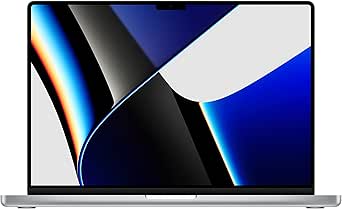
Apple MacBook Pro 16-inch (2021), M1 Pro, 10-core CPU, 16-core GPU, 16GB RAM, 512GB SSD, Silver
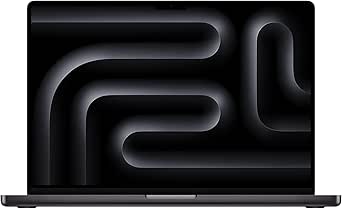
Apple MacBook Pro 16.2-inch with M5 Pro, 18-core CPU, 20-core GPU, 24GB Memory, 1TB SSD, Wi-Fi 7, Space Black

Apple MacBook Pro 14.2-inch with Tandem OLED Display, Space Black
As an affiliate, we earn on qualifying purchases.
From First Build to Version 1.5.1
Meyer defines “vibe coding” as describing software in plain language to an AI model and having it write much of the code. He says Docestra’s first version was committed at 9:47 p.m. Central European Time on Nov. 6. By Nov. 12, the project had reached version 1.5.1. The development account was published the following day.
The project also encountered a licensing decision. Meyer says the PDF viewer library includes fonts under the GPL-2.0 licence, which his project rules exclude, so Docestra does not ship those fonts. He says he later reviewed licences for bundled libraries before adding text recognition and text-editing capabilities. These are the developer’s descriptions of his own process, not a third-party audit.
“Vibe coding gets you a working tool quickly. Turning it into a tool you can rely on is the real work.”
— Thorsten Meyer, describing the project’s central lesson
Limits of the Reported Tests
The results come from Meyer’s account of his own private project. The account does not provide the full PDF test corpus, detailed procedures for the 917-file redaction test, or independent verification of the reported zero leaks. It is also unclear how the editor performs across PDF types beyond the tested files, operating systems beyond Meyer’s Mac, or use by people other than its developer.
Docestra is not available to download, and Meyer reports no measured savings in time or money. The account does not establish that the software has undergone a formal security audit, nor does it claim that all PDF compatibility or privacy risks have been eliminated.
Version 2.0 Remains in Development
Meyer says work on Docestra version 2.0 began Nov. 13, 2026, the day he published his account, and that it is not finished. He does not give a release date or describe a distribution plan. For now, the next reported milestone is continued development of a private tool, rather than a public launch.
The account gives no schedule for additional testing or external review. Until those details are available, the reported improvements describe Meyer’s own development and test results, not a guarantee of performance for other users or documents.
Key Questions
What is Docestra?
Docestra is a PDF editor Meyer built for his own use as a local web app on his Mac. He says it can annotate, sign and fill forms, rearrange pages and save PDFs.
How was the editor built?
Meyer says Anthropic’s Claude Code, running Claude Opus, generated the code, while OpenAI’s Codex reviewed it. He describes the approach as vibe coding: giving an AI coding model plain-language instructions.
What problems did testing uncover?
Tests found a saving issue that could make annotations disappear, restrictions affecting 52 of 69 encrypted PDFs tested, and a first redaction tool that covered text without removing it. Meyer says he changed the save and redaction approaches and added an unlock confirmation for restricted files.
Can readers download or use Docestra?
No public download is reported. Meyer says Docestra is private and built for his own workflow.
Has Meyer measured whether it saves time or money?
No. Meyer says he has not measured time or cost savings. His account describes development and testing, not a quantified productivity study.
Source: ThorstenMeyerAI.com