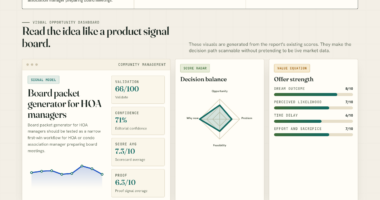

📊 Full opportunity report: The Gulf: Own the Capital on ThorstenMeyerAI.com — validation score, market gap, and execution plan.

Get hardware and tech essentials delivered free with Prime
- Fast, free delivery on millions of items
- Prime Video, Amazon Music and more included
- Member-only deals all year
TL;DR
Gulf countries are actively acquiring AI infrastructure and stakes, transforming their oil wealth into ownership of future technologies. This marks a significant shift in how resource-rich states approach economic diversification and capital ownership.
Gulf countries are rapidly investing in artificial intelligence and digital infrastructure, aiming to own the assets and capital of the emerging AI economy. This strategic shift is driven by their sovereign wealth funds, which are deploying over two trillion dollars into AI-related projects, making the region a key player in the future of technology ownership.
The Gulf states, including Saudi Arabia, the UAE, and Qatar, have committed substantial capital to AI, data centers, and frontier technology through sovereign funds like PIF, ADIA, and QIA. Initiatives such as the UAE’s G42 conglomerate, Saudi Arabia’s HUMAIN, and Qatar’s Qai exemplify a deliberate effort to become owners rather than mere consumers of AI. These investments are not passive; they involve direct stakes in AI startups, infrastructure, and research labs, with the goal of integrating AI into their economies and ensuring their citizens benefit from the wealth generated.
This approach contrasts sharply with Western models, which tend to focus on rules, skills, and income floors, leaving ownership of capital largely untouched. The Gulf’s model emphasizes state ownership and redistribution of AI-generated gains, funded by resource rents from oil and gas. The strategy aims to convert depleting fossil fuel assets into ownership of new digital assets, thus securing economic stability beyond oil’s lifespan.
Own the Capital
For five rows, one lever stayed dark. The Gulf pulls it hard: own the capital, distribute its returns to citizens — and now spend that capital to buy into AI, so the dividend outlives the oil.
Independent commentary, produced with AI assistance under human editorial oversight. The views are the author’s own and may change. This is analysis, not policy, economic, investment, or legal advice. Descriptions of Gulf sovereign wealth funds, the rentier social contract, national AI champions (G42, MGX, HUMAIN, Qai), and AI-infrastructure investment reflect publicly reported information as of mid-2026 and may change; population, asset, and investment figures are indicative. This phase maps differing approaches and endorses none; characterizations of contested political and labor arrangements present competing views, not a verdict. Country, program, and company names are referenced for analysis and imply no affiliation.
Why Gulf AI Investments Reshape Global Capital Ownership
This shift signifies a fundamental change in how resource-rich states are positioning themselves in the digital economy. By actively owning AI infrastructure and stakes, the Gulf aims to secure long-term economic benefits and influence in the emerging AI-driven world. It also challenges Western models of labor-centric growth, emphasizing capital ownership and redistribution. The region’s approach could set a precedent for other resource-dependent economies seeking to transition into technology-driven futures, potentially reshaping global power dynamics and wealth distribution.As an affiliate, we earn on qualifying purchases.
Gulf’s Resource Wealth Fuels AI Ownership Push
For decades, Gulf states have used their oil wealth to fund generous social contracts, including public-sector jobs, subsidies, and no income taxes, effectively distributing resource rents as a form of capital dividend. Recently, they have pivoted toward investing in AI and digital infrastructure, aiming to own the assets of the next economy. Since 2017, Gulf governments have launched initiatives like the UAE’s Ministry of AI and G42, Saudi Arabia’s HUMAIN, and Qatar’s Qai, committing over two trillion dollars to AI and US technology sectors. This strategy is driven by the desire to transform resource wealth into ownership of future technological assets, ensuring economic resilience as oil depletes.
“Our goal is to ensure that the wealth generated from AI infrastructure benefits our citizens directly through ownership and strategic investments.”
— Gulf government official
As an affiliate, we earn on qualifying purchases.
Unclear Long-Term Impact and Political Risks
It remains uncertain how sustainable the Gulf’s ownership-driven model will be long-term, especially as geopolitical tensions, regional stability, and global technological competition evolve. Additionally, the social and political implications of concentrated state ownership and limited civil protections are still developing and could influence future policy directions.As an affiliate, we earn on qualifying purchases.
Next Steps in Gulf’s AI Capital Strategy
Gulf countries are expected to deepen their investments in AI infrastructure and expand their stakes in frontier technologies. Monitoring how these initiatives impact regional economies, citizen benefits, and geopolitical influence will be crucial. Further, developments in regional stability and global tech competition will shape the sustainability of their ownership models, with potential policy adjustments on the horizon.
sovereign wealth fund investment guide
As an affiliate, we earn on qualifying purchases.
As an affiliate, we earn on qualifying purchases.
Key Questions
Why are Gulf states investing so heavily in AI now?
They aim to diversify their economies, transform resource wealth into ownership of future assets, and maintain economic stability as oil depletes. AI is seen as the next major driver of wealth and influence.
How does this strategy differ from Western approaches?
Western models typically focus on rules, skills, and income floors, leaving ownership largely to private markets. Gulf states are actively owning and controlling AI infrastructure through sovereign funds and state initiatives.
What are the risks of this ownership-focused approach?
Potential risks include geopolitical tensions, regional instability, and social unrest due to concentrated state control and limited civil protections. The sustainability of funding and global competition also pose uncertainties.
Will this strategy benefit Gulf citizens directly?
Yes, the model aims to distribute AI-generated wealth through state-led dividends, jobs, and services, although the benefits are currently tied to citizenship and political structures.
Source: ThorstenMeyerAI.com
Fall Picks
fall essentials
As an affiliate, we earn on qualifying purchases.