
📊 Full opportunity report: Outcome-First Decisions: Keep, Change, or Kill on ThorstenMeyerAI.com — validation score, market gap, and execution plan.

Get hardware and tech essentials delivered free with Prime
- Fast, free delivery on millions of items
- Prime Video, Amazon Music and more included
- Member-only deals all year
TL;DR
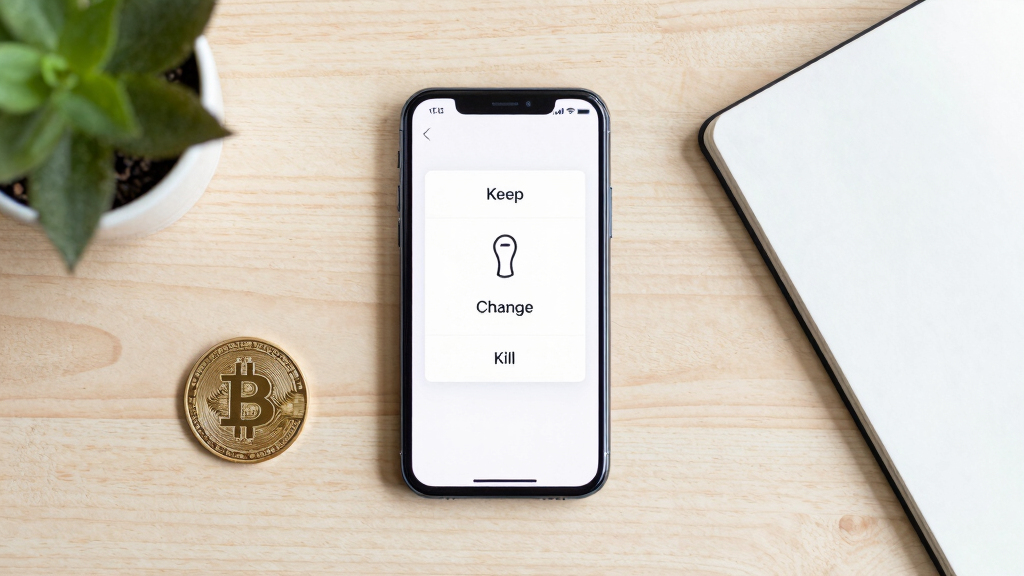
Outcome-First Decisions is a framework that guides organizations to evaluate initiatives by their current outcomes and decide whether to keep, change, or kill them. It emphasizes pruning to improve efficiency and capacity.
A new decision-making framework called Outcome-First Decisions is gaining attention for its emphasis on evaluating ongoing initiatives based solely on their current outcomes, rather than past investments or emotional attachment. Developed to help organizations prune their portfolios effectively, it aims to address the common problem of projects lingering without clear justification.
Outcome-First Decisions is a framework that prompts decision-makers to assess whether ongoing initiatives produce outcomes worth their ongoing costs. It introduces the Worth Filter, a mechanism that evaluates projects by their future value, disregarding sunk costs and emotional biases. The framework offers three verdicts: keep, change, or kill. It is open source under the AGPL-3.0 license, designed to run locally on owned hardware, and provider-agnostic, making it adaptable across different systems. Its primary purpose is to prevent portfolios from accumulating dead projects that drain resources and attention without delivering value.Developed by Thorsten Meyer, the framework is positioned as a tool for routine portfolio pruning, helping organizations reclaim capacity by ending initiatives that no longer justify their costs. It aims to complete the decision cycle by closing the loop after idea generation and planning, ensuring that only projects with justifiable outcomes continue. The framework emphasizes that killing projects is often the hardest decision but necessary for long-term efficiency and focus.
Outcome-First Decisions — keep, change, or kill
The hardest decision isn’t what to start — it’s what to stop. Judge every initiative by the outcome it produces now, not the effort already spent.
Independent commentary, produced with AI assistance under human editorial oversight. The views are the author’s own and may change. Outcome-First Decisions is open source under AGPL-3.0, provided “as is” without warranty; see the repository LICENSE. The framework’s verdicts are reasoning aids based on the inputs given and may be wrong — decision support, not decisions; verify independently before acting. Product and company names are trademarks of their respective owners; mention does not imply endorsement.
Why Outcome-First Decisions Reshape Portfolio Management
This framework matters because it offers a disciplined approach to stopping initiatives that no longer produce value, addressing a common organizational blind spot. By focusing on current outcomes rather than sunk costs or emotional ties, it encourages more rational resource allocation and reduces the burden of maintaining dead projects. Its open-source, local-first design makes it accessible and adaptable for various organizations, potentially leading to more efficient use of time, capital, and attention across industries.
portfolio management decision software
As an affiliate, we earn on qualifying purchases.
As an affiliate, we earn on qualifying purchases.
The Challenge of Managing Long-Tail Projects
Many organizations struggle with a long tail of ongoing projects that neither succeed nor are formally terminated. These projects often continue due to sunk cost fallacies, organizational inertia, or emotional attachment, consuming valuable resources without delivering proportional benefits. Traditional decision-making processes tend to favor starting new initiatives over pruning existing ones, leading to bloated portfolios and reduced agility. The Outcome-First framework responds to this challenge by providing a clear, outcome-based decision point to regularly evaluate and eliminate non-viable initiatives.
“The hardest decision in any portfolio isn’t what to start. It’s what to stop.”
— Thorsten Meyer
As an affiliate, we earn on qualifying purchases.
Uncertainties About Outcome Measurement and Application
It remains unclear how organizations will accurately measure and interpret outcomes, especially for slow-start projects or those with long-term benefits. There is also uncertainty about how decision-makers will handle emotional resistance to killing initiatives, even when the framework indicates they should be terminated. Additionally, the effectiveness of the Worth Filter in diverse contexts and its susceptibility to gaming or mismeasurement is yet to be fully tested in real-world settings.
outcome-based decision making software
As an affiliate, we earn on qualifying purchases.
As an affiliate, we earn on qualifying purchases.
Next Steps for Adoption and Refinement
Organizations are encouraged to experiment with the framework in small portfolios to evaluate its practical impact. Further development may include creating standardized outcome metrics and integrating the framework into existing portfolio management tools. As open-source software, community contributions could refine its usability and address potential pitfalls, such as outcome mismeasurement. Monitoring how organizations implement and adapt the framework will be key to understanding its broader effectiveness.
As an affiliate, we earn on qualifying purchases.
Key Questions
How does Outcome-First differ from traditional project evaluation?
Unlike traditional methods that often consider past investments or emotional ties, Outcome-First focuses solely on the current and projected outcomes to decide whether to continue, change, or kill an initiative.
Can this framework be applied to all types of projects?
While designed to be provider-agnostic and flexible, its effectiveness depends on accurate outcome measurement. It is most suitable for organizations willing to adopt outcome-based evaluation practices.
What are the risks of using Outcome-First Decisions?
The main risks include mismeasuring outcomes, prematurely killing projects that are still valuable, and emotional resistance to ending initiatives. Proper implementation and judgment are critical.
Is Outcome-First a replacement for existing portfolio management processes?
It is intended as a complementary decision layer that enhances existing processes by providing a clear, outcome-focused stopping point to prevent portfolio bloat.
How can organizations start implementing Outcome-First Decisions?
Organizations should begin by defining clear outcome metrics, applying the framework to select projects for review, and fostering a culture open to ending initiatives based on current results.
Source: ThorstenMeyerAI.com
Halloween Picks
halloween
As an affiliate, we earn on qualifying purchases.