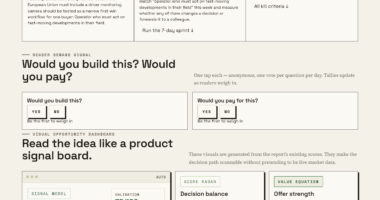

📊 Full opportunity report: Data: The One Thing You Can’t Rent on ThorstenMeyerAI.com — validation score, market gap, and execution plan.

Get hardware and tech essentials delivered free with Prime
- Fast, free delivery on millions of items
- Prime Video, Amazon Music and more included
- Member-only deals all year
TL;DR
The AI industry faces a new bottleneck: access to unique, verified data. As free data sources dry up and legal restrictions tighten, control over valuable data becomes a key competitive advantage, favoring large incumbents and raising barriers for startups.
Data has become the new chokepoint in the AI industry, as the era of freely scraping the web for training data ends in 2026. Industry insiders confirm that the remaining valuable data is now fenced, licensed, and often treated as a national asset, creating barriers for new entrants and consolidating power among large players.
Recent legal developments, including Anthropic’s $1.5 billion settlement over copyright claims, mark the end of the era where AI models could be trained on freely obtained data. This shift is reinforced by ongoing lawsuits and licensing agreements involving major publishers like The New York Times and News Corp, signaling a move toward a market-based regime for data access.
As the public internet’s high-quality text corpus nears exhaustion—estimated to be fully used between 2026 and 2032—AI labs are increasingly relying on proprietary, verified data sources, such as paywalled content, enterprise data, and expert-generated material. Synthetic data, while helpful, carries risks of model collapse if not supplemented with verified human data.
Simultaneously, the industry has shifted from cheap, low-cost data labeling to sourcing expertise from highly specialized professionals—lawyers, scientists, and domain experts—whose rare knowledge now constitutes a critical asset. Companies like Meta’s recent investments in expert-focused data firms exemplify this trend, while dependency on a few large data providers has made some companies vulnerable, as seen with the decline of Appen.
Data: The One Thing You Can’t Rent
The free part of “all human knowledge” is running out. As compute and models commoditize, the corpus you can’t replicate becomes the moat — so data is being fenced, priced, and, in places, treated as a national asset.
Data was supposed to be the abundant input. It’s the scarce one. It’s also the chokepoint you can actually own — so guard your proprietary data, and don’t hand it to a provider who can become your competitor (the lesson everyone fled Scale to learn). Nations: license it like Ukraine — keep the model, keep the leverage.
Why Data Control Shapes AI Industry Power
The transition from open, free data to fenced, licensed sources fundamentally alters the competitive landscape of AI development. Large incumbents with resources to acquire and license data gain significant advantages, creating high barriers for startups and smaller labs. This concentration of data access could influence innovation, market dynamics, and the pace of AI progress, making data ownership a strategic asset.
enterprise data licensing software
As an affiliate, we earn on qualifying purchases.
As an affiliate, we earn on qualifying purchases.
Legal and Industry Shifts Reshape Data Accessibility
Historically, AI training relied heavily on scraping publicly available web data, but legal actions in 2026 have changed this paradigm. The Anthropic settlement and ongoing lawsuits have established a precedent that scraping copyrighted material without licensing is no longer permissible, prompting a shift toward licensed and proprietary data sources. Meanwhile, the industry increasingly values expert-generated and verified data, which is costly and scarce.
In parallel, the rise of synthetic data as a supplement has not fully offset the decline in high-quality human data, especially in domains requiring precise verification. The move toward licensing and fencing data sources reflects broader legal, economic, and strategic trends shaping the future of AI training.
“The settlement clarifies that using pirated or shadow library data for training is not fair use, setting a legal precedent for licensing models.”
— Legal expert familiar with the Anthropic settlement
professional data annotation services
As an affiliate, we earn on qualifying purchases.
As an affiliate, we earn on qualifying purchases.
Unresolved Questions About Data Market Dynamics
It remains unclear how quickly smaller startups can adapt to the new licensing regime, or whether new legal challenges will further restrict access to proprietary data. The long-term impact of data fencing on innovation and market competition is still uncertain, as legal, technological, and economic factors continue to evolve.
As an affiliate, we earn on qualifying purchases.
Next Steps in Data Licensing and Industry Consolidation
Legal cases and licensing agreements are expected to shape the data landscape through 2026 and beyond. Industry players will likely invest heavily in acquiring proprietary data sources and expertise, while startups may seek alternative strategies or niche domains less affected by fencing. Monitoring legal developments and industry reactions will be key to understanding future access to high-quality data.
As an affiliate, we earn on qualifying purchases.
Key Questions
Why is data now considered a bottleneck in AI development?
Because the most valuable high-quality, verified data is increasingly fenced, licensed, and scarce, making it a key differentiator and barrier for new entrants.
What legal changes have impacted data access for AI training?
Legal settlements like Anthropic’s $1.5 billion copyright case and ongoing lawsuits have established that scraping copyrighted material without proper licensing is no longer permissible, shifting the industry toward licensed data sources.
How does the move to licensed data affect startups?
It raises entry barriers by requiring significant financial resources to acquire proprietary data, favoring large incumbents and potentially reducing competition and innovation.
What role does synthetic data play in this new landscape?
While synthetic data helps supplement training datasets, it cannot fully replace verified human data, especially in complex or verification-critical domains, and carries risks of model errors.
What kind of data is considered the most valuable now?
Unique, verified, human-generated data—such as expert annotations, proprietary enterprise data, and rare domain-specific information—are now the most prized assets in AI training.
Source: ThorstenMeyerAI.com
Halloween Picks
halloween
As an affiliate, we earn on qualifying purchases.