🔍 Read the full analysis: A Closer Look At SoftBank’s $7 Billion Loss And Its AI Power Bill on ThorstenMeyerAI.com

Get hardware and tech essentials delivered free with Prime
- Fast, free delivery on millions of items
- Prime Video, Amazon Music and more included
- Member-only deals all year
TL;DR
SoftBank Group reported a ¥1.12 trillion ($7.0 billion) net loss for July–September 2026, reversing a profit a year earlier. A subsidiary’s revised power-equipment procurement plans led to $3.8 billion in charges after SoftBank had paid $9.48 billion in advance and for factory capacity; financing costs also rose sharply.
SoftBank Group reported a ¥1,115.3 billion ($7.0 billion) net loss for the July-to-September quarter on November 10, after its plans for power equipment intended for U.S. AI data centers were revised. The company said the procurement changes produced a ¥597.2 billion ($3.73 billion) loss, making the charge a major contributor to a sharp reversal from the profit recorded in the same quarter a year earlier.
A SoftBank subsidiary, Silver Bands 7 (SB7), had paid ¥1.5 trillion, or about $9.48 billion, through September 30 for power-generation equipment and reserved factory capacity. SoftBank said the payments were made in advance to secure equipment amid anticipated shortages for U.S. AI data center projects. After reviewing the requirements of existing and planned projects, SB7 changed its procurement strategy.
The company reported $2.9 billion in losses on non-refundable advance payments for equipment no longer included in revised plans, along with $0.9 billion for contract modifications and settlements. SoftBank said it expected cash payments related to the latter from the third quarter onward. It also said $6.6 billion of the advance payments remained allocated to equipment for the PORTS-Pike project in Ohio and other projects.
SoftBank said it may receive rebates of up to $2.1 billion over 10 years on future equipment purchases, subject to conditions. It did not record the possible rebates as an asset because their amount could not be determined. The company said it expects to recover its investment through project financing, but did not specify the equipment, suppliers or individual purchases affected.
SoftBank’s $7 Billion Loss and Its AI Power Bill
Revised power equipment plans drove a major quarterly loss, showing how infrastructure commitments can become costly before AI data center requirements are settled.
Where the charges came from
SB7 revised plans after reviewing the needs of existing and planned projects.
Unused equipment advances
$2.9 billion was lost on non-refundable advances for equipment no longer in the revised plans.
Modifications and settlements
$0.9 billion was charged for contract changes and settlements, with cash payments expected from the third quarter onward.
What remains allocated
Some advance payments are still tied to planned projects.
The infrastructure exposure
AI capacity depends on power equipment and factory slots as well as chips and land.
- SB7 sought to secure supply amid anticipated equipment shortages.
- Equipment was purchased before long-term project specifications were final.
- Project requirements evolved, changing procurement plans.
- Some advances became non-refundable losses.
Recovery details to watch
SoftBank expects to recover its investment through project financing, but the available details are limited.
- Suppliers and affected orders have not been identified.
- Rebates of up to $2.1 billion depend on conditions and were not recorded as an asset.
- Financing terms and the expected recovery amount have not been specified.
Power Costs Shape AI Capacity
The results show how building AI data centers involves more than securing chips and land: power generation equipment and factory slots can also become costly constraints. SoftBank’s payments were intended to secure supply, but changing project requirements left part of that spending attached to equipment it no longer planned to procure. That cost illustrates the financial exposure created when infrastructure commitments are made before specifications are settled.
The impact goes beyond one quarterly result. SoftBank is financing data center development, while OpenAI is described in the source material as the long-term tenant; Nvidia guarantees part of the tenant’s lease obligations, and SoftBank holds an approximately 13% stake in OpenAI. These links create shared exposure, although the available information does not quantify how the reported equipment losses affect each party. For companies buying AI computing capacity, the episode underscores that available service can depend on power infrastructure and the suppliers behind it, as well as on the chips themselves.
SoftBank’s reported sales rose to ¥2,215.4 billion in the quarter from ¥1,916.5 billion a year earlier, while finance costs increased to ¥461.9 billion from ¥174.7 billion. The loss was not simply a decline in sales: the company also reported a ¥669.9 billion loss under “other gain (loss),” which included the power-equipment charges, and smaller investment gains than in the prior-year quarter.
Products Worth Considering
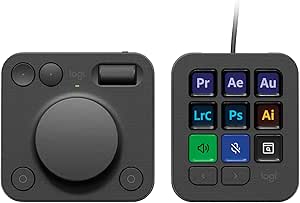
Logitech MX Creative Console with 9 Customizable Keys, Graphite

Ledger Stax Crypto Wallet with Touchscreen

Logitech MX Master 4 for Mac Wireless Ergonomic Mouse, White Silver
As an affiliate, we earn on qualifying purchases.
How Procurement Plans Changed
SoftBank’s fiscal year runs from April through March, so the reported second quarter covers July to September 2026. In the same quarter of fiscal 2025, the group recorded net income attributable to owners of ¥2,502.2 billion. It had also reported a ¥347.3 billion profit in the first quarter of the current fiscal year, making the second-quarter result a marked change in its financial performance.
According to SoftBank’s financial report, SB7 signed manufacturing-capacity reservation agreements, equipment purchase contracts and other arrangements for power-generation equipment for U.S. AI data center projects, including the PORTS-Pike Technology Campus in Pike County, Ohio. The company said the advance commitments were made in anticipation of equipment shortages. It reported spending $3.9 billion in fiscal 2025 and a further $5.6 billion in the first half of fiscal 2026.
At a Tokyo briefing, Chief Financial Officer Yoshimitsu Goto said competition for energy supply and power equipment had led to purchases before long-term specifications were final, according to Reuters. The figures in SoftBank’s November 10 report are unaudited, and the company said its English financial report is a translation of the Japanese original.
““SB7 revised its equipment procurement strategy given the evolving requirements of its existing and planned projects.””
— SoftBank Group, describing SB7’s procurement decision
Suppliers and Recovery Terms Remain Unknown
SoftBank has not identified which equipment was purchased, which suppliers were involved or which specific orders were cancelled or modified. The company also has not detailed the conditions attached to possible rebates of up to $2.1 billion, or how much it ultimately expects to receive. Because those rebates could not be measured, SoftBank said it did not recognize them as an asset.
The timing and scale of any project-financing recovery are also not clear. SoftBank said it expects to recoup the investment through project financing, but the reported materials do not specify financing arrangements, expected proceeds or how much of the remaining equipment allocation is tied to each project. The results are unaudited, and the source material does not establish how the equipment charge will affect future quarterly results.
Project Financing and Costs Ahead
SoftBank said cash payments for contract modifications and settlements were expected from the third quarter onward. Investors and data center customers will be watching for later disclosures on those payments, the use of the equipment still allocated to PORTS-Pike and other projects, and whether project financing allows the subsidiary to recover its spending.
Further reporting may also clarify how much of the conditional rebates can be earned and whether the revised procurement approach changes project schedules or power availability. SoftBank has not provided those details in the information available here. Its next financial disclosures should show whether the charges remain concentrated in this quarter or are accompanied by additional costs or recoveries.
Key Questions
Why did SoftBank report a $7 billion quarterly loss?
SoftBank reported a ¥1,115.3 billion ($7.0 billion) net loss for July–September 2026. A ¥597.2 billion loss tied to revised power-equipment procurement plans was a major contributor. The quarter also included higher finance costs and weaker investment gains than the same period a year earlier.
How much had SoftBank paid for power equipment and factory capacity?
SoftBank said its subsidiary SB7 had paid ¥1.5 trillion, or about $9.48 billion, through September 30, 2026, for power-generation equipment and reserved manufacturing capacity.
Can SoftBank recover any of the equipment spending?
SoftBank said it expects to recoup its investment through project financing and may receive up to $2.1 billion in future-purchase rebates, subject to conditions. The company did not record the possible rebates as an asset because their amount could not be determined. The extent and timing of any recovery are not yet clear.
Which AI data center projects are affected?
SoftBank identified U.S. AI data center projects, including the PORTS-Pike Technology Campus in Ohio. It has not disclosed which equipment orders were cancelled or modified, or which suppliers were involved.
Source: ThorstenMeyerAI.com