

Supported by Donald Trump, World Liberty Financial is making a significant move into the crypto space, and it's worth considering what's driving this bold venture. With a focus on bridging traditional finance with decentralized models, the firm is setting ambitious goals. But what does this mean for the future of digital assets and American economic power? The intricacies of their strategy might just surprise you.

Get hardware and tech essentials delivered free with Prime
- Fast, free delivery on millions of items
- Prime Video, Amazon Music and more included
- Member-only deals all year
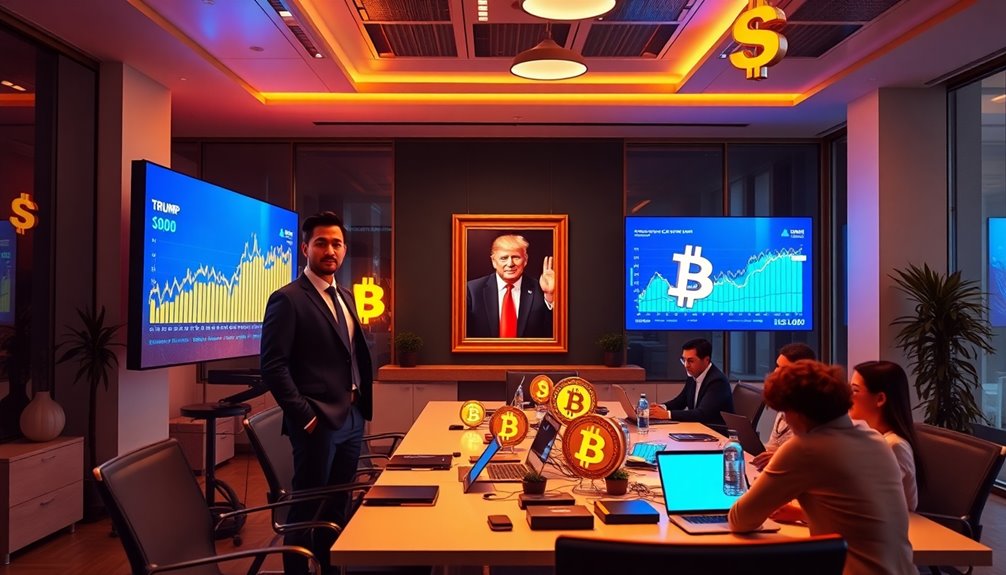
As World Liberty Financial launches its ambitious mission to bridge traditional and decentralized finance, it's backed by high-profile supporters like Donald Trump and his sons. This backing adds a layer of credibility and intrigue, especially as the company seeks to simplify access to decentralized finance (DeFi) protocols.
The firm has already made waves by selling around 24 billion WLFI tokens at $0.05 each, amassing an impressive $1.2 billion. With Donald Trump's family holding 60% of the project's equity, their commitment to the venture is clear.
You'll find that World Liberty Financial isn't just focused on token sales; it's actively investing in the crypto space. The firm has made significant purchases of wrapped Bitcoin, Ethereum, AAVE, and ONDO tokens, building a strategic crypto reserve. World Liberty Financial is accumulating crypto for a strategic reserve, which underscores their long-term vision for the industry.
They've transferred over $307 million in assets to Coinbase Prime for treasury management, emphasizing their serious approach to asset management. While they deny selling assets, citing operational transfers, the market's eyes are keenly focused on their moves, especially considering the potential for market volatility.
Token swaps are another aspect of their strategy, with at least $10 million committed to purchasing tokens from other projects. The valuation of WLFI tokens sits at a substantial $1.5 billion when fully diluted.
Interestingly, projects that invest $15 million or more receive priority treatment, which could lead to lucrative partnerships. You might notice that the company charges a 10% fee on token swaps, but there's no vesting period, making their offerings attractive for quick liquidity.
Regulatory concerns loom large, especially with Trump's potential return to office. His previous statements about limiting crypto regulation could influence the landscape significantly.
Meanwhile, his son Donald Jr. views crypto as essential for maintaining American economic power, further solidifying the family's commitment to this industry. Their integration with DeFi applications aims to enhance yield earning and borrowing capabilities, aligning with broader trends in finance.
Evergreen bestsellers Picks
bestsellers
As an affiliate, we earn on qualifying purchases.