
📊 Full opportunity report: SpaceX Owns Every Layer of AI Now. The Model Is Still the Weak Link. on ThorstenMeyerAI.com — validation score, market gap, and execution plan.

Get hardware and tech essentials delivered free with Prime
- Fast, free delivery on millions of items
- Prime Video, Amazon Music and more included
- Member-only deals all year
TL;DR
SpaceX has bought Cursor, a profitable AI coding application, for $60 billion, giving it control over every AI layer. However, the AI model itself remains a weak link, raising questions about future performance.
SpaceX has completed the acquisition of Cursor for $60 billion in all-stock, establishing control over every layer of the AI stack—compute, power, research, model, and application. This move positions SpaceX as a dominant player in AI infrastructure, but the company faces ongoing challenges with the performance of its AI models, which remain the weak link in its ecosystem.
On June 16, SpaceX announced it would acquire Cursor, a profitable AI coding company founded in 2022, for $60 billion. The deal, expected to close in Q3 2026, makes Cursor a wholly owned subsidiary, integrating its model team, application, and distribution channels directly into SpaceX’s infrastructure. This acquisition completes SpaceX’s control over all AI layers: from the silicon and supercomputers like Colossus in Memphis, to power generation, research labs, and application deployment.
Cursor’s revenue of approximately $4 billion annually and its profitable AI coding platform were key factors in the deal. SpaceX’s vertical integration now spans hardware, software, and application layers, with plans to deploy AI satellites and orbit-based data centers, aiming to revolutionize compute scalability. The company’s supercomputing infrastructure, notably the Colossus clusters, can train models rapidly, but recent internal reports reveal underutilization of its GPU capacity, highlighting inefficiencies in model training and deployment.
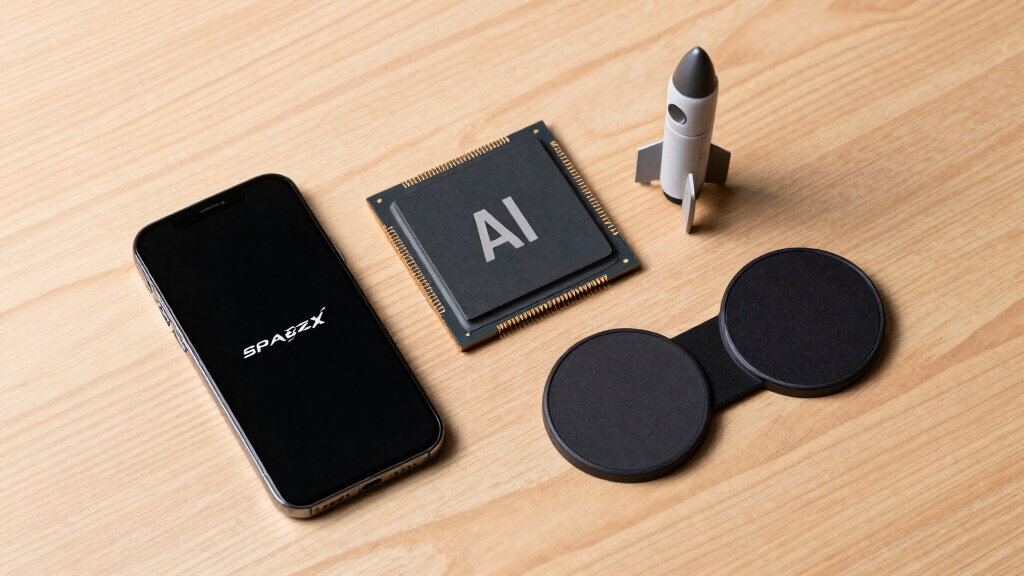
SpaceX owns every layer
of AI now
The $60B Cursor buy completes the stack: power, compute, research, model, app, distribution. But owning every layer isn’t winning every layer — and the model is the weak one.
(Anysphere)
You can buy a coding app and a model team. You can’t buy the research lead that makes your foundation model the one everyone else builds on — which is why Anthropic pays Musk $1.25B/month, not the other way around. Owning every layer bought SpaceX the right to attempt the hard thing. It hasn’t done it yet.
Control of All AI Infrastructure Layers Highlights Industry Shift
This acquisition underscores SpaceX’s ambition to dominate AI infrastructure, making it one of the most vertically integrated tech companies globally. Controlling every layer—compute, power, research, and application—provides a strategic advantage in AI development and deployment. However, the persistent weakness of its AI models, notably in terms of efficiency and performance, could limit the practical impact of this dominance. The move also concentrates significant AI compute resources within a few major players, raising concerns about market competition and innovation.
As an affiliate, we earn on qualifying purchases.
Background of SpaceX’s AI and Compute Expansion
In recent years, SpaceX has heavily invested in AI hardware and infrastructure, building the Colossus supercomputers capable of rapid model training with hundreds of thousands of GPUs. The company’s approach emphasizes vertical integration: owning chips, cooling, power, and software. Prior to the Cursor deal, SpaceX had already secured major contracts with AI labs like Anthropic and Google, leasing out its surplus compute capacity at high margins. The acquisition of Cursor marks a significant step in consolidating these efforts, giving SpaceX a profitable application and an established developer base, alongside its hardware assets.
This move follows a broader industry trend of increasing consolidation among AI infrastructure providers, with major tech firms seeking to control both hardware and software to reduce costs and improve efficiency. However, the recent revelation that even the most advanced supercomputers have low utilization rates highlights ongoing challenges in model training efficiency and scalability.
“Our partnership with SpaceX aims to build the world’s most useful AI models, leveraging their infrastructure and our expertise.”
— Michael Truell, Cursor CEO
GPU high performance for AI training
As an affiliate, we earn on qualifying purchases.
As an affiliate, we earn on qualifying purchases.
Unresolved Challenges in Model Performance and Utilization
It remains unclear how effectively SpaceX’s models will perform at scale, given the recent reports of low GPU utilization and training inefficiencies. The company’s plans to improve model robustness and scalability are still in development, and it is not yet confirmed how these issues will impact future deployment and competitiveness.
As an affiliate, we earn on qualifying purchases.
Next Steps for SpaceX’s AI Strategy and Model Development
SpaceX is expected to focus on enhancing the performance and efficiency of its models, potentially through further research and development or additional acquisitions. The company’s planned deployment of AI satellites and orbit-based data centers will likely serve as testbeds for new AI applications. Monitoring how the company addresses current model weaknesses will be critical in assessing its future success in AI dominance.
As an affiliate, we earn on qualifying purchases.
Key Questions
Why did SpaceX buy Cursor?
SpaceX acquired Cursor to gain control over a profitable AI application, its development team, and distribution channels, completing its vertical integration across all AI infrastructure layers.
What are the main challenges facing SpaceX’s AI models?
The models currently face issues with low GPU utilization and training inefficiencies, which limit their scalability and performance in real-world applications.
How does this acquisition impact the AI industry?
It signals a move toward highly integrated, vertically controlled AI ecosystems, potentially reducing competition and innovation if dominant players hoard resources and expertise.
Will owning all AI layers guarantee success?
Not necessarily; the ongoing performance issues with the models suggest that infrastructure control alone may not ensure technological or market leadership.
Source: ThorstenMeyerAI.com
Halloween Picks
halloween
As an affiliate, we earn on qualifying purchases.