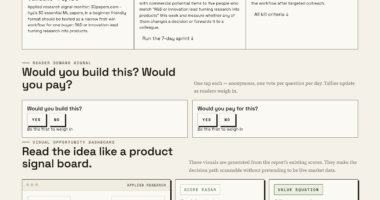
📊 Full opportunity report: Sovereignty Is A Pipe, Not A Passport on ThorstenMeyerAI.com — validation score, market gap, and execution plan.

Get hardware and tech essentials delivered free — and shop member deals
- Fast, free delivery on millions of items
- Access to Prime Big Deal Days deals on October 6–7
- Prime Video, Amazon Music and more included
TL;DR
Mistral promotes itself as a sovereign European AI provider by hosting models on European infrastructure. However, when models are accessed via American cloud platforms, US jurisdiction laws like the CLOUD Act still apply, complicating claims of sovereignty.
Mistral, a European AI company valued at $14 billion, claims to offer sovereign AI solutions by hosting models on European infrastructure. However, when its models are accessed through American cloud platforms like Microsoft Azure, Google Cloud, or Amazon Web Services, US jurisdiction laws such as the CLOUD Act still apply, raising questions about the actual sovereignty of European data.
Despite promoting a European-centric approach, Mistral distributes its AI models through major American cloud providers. This reliance means that US authorities can potentially access data hosted on these platforms, regardless of the physical location of the servers, because of the CLOUD Act, which grants US courts jurisdiction over data held by US-based companies.
When models are run on-premise or within dedicated European data centers, Mistral’s sovereignty claims are valid, as the data remains under EU jurisdiction and outside US legal reach. European certifications like SecNumCloud and BSI C5 further support this, and recent funding for Mistral’s European data centers underscores its commitment to local infrastructure.
However, the widespread use of American hyperscalers for model distribution creates a vulnerability. Once the models are accessed via these platforms, the legal jurisdiction shifts back to the US, exposing data to US law enforcement and legal processes. This undermines the core premise of sovereignty based solely on hosting location.
Additionally, hardware dependencies, such as Nvidia chips, are still controlled by US companies, which adds another layer of complexity. Even fully European-hosted models rely on US-controlled hardware and subcontractors, complicating the sovereignty narrative further.
Sovereignty is a pipe, not a passport
Mistral sells European data sovereignty — then distributes its models through Azure, Bedrock & Google Cloud, the American infrastructure it tells customers to flee. A French passport on the lab doesn’t travel down an American wire.
Mistral-direct
hyperscaler
The CLOUD Act lets US authorities compel a US-headquartered provider to hand over data wherever it physically sits. Picking the “EU region” in AWS or Azure doesn’t resolve it — jurisdiction follows the company’s HQ, not the server’s location. Schrems II established the same from the EU side.
Mistral isn’t selling a lie — it’s selling a conditional truth, and the condition is the part the marketing skips. Sovereignty holds on Mistral’s own iron; it leaks the moment convenience routes the model through the American cloud. The deeper lesson cuts at Brussels: sovereignty is an end-to-end property of the whole stack — model, cloud, chips, supply chain — that Europe owns at no layer except the model itself. As Mensch put it: you “cannot regulate your way to computing supremacy.”
Implications of Jurisdictional Control over Data Access
This situation highlights a fundamental challenge in data sovereignty: hosting data in Europe does not guarantee legal protection if access occurs via American cloud services. For European enterprises and regulators, the key concern is whose law governs the data at every layer of the technology stack, not just where it is physically stored. As US laws like the CLOUD Act remain in force, European claims of sovereignty are limited by the legal jurisdiction of service providers, regardless of physical hosting location.
This has broad implications for European data privacy, security, and strategic autonomy. It questions whether hosting models locally is enough or if legal jurisdiction trumps physical location, potentially influencing procurement decisions and regulatory policies in the near future.
As an affiliate, we earn on qualifying purchases.
European Sovereignty Efforts and Cloud Legal Frameworks
European companies and regulators have long debated how to achieve true data sovereignty amid the dominance of US-based cloud providers. Laws like the 2018 CLOUD Act and the European Schrems II ruling have shown that jurisdiction, not physical location, determines legal reach over data. Despite investments in European data centers and certifications like SecNumCloud, the reliance on US cloud infrastructure persists, complicating sovereignty claims.
Recent funding rounds for European AI startups like Mistral, along with government initiatives to promote local cloud providers, reflect ongoing efforts to reduce dependency on US technology. However, the widespread use of American hyperscalers for distribution remains a core challenge, as legal jurisdiction can override physical sovereignty.
“Hosting data in Europe does not automatically shield it from US jurisdiction if the platform it runs on is US-based. The legal jurisdiction follows the service provider, not the physical location.”
— Legal expert
As an affiliate, we earn on qualifying purchases.
Legal and Technical Boundaries of Data Sovereignty
It remains unclear how European regulators and courts will evolve their stance on jurisdictional issues related to cloud data. While hosting models on European infrastructure strengthens sovereignty claims, the pervasive use of US cloud platforms for distribution complicates enforcement of sovereignty. The legal interpretations of jurisdiction versus physical location are still being tested in courts, and future rulings could reshape the landscape.
As an affiliate, we earn on qualifying purchases.
Potential Regulatory and Market Responses
European regulators may tighten rules on data access and cloud provider compliance, possibly requiring stricter localization or legal safeguards. European AI vendors might accelerate development of fully local hosting solutions to reinforce sovereignty claims. Additionally, legal challenges to US jurisdiction over data stored on American platforms could influence future policy and cloud service offerings. Monitoring court rulings and regulatory updates will be essential to understanding how sovereignty claims evolve.
As an affiliate, we earn on qualifying purchases.
Key Questions
Does hosting data in Europe guarantee sovereignty?
Not necessarily. While hosting data within European infrastructure helps, legal jurisdiction over the service provider can still allow US authorities to access data, depending on the platform used.
Why is the CLOUD Act relevant to European data sovereignty?
The CLOUD Act allows US authorities to access data held by US-based companies, regardless of where the data physically resides, undermining sovereignty claims based solely on hosting location.
Can European cloud providers fully ensure data sovereignty?
They can improve sovereignty by hosting data locally and avoiding US jurisdiction, but dependencies on US hardware and subcontractors can still pose risks.
What role do hardware suppliers like Nvidia play in sovereignty?
US-controlled hardware suppliers mean that even fully European-hosted models depend on US-controlled technology, complicating sovereignty claims at the hardware level.
What are the implications for European AI companies?
European AI companies must consider legal jurisdiction and infrastructure choices carefully, balancing operational needs with sovereignty claims, and possibly investing in fully local solutions.
Source: ThorstenMeyerAI.com
Fall Picks
fall essentials
As an affiliate, we earn on qualifying purchases.