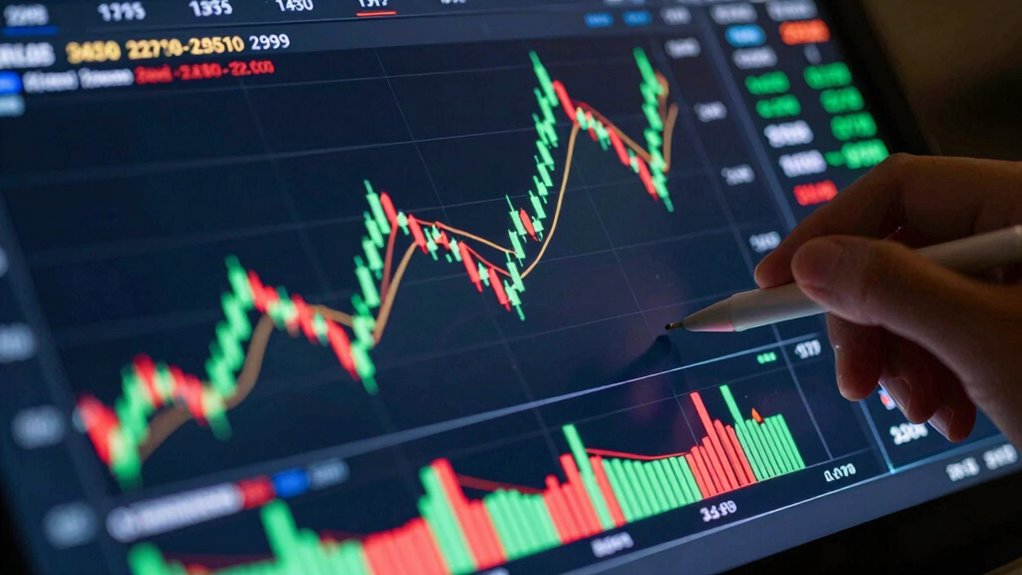
Bitcoin’s extreme price swings draw many U.S. investors looking for quick, exciting gains. You’re attracted by the unpredictable ups and downs, which create opportunities to profit through active trading and strategic timing. The thrill of outsmarting market fluctuations keeps investors engaged, despite the risks. Plus, regulatory shifts and external events add to the volatility, making Bitcoin feel dynamic and promising. If you want to understand why this pattern persists, keep exploring the factors behind Bitcoin’s ongoing appeal.
Key Takeaways
- Bitcoin’s rapid price swings offer the potential for quick, significant gains appealing to risk-tolerant U.S. investors.
- Market volatility creates a dynamic environment that encourages active trading and strategic speculation.
- Regulatory uncertainty fuels investor interest by increasing unpredictability and potential profit opportunities.
- External events and shifting policies amplify price fluctuations, attracting investors seeking to capitalize on volatility.
- The thrill of outsmarting market movements and the possibility of high rewards sustain ongoing investor engagement.

Despite its notorious price swings, Bitcoin’s volatility continues to draw U.S. investors seeking high-risk, high-reward opportunities. The unpredictable nature of Bitcoin’s value means that, while you might see significant gains in a short period, you also face the possibility of steep losses. This high level of market speculation appeals to investors who enjoy the thrill of trying to outsmart the market. You’re attracted to the idea that, with the right timing and strategy, you could capitalize on rapid price movements that traditional assets simply can’t match. The allure of potentially quick profits keeps many U.S. investors engaged, despite the inherent risks.
However, it’s not just market speculation that fuels your interest in Bitcoin. Regulatory challenges also play a significant role. The landscape of cryptocurrency regulation is constantly evolving, creating an environment of uncertainty. You might find it exciting that governments and regulators are still figuring out how to classify and control digital assets. This ambiguity can lead to sudden changes in the market, which, in turn, can cause Bitcoin prices to soar or plunge unexpectedly. For you, this means that staying informed about regulatory developments is crucial, as they can impact your investment strategies and outcomes.
The regulatory environment, while daunting, also adds an element of complexity that many investors find engaging. You might see the ongoing debates around cryptocurrency laws as a chance to anticipate market moves or identify emerging opportunities before they become mainstream. Because regulations are still being shaped, Bitcoin’s price can react sharply to news or policy announcements, creating opportunities for savvy investors to profit from volatility. This constant flux keeps you on your toes, making Bitcoin more than just a digital currency; it becomes a dynamic asset that responds to global regulatory shifts and market sentiment. Additionally, the ongoing regulatory uncertainty underscores the importance of understanding the broader digital content landscape and how it influences asset perceptions. Moreover, market sentiment can often be swayed by social and political events, further amplifying Bitcoin’s volatility. Understanding the market dynamics behind these fluctuations can give investors a strategic edge in navigating unpredictable price swings.
Ultimately, your interest in Bitcoin’s volatility is driven by a mix of the thrill of market speculation and the evolving regulatory landscape. You recognize that these factors contribute to the unpredictable yet potentially rewarding environment that Bitcoin offers. While the risks are high, the potential for significant gains keeps investors like you coming back for more. The ongoing regulatory challenges and market speculation make Bitcoin a compelling asset for those willing to navigate its turbulent waters, fueling the continued fascination with its unpredictable price swings.

FOREX TRADING: The Basics Explained in Simple Terms (Forex, Forex Trading System, Forex Trading Strategy, Oil, Precious metals, Commodities, Stocks, Currency Trading, Bitcoin)
As an affiliate, we earn on qualifying purchases.
As an affiliate, we earn on qualifying purchases.
Frequently Asked Questions
How Do U.S. Regulations Impact Bitcoin Investment Strategies?
U.S. regulations substantially impact your Bitcoin investment strategies by creating both opportunities and challenges. When there’s regulatory clarity, you feel more confident in making long-term investments and risk management. However, legal uncertainties can lead you to adopt conservative approaches, like limiting exposure or delaying trades. Staying informed about evolving rules helps you navigate these changes, allowing you to adapt your strategy to maximize gains while minimizing legal risks.
What Are the Tax Implications of Bitcoin Trading in the U.S.?
Think of Bitcoin trading like steering through a maze—you need to stay on top of tax reporting and capital gains. In the U.S., you must report every transaction, whether you profit or not. Short-term gains are taxed as ordinary income, while long-term gains benefit from lower rates. Failing to report can lead to penalties. So, keep detailed records and plan your trades wisely to avoid surprises at tax time.
How Do Institutional Investors Influence Bitcoin’s Volatility?
Institutional investors influence Bitcoin’s volatility by sometimes engaging in market manipulation, which can cause sudden price swings. Their large trades also pose liquidity challenges, making it harder to buy or sell significant amounts without impacting the price. As a result, their actions can amplify price fluctuations, attracting traders who seek quick profits from these unpredictable movements, further fueling Bitcoin’s reputation for volatility and drawing new investors into the market.
What Future Technological Developments Could Affect Bitcoin’s Stability?
Future technological developments like blockchain scalability improvements could make Bitcoin transactions faster and more reliable, reducing volatility caused by network congestion. However, quantum computing risks threaten Bitcoin’s security, potentially destabilizing its value if vulnerabilities are exploited. As you watch these innovations unfold, they could either bolster Bitcoin’s stability by enhancing security and efficiency or introduce new risks that increase its price swings, influencing your investment decisions.
How Does U.S. Inflation Influence Bitcoin Investment Decisions?
You might notice that during periods of high U.S. inflation, Bitcoin’s appeal as an inflation hedging asset grows—over 80% of investors see it this way. When inflation rises, your purchasing power diminishes, making Bitcoin an attractive option to preserve value. Its decentralized nature and limited supply appeal to those seeking to hedge against inflation’s erosion, prompting many U.S. investors to contemplate Bitcoin as part of their financial strategy.

ACrypto Bitcoin Portfolio Price Alert Tracker
Interactive price and volume charts for all cryptocurrencies
As an affiliate, we earn on qualifying purchases.
As an affiliate, we earn on qualifying purchases.
Conclusion
You see, despite its wild swings, Bitcoin’s volatility continues to draw new U.S. investors. Did you know that Bitcoin’s price has experienced over 70% swings within a single year? That kind of risk can be intimidating, but it also offers the chance for significant gains. If you’re willing to ride the rollercoaster, this unpredictable asset might just be worth your attention. Keep an eye on those price movements—they’re what make Bitcoin so compelling.

The Basics of Bitcoins and Blockchains: An Introduction to Cryptocurrencies and the Technology that Powers Them (Cryptography, Derivatives Investments, Futures Trading, Digital Assets, NFT)
As an affiliate, we earn on qualifying purchases.
As an affiliate, we earn on qualifying purchases.

Professional Crypto Portfolio Log: 3-Year Cryptocurrency Investment Tracker with Tax Worksheets, Trading Analysis & Digital Asset Management System
As an affiliate, we earn on qualifying purchases.
As an affiliate, we earn on qualifying purchases.