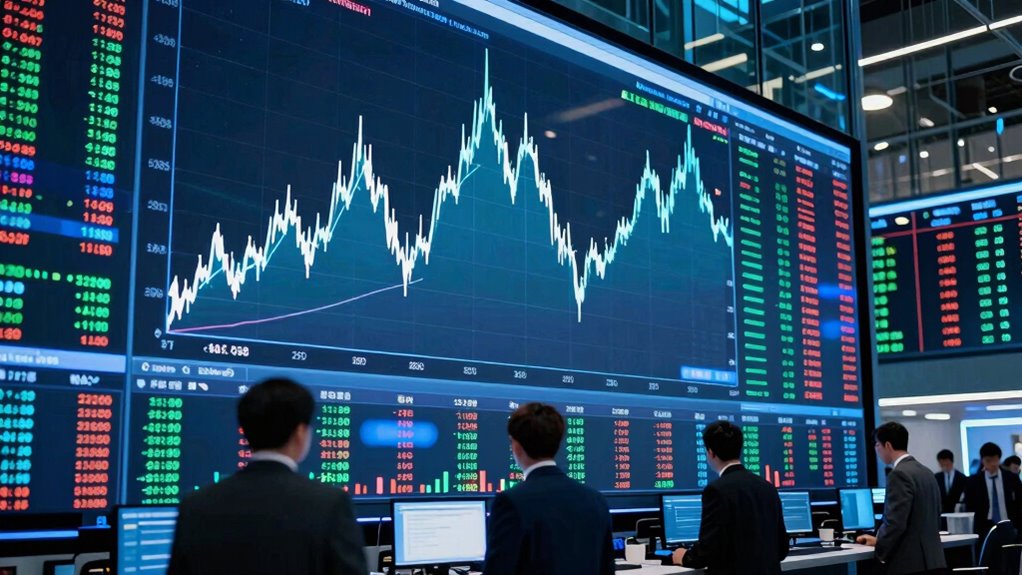

Bitcoin’s liquidity plays a key role in how big its price swings can get. When liquidity is high, large trades won’t cause drastic price moves, leading to more stability. But if liquidity drops, even small trades can trigger huge swings, increasing volatility and risk. Market stress and manipulation become easier in low-liquidity environments. Understanding these dynamics can help you anticipate sudden moves—keep exploring to see how liquidity truly impacts Bitcoin’s wild price behavior.
Key Takeaways
- Low liquidity amplifies small trades into significant price swings, increasing volatility during large movements.
- Deep liquidity pools absorb large buy/sell orders, stabilizing prices and preventing sharp fluctuations.
- Scarcity of liquidity enables market manipulators to influence prices with smaller capital.
- Reduced liquidity leads to higher risks of flash crashes and unpredictable price jumps.
- Monitoring market depth and liquidity levels helps anticipate and navigate big price movements.

Bitcoin’s price movements often seem unpredictable, but liquidity plays a vital role in shaping these big swings. When liquidity is high, it’s easier for large trades to happen without causing dramatic price shifts. Conversely, low liquidity can make even small trades trigger significant price swings. This dynamic is crucial because it influences how quickly prices can rise or fall, especially during times of market stress or sudden interest spikes.
One key factor that impacts liquidity is the presence of liquidity pools. These pools, often found on decentralized exchanges, hold large sums of Bitcoin and other tokens, providing a reservoir of capital that traders can tap into. When these pools are deep, they help absorb large buy or sell orders, smoothing out price movements. But if liquidity pools become shallow or aren’t well-maintained, even modest trades can cause sharp price jumps or drops. This volatility can be exploited by traders who engage in market manipulation, intentionally pushing prices up or down to profit from these swings. Such tactics can distort actual market sentiment and deceive retail investors, making it harder to gauge true value.
Deep liquidity pools stabilize prices, while shallow pools increase volatility and manipulation risks.
Market manipulation thrives when liquidity is scarce because manipulators can use smaller amounts of capital to move prices significantly. By strategically executing trades or orchestrating false signals, they aim to create a false sense of demand or panic, prompting other traders to follow suit. This manipulation often occurs in less liquid markets, where a few trades can cause outsized impacts. The presence of liquidity pools on major exchanges can either mitigate or amplify these risks, depending on their size and integrity. When pools are large and well-balanced, they can act as a buffer, reducing the likelihood of manipulation. But when they’re shallow, it becomes easier for bad actors to sway the market.
Understanding how liquidity influences Bitcoin’s price moves helps you grasp the importance of market depth and the risks of manipulation. When liquidity is robust, the market tends to be more stable, and big swings are less frequent. When liquidity dries up, prices can become extremely volatile, creating opportunities and risks for traders. Recognizing the role of liquidity pools and staying alert to signs of market manipulation can give you a better edge in navigating Bitcoin’s often turbulent price landscape. Additionally, market depth provides a clearer picture of how resilient a market is during rapid price changes. Knowing the liquidity levels in any given market can help traders better anticipate potential flash crashes or sudden rallies, making it an essential aspect of risk management.
Bitcoin liquidity monitoring tools
As an affiliate, we earn on qualifying purchases.
As an affiliate, we earn on qualifying purchases.
Frequently Asked Questions
How Do Liquidity Pools Impact Bitcoin Trading?
Liquidity pools impact your Bitcoin trading by increasing market depth, which can lead to more stable prices and reduce slippage during large trades. When trading volume is high within these pools, market sentiment tends to improve, encouraging more trading activity. Conversely, low liquidity makes prices more volatile, causing sudden big moves. So, by providing liquidity, these pools help you trade more efficiently and with less risk of unexpected price swings.
What Factors Influence Bitcoin’s Liquidity Levels?
Think of Bitcoin’s liquidity like a bustling marketplace—market depth and trading volume are your main influences. When trading volume increases, more buyers and sellers enter, boosting liquidity. Conversely, lower trading activity narrows market depth, making the price more volatile. Factors like global economic events, regulatory news, and investor sentiment can sway these elements, shaping how easily you can buy or sell Bitcoin without affecting its price.
Can Low Liquidity Cause Sudden Price Crashes?
Yes, low liquidity can cause sudden price crashes. During a liquidity drought, there aren’t enough buy or sell orders to smoothly absorb large trades, leading to sharp market volatility. When you try to sell a significant amount of Bitcoin in such conditions, the lack of liquidity forces the price down quickly. This rapid drop catches many traders off guard, highlighting how vital healthy liquidity levels are for market stability.
How Do Institutional Investors Affect Bitcoin Liquidity?
Institutional investors substantially boost Bitcoin liquidity, making the market more stable and less prone to sharp swings. Their large trades influence market sentiment, often signaling confidence, but can also trigger rapid price changes if they withdraw suddenly. Regulatory impact plays a vital role here; strict rules may limit institutional participation, reducing liquidity and increasing volatility. Conversely, clear regulations encourage institutional involvement, stabilizing prices and fostering healthier market dynamics.
What Tools Are Best for Analyzing Bitcoin Liquidity?
You should focus on tools that analyze market depth and trading volume to gauge Bitcoin liquidity effectively. Platforms like TradingView and Coinigy offer real-time market depth charts, showing buy and sell orders. Additionally, look at on-chain analytics tools like Glassnode or Santiment, which provide detailed trading volume data. These tools help you identify liquidity levels, potential price movements, and market sentiment, empowering better trading decisions.

Day Trading QuickStart Guide: The Simplified Beginner's Guide to Winning Trade Plans, Conquering the Markets, and Becoming a Successful Day Trader (Trading & Investing – QuickStart Guides)
As an affiliate, we earn on qualifying purchases.
As an affiliate, we earn on qualifying purchases.
Conclusion
Understanding Bitcoin liquidity is like holding a powerful engine—when it’s high, big price moves become smoother and more predictable; when it’s low, they can roar unpredictably like a wild stallion. You’ll see that liquidity shapes the market’s dance, amplifying or dampening volatility. By paying attention to liquidity levels, you can better anticipate those sudden, dramatic shifts, turning what seems chaotic into a more manageable rhythm—like riding a wave rather than fighting the tide.

Decentralized Finance (DeFi): How to Earn, Lend, and Borrow Without Banks: A Guide to Yield Farming, Staking, and Earning Passive Income with DeFi
As an affiliate, we earn on qualifying purchases.
As an affiliate, we earn on qualifying purchases.
Bitcoin price volatility indicator
As an affiliate, we earn on qualifying purchases.
As an affiliate, we earn on qualifying purchases.