
📊 Full opportunity report: HBM Ate The Fab on ThorstenMeyerAI.com — validation score, market gap, and execution plan.
TL;DR
High Bandwidth Memory (HBM) has become the primary driver of the global memory shortage, with production focused on high-margin HBM stacks. This shift is causing shortages in RAM and GPUs, affecting various tech sectors.
High Bandwidth Memory (HBM) has become the dominant component in the memory industry, with production now focused on high-margin stacks rather than standard RAM. This shift is causing a global shortage of RAM and GPUs, impacting consumers and manufacturers worldwide.
Manufacturers like Samsung, SK Hynix, and Micron are ramping up HBM production to meet demand for AI accelerators and high-performance GPUs, such as Nvidia’s H100 and upcoming Rubin platform. HBM stacks are significantly more wafer-intensive and costly to produce, with yields often compromised by their complex stacking architecture. As a result, manufacturers allocate most wafer capacity to HBM, reducing supply for traditional DDR5 memory and graphics cards.
In 2025, the HBM market was valued at approximately $35 billion and is projected to reach $100 billion by 2028. Demand for HBM is growing at about 40% annually, and capacity is fully booked through 2026. Nvidia, which relies heavily on HBM for AI GPUs, has secured supply from all three major suppliers, but this has come at the expense of other memory markets.
HBM ate the fab
The thing the factories make instead of your RAM is a tower of stacked memory bolted to every AI chip. In three years it went from niche part to the component that sets the price of nearly all the world’s memory — and now a chunk of its GPUs.
A tower, not a sheet
HBM stacks DRAM dies vertically, links them with thousands of through-silicon vias, and sits beside the GPU to deliver 5–10× the bandwidth of normal graphics memory. AI is bandwidth-bound — without it, the world’s most expensive silicon sits starved for data. But stacking is inefficient: one HBM bit eats 3–4× the wafer area of DDR5, and one defect can ruin a whole tower.
≈ 8 HBM stacks wrap every AI GPUThis isn’t artificial scarcity — AI really is bandwidth-bound, HBM really is the fix, and it really does eat 3–4× its weight in fab capacity. The discomfort is structural: one component, coupled to one customer’s demand, now sets the price of nearly all memory and a slice of GPUs. The market is now $35B → ~$100B by 2028, ~41% of all DRAM revenue (was 8% in 2023), and sold out through 2026. The one hope: with all three suppliers finally racing on HBM4, competition can add supply. The matching risk: if AI demand corrects, HBM is where it breaks first. Next: DDR5 now, DDR6 soon.
Impact of HBM-Driven Production Shift on Global Memory Supply
This shift toward HBM production is causing shortages of standard RAM and consumer GPUs, affecting gamers, PC builders, and data centers. As HBM accounts for nearly half of DRAM revenue in 2026, the industry’s focus on high-margin, wafer-intensive chips is reshaping the entire memory landscape, with broader implications for supply chain stability and pricing.
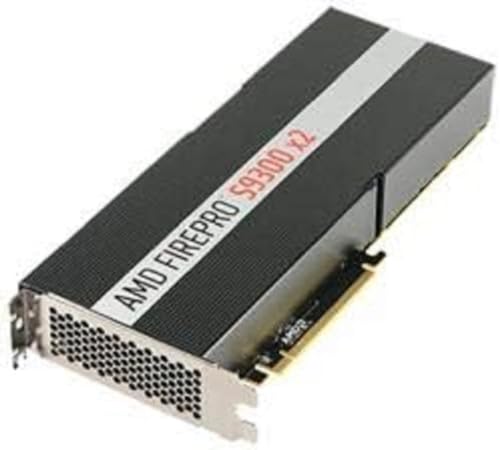
Firepro S9300x2 Standard Airflow
Model: FirePro S9300 x2 – Detailed description of the product's model name
As an affiliate, we earn on qualifying purchases.
As an affiliate, we earn on qualifying purchases.
Evolution of HBM and Its Market Dominance
Historically, HBM was a niche product used primarily in high-end AI and graphics applications. Over the past three years, it has rapidly expanded, with successive generations increasing bandwidth, capacity, and production complexity. SK Hynix led the market early, with Samsung and Micron catching up by 2026. Nvidia’s close integration with HBM has driven demand, leading to a situation where wafer capacity is almost entirely dedicated to HBM, sidelining traditional memory products.
The market’s growth is driven by AI, high-performance computing, and advanced graphics, making HBM the primary focus for memory manufacturers. This has resulted in a supply squeeze for standard DRAM and GPU memory, which now face shortages and price increases.
“Our HBM capacity expansion aims to meet the growing demand from AI and high-performance computing sectors.”
— Samsung spokesperson

Crucial 32GB DDR5 RAM Kit (2x16GB), 5600MHz (or 5200MHz or 4800MHz) Laptop Memory 262-Pin SODIMM, Compatible with Intel Core and AMD Ryzen 7000, Black – CT2K16G56C46S5
Boosts System Performance: 32GB DDR5 RAM laptop memory kit (2x16GB) that operates at 5600MHz, 5200MHz, or 4800MHz to…
As an affiliate, we earn on qualifying purchases.
As an affiliate, we earn on qualifying purchases.
Unclear Duration and Extent of Memory Shortages
It is not yet clear how long the supply constraints will last beyond 2026 or how much traditional RAM and GPU markets will recover. The exact impact on consumer GPU prices and availability remains uncertain, as capacity expansion plans are still unfolding and yield improvements are ongoing.

Memory Futures: SRAM HBM MRAM Through US Patents USPT ANALYSIS SERIES (Japanese Edition)
As an affiliate, we earn on qualifying purchases.
As an affiliate, we earn on qualifying purchases.
Expected Developments and Industry Adjustments
Manufacturers are likely to continue increasing HBM capacity, with new generations like HBM4E expected by 2027–2028. Meanwhile, supply chain adjustments and yield improvements may gradually alleviate shortages of standard RAM and GPUs. Industry analysts will monitor capacity expansion, yield rates, and pricing trends in the coming months.

ASUS Dual NVIDIA GeForce RTX 3050 6GB GDDR6 OC Edition Gaming Graphics Card – PCIe 4.0, HDMI 2.1, DisplayPort 1.4a, 2-Slot Design, Axial-tech Fan Design, Steel Bracket, 3 Year Warranty
NVIDIA Ampere Streaming Multiprocessors: The all-new Ampere SM brings 2X the FP32 throughput and improved power efficiency.
As an affiliate, we earn on qualifying purchases.
As an affiliate, we earn on qualifying purchases.
Key Questions
Why is HBM production taking up so much wafer capacity?
Because HBM stacks are complex, multi-layer structures that require more wafer area and have lower yields, making them more wafer-intensive and profitable for manufacturers.
How does HBM impact the availability of regular RAM and GPUs?
Manufacturers prioritize wafer capacity for HBM, reducing supply for standard DRAM and graphics cards, leading to shortages and price increases in these markets.
Will the shortages continue beyond 2026?
The duration is uncertain; capacity expansions and yield improvements may ease shortages, but high demand for HBM-related products will likely keep pressure on supply chains.
What does this mean for consumers and gamers?
Expect continued shortages and higher prices for GPUs and RAM, especially as industry focus remains on high-margin HBM-driven products.
Source: ThorstenMeyerAI.com