

When you send Bitcoin, your transaction starts when your wallet signs it with your private key and broadcasts it to the network. It then enters the mempool, where miners verify your balance and digital signatures. Miners compete to add your transaction to a new block through proof-of-work, and once confirmed, it becomes part of the blockchain. This process guarantees security and finality, and if you want to understand each step in detail, there’s more to explore.

Get hardware and tech essentials delivered free with Prime
- Fast, free delivery on millions of items
- Prime Video, Amazon Music and more included
- Member-only deals all year
Key Takeaways
- The sender initiates a transaction with recipient address, amount, and a digital signature using their private key.
- The transaction is broadcasted to the Bitcoin network and enters the mempool for validation.
- Miners verify transaction validity and include it in a new block through proof-of-work mining.
- Once confirmed in a block, the transaction receives network confirmations, securing its permanence.
- The recipient’s wallet updates to reflect the received Bitcoin after the transaction is confirmed.
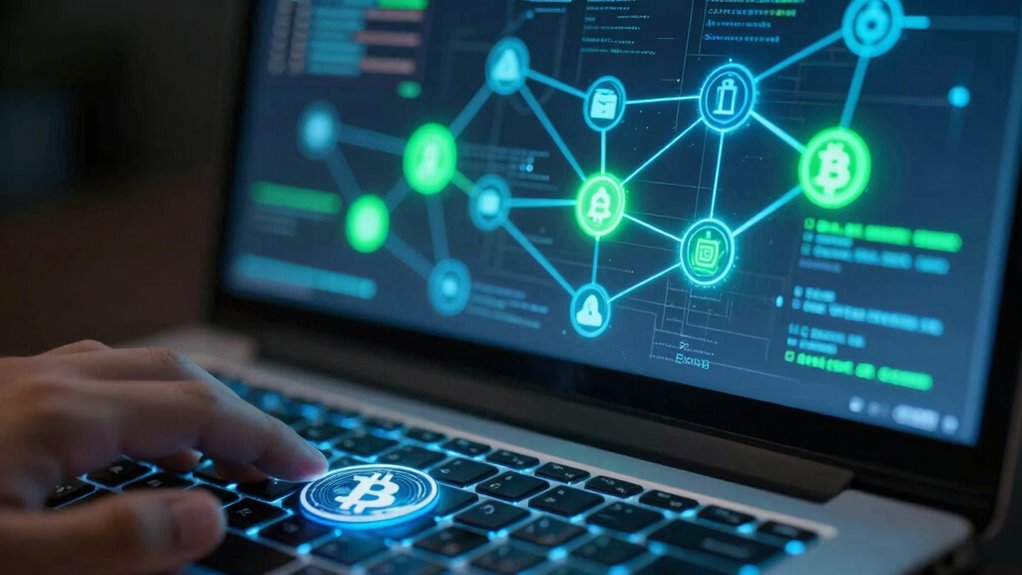
When you send Bitcoin, the transaction begins a process that moves digital currency from your wallet to someone else’s. First, you initiate the transfer through your chosen wallet app or platform. Once you confirm the transaction, your wallet creates a digital message containing details like the recipient’s address, the amount, and your private key signature. This message is then broadcasted to the Bitcoin network.
From there, the transaction enters a pool known as the mempool, where pending transactions wait to be processed. Miners pick transactions from this pool to include in a new block. This is where blockchain verification becomes crucial. Miners verify the transaction by checking that you have sufficient funds and that the digital signatures are valid. They also ensure your transaction adheres to network rules, preventing fraud or double-spending. Once verified, your transaction is added to a block along with other verified transactions. Blockchain security relies on these verification processes to maintain integrity and trust. This process is fundamental to maintaining the decentralized trust model of Bitcoin.
The next step involves miners competing to solve a complex mathematical puzzle, known as proof-of-work. This process requires significant computational effort, and the first miner to solve the puzzle gets to add their block to the blockchain. When your transaction is included in a valid block, it’s considered confirmed. The more blocks that follow, the more secure and irreversible your transaction becomes, as each new block reinforces the previous ones. This verification process depends on the cryptographic principles inherent in blockchain technology to ensure security. Additionally, the proof-of-work mechanism ensures that adding new blocks requires considerable effort, which helps secure the network against attacks.
Throughout this process, transaction fees play an essential role. When you send Bitcoin, you can choose a fee amount, and this fee incentivizes miners to prioritize your transaction. Higher fees usually mean faster confirmation times because miners are more inclined to include your transaction in the next block they mine. Conversely, lower fees might result in longer wait times, especially during network congestion. The fee amount can also be influenced by the overall network demand, which varies depending on user activity and transaction volume.
Once your transaction is confirmed on the blockchain, the recipient’s wallet recognizes the incoming Bitcoin. They can view the transaction details on a blockchain explorer, which provides transparency by showing the transaction’s status, confirmation count, and details. Understanding how the blockchain verifies transactions is fundamental to grasping the security of Bitcoin. Ultimately, your Bitcoin transfer is complete when the recipient’s wallet shows the updated balance, and the transaction becomes a permanent part of the blockchain. This entire process, from initiation to confirmation, underscores the seamless yet intricate technology behind sending Bitcoin.
As an affiliate, we earn on qualifying purchases.
Frequently Asked Questions
How Long Does a Bitcoin Transaction Typically Take to Confirm?
A Bitcoin transaction typically confirms within 10 minutes, but it can take longer depending on blockchain scalability and network congestion. Faster confirmations are possible with higher transaction fees, which incentivize miners. Be aware of transaction malleability, which can temporarily alter transaction details before confirmation, but it doesn’t affect the confirmation time itself. Overall, patience is key, especially during busy periods, to guarantee your transaction gets confirmed securely.
What Fees Are Involved in Sending Bitcoin?
When you send Bitcoin, you’ll encounter fees primarily to prioritize your transaction in the network. These fees vary based on network congestion and transaction size, so fee estimation tools can help you choose an appropriate amount for quick confirmation. Higher fees generally improve transaction security by reducing the risk of delays or double-spending. Always consider current fee levels to balance cost and confirmation time effectively.
Can Bitcoin Transactions Be Reversed or Canceled?
You can’t reverse or cancel Bitcoin transactions once confirmed, which enhances security but impacts cryptocurrency privacy and blockchain scalability. Because transactions are irreversible, you need to double-check details before sending. This design prevents fraud, but it also means errors are permanent. The blockchain’s transparency and scalability guarantee everyone can verify transactions, but they also mean your transaction history is public. Always confirm details to avoid unintended transfers.
How Does the Bitcoin Network Prevent Double-Spending?
You prevent double-spending on the Bitcoin network through cryptographic signatures and consensus mechanisms. When you send Bitcoin, your transaction is signed with your private key, proving authenticity. Miners then verify this signature and include your transaction in a block. The network’s consensus mechanism, like proof of work, guarantees all miners agree on the transaction history, making double-spending nearly impossible by confirming that your coins haven’t been spent elsewhere.
What Happens if I Send Bitcoin to the Wrong Address?
Sending Bitcoin to the wrong address is like casting a message in a bottle into the ocean—you can’t retrieve it once it’s gone. If you realize you’ve made a mistake, transaction security and address verification are your best allies. Double-check the recipient address before sending, but if it’s wrong, the transaction is irreversible, and your coins are lost unless the recipient returns them. Always verify addresses carefully to avoid permanent loss.
Bitcoin transaction signing software
As an affiliate, we earn on qualifying purchases.
As an affiliate, we earn on qualifying purchases.
Conclusion
So, next time you send Bitcoin, remember it’s not just clicking a button—you’re triggering a complex dance of computers working behind the scenes. Your transaction travels through networks, gets verified, and waits for confirmation. But what if something goes wrong? The process is resilient, yet unpredictable. The blockchain holds its secrets tightly. Are you ready to dive deeper into this digital mystery? The journey of your Bitcoin is just beginning—stay tuned.
As an affiliate, we earn on qualifying purchases.
As an affiliate, we earn on qualifying purchases.
Columbus Day / Indigenous Peoples' Day Picks
long weekend sales
As an affiliate, we earn on qualifying purchases.