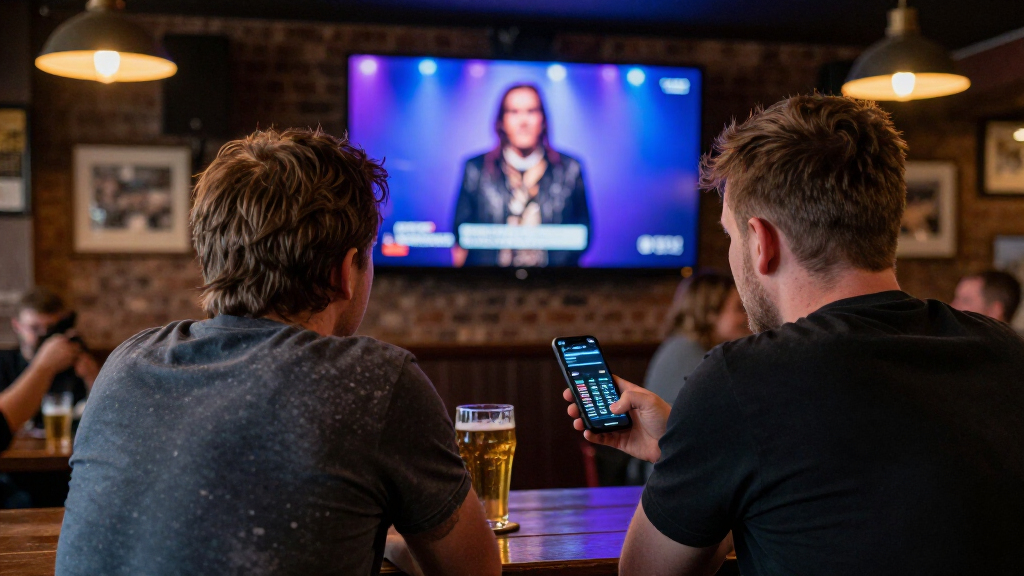

🔍 Read the full analysis: What Fans See In The AI Debate Over Digital Ozzy on ThorstenMeyerAI.com

Get hardware and tech essentials delivered free with Prime
- Fast, free delivery on millions of items
- Prime Video, Amazon Music and more included
- Member-only deals all year
TL;DR
Developments involving an AI-generated Odyssey clip, the proposed Digital Ozzy avatar and an accusation about A$AP Rocky’s video have sharpened debate over AI in entertainment. The source account says audiences are reacting less to the technology itself than to questions of consent, credit and creative quality; some key details, including the Ozzy avatar’s launch timing and the video allegation, remain unresolved.
Several entertainment developments in the week ending October 26, 2026 have renewed debate over AI-generated work: xAI posted a short AI-made Odyssey clip, Jack Osbourne said backlash to plans for a Digital Ozzy avatar was his own fault, and a visual-effects artist accused an A$AP Rocky video of using his footage without credit. The claims and responses vary by case, but the disputes have focused on consent, attribution and creative quality as much as on AI itself.
On October 23, Grok Imagine posted a roughly seven-minute video described as “Episode 1” of an Odyssey series. The post credited a creative collaboration with Wonder Studios and director Dev Walker. The clip followed Elon Musk’s July promise that Grok Imagine would make a full-length, historically accurate adaptation before the end of 2026. It is not the feature-length film he described.
Jack Osbourne addressed criticism of the proposed Digital Ozzy project in a podcast posted October 21. He said, “The backlash, it was my own fault,” and said he had not been properly prepared to explain it. The family had announced an interactive avatar using Ozzy Osbourne’s voice, image and movement, with Jack describing it as the late singer’s “digital DNA.” Ozzy died in July 2025, aged 76.
A separate dispute concerns A$AP Rocky’s “Shroom Clouds” video, released October 19. Visual-effects artist Cache Bunny alleges that a shot in the video uses his 2019 footage, processed with AI to replace a person with Rocky. The source account reported that AI artists were listed in the video credits, but that does not establish whether Bunny’s footage was used or whether he was credited. It said no response from Rocky’s side had been published by October 26.
Consent, Credit and Creative Quality
The cases highlight distinct questions that can be blurred together in arguments about AI. The Odyssey clip was openly labeled as AI-made, yet the source account says reviewers criticized its execution. In the Digital Ozzy case, the family had authorized the project, but Jack Osbourne’s comments about putting the avatar into commercial templates prompted a different concern: whether a family-approved use would feel like an endorsement or sale to fans.
The Rocky dispute is different again. It is an unresolved allegation about the use and attribution of a specific creator’s footage, not simply a disagreement about whether AI belongs in music videos. If the footage was used as alleged, the question of credit and permission would matter independently of the technology used to alter it. The account also notes examples of AI-assisted music made with the participation of artists or their families, including the Beatles’ “Now and Then” and a Randy Travis recording. Those examples suggest public responses can vary with the process and the people involved; they do not settle the current disputes.
For artists, families, studios and audiences, the practical stakes include control over a person’s likeness, recognition for creative work, and confidence that a video or performance is represented honestly. The source says the EU AI Act’s deepfake disclosure rules have applied to deployers since August 2, 2026, with a lighter, non-intrusive duty for evidently artistic work. That disclosure requirement addresses transparency, but it does not by itself answer questions about consent, ownership or quality.
Products Worth Considering

Ledger Nano X Bluetooth Crypto Wallet

Apple MacBook Pro 16.2-inch (2026) with M5 Pro Chip

LG UltraGear 32GX870A-B 32-inch 4K OLED Gaming Monitor
As an affiliate, we earn on qualifying purchases.
How the Four Disputes Unfolded
The developments came in a short sequence. The “Shroom Clouds” video appeared October 19, and the source account says AI artists were named in its credits. On October 21, Jack Osbourne discussed the Digital Ozzy backlash on the Great Company podcast. Two days later, the Grok Imagine account posted its Odyssey episode. On October 24, Jay-Z told an audience at SoFi Stadium to “Question everything in this world of AI.” The source presents that remark as a warning about trust, rather than an attack on a particular tool.
The Odyssey clip also sits within an earlier public dispute over Christopher Nolan’s film. The source says Musk criticized the film’s casting and later promised a competing AI-made version. It reports that the Grok clip drew mixed reviews: TechCrunch writer Anthony Ha noted moments that could resemble real actors at sea, but described the overall clip as “completely airless.” The source cites Rolling Stone as reporting that Nolan’s film had earned more than $1.78 billion worldwide. Those contrasting projects differ in production scale and form, so the reported figures do not establish a direct measure of audience preference.
The Digital Ozzy project was announced by Sharon and Jack Osbourne in May 2026 with Hyperreal and Proto Hologram. The stated plan was an interactive avatar built from Ozzy’s voice, image and movement, with the family involved in controlling the digital likeness. The source says a summer debut in Proto Luma units in the United States and United Kingdom had been planned, but had not happened by the time of its October 26 report.
“The backlash, it was my own fault.”
— Jack Osbourne, speaking on the Great Company podcast
Launch Timing and Video Evidence
The source account says the Digital Ozzy avatar was expected in Proto Luma units from late summer but had not launched by October 26. It does not establish whether the rollout has been canceled, postponed, or changed, or whether the family or its partners have announced a revised date. The terms governing commercial uses of the avatar are also not fully detailed in the material provided.
The allegation about “Shroom Clouds” remains unverified in the available account. It does not include a response from A$AP Rocky, the video’s production team or the label, nor independent evidence establishing that the disputed shot came from Cache Bunny’s 2019 footage. The Odyssey clip’s view count and reviewer reactions are reported observations, not a complete measure of audience response. No broader conclusion about what all fans think can be drawn from these cases alone.
Responses and Release Updates
The next developments to watch are whether the Digital Ozzy partners provide a revised release plan and explain how the avatar may be used, and whether Rocky’s representatives or the video’s producers respond to Cache Bunny’s allegation. Any evidence or statement about the clip’s production and credits could clarify the dispute; at present, the claim remains an allegation.
For the Grok Imagine project, the stated promise was to make a full-length Odyssey film before the end of 2026. The October episode does not confirm whether a feature-length release is in production or when it might appear. More generally, the cases will continue to turn on specific facts—who authorized a likeness, what source material was used, how creators are credited and what audiences are told—rather than on a single verdict about AI in entertainment.
Key Questions
What happened with the Digital Ozzy project?
Sharon and Jack Osbourne announced an interactive avatar using Ozzy Osbourne’s voice, image and movement. Jack later said the backlash was “my own fault.” The source account says the planned summer debut had not occurred by October 26, 2026.
Has Cache Bunny proved that the Rocky video copied his footage?
No. Cache Bunny alleges that “Shroom Clouds” used his 2019 footage after AI processing. The account does not provide independent confirmation, and it says no response from Rocky’s side had been published by October 26.
Was Grok Imagine’s Odyssey clip a full-length film?
No. The Grok Imagine account posted a roughly seven-minute video called “Episode 1” on October 23. Musk had previously promised a full-length film before the end of 2026, but the post did not fulfill that description.
What did Jay-Z say about AI?
At SoFi Stadium on October 24, Jay-Z told the audience, “Question everything in this world of AI.” The source presents the comment as a warning about trust and online narratives.
What is the central issue in these disputes?
The cases raise different questions about creative quality, consent and credit. The source argues that the technology itself is not the only issue; however, the disputes do not establish one uniform public response to AI-generated entertainment.
Source: ThorstenMeyerAI.com