
📊 Full opportunity report: VigilSAR: The Object That Isn’t Transmitting on ThorstenMeyerAI.com — validation score, market gap, and execution plan.
TL;DR
VigilSAR uses synthetic-aperture radar and AI to detect ships that appear on radar but lack transponder signals. This capability improves maritime security, safety, and law enforcement efforts. Its deployment is based on public SAR data, but commercial and operational details remain proprietary.
VigilSAR has confirmed its ability to detect vessels on radar that are not broadcasting transponder signals, a capability that enhances maritime domain awareness and law enforcement. The platform leverages synthetic-aperture radar (SAR) data combined with AI-driven classification and data fusion to identify ‘dark’ vessels, which are significant in contexts like illegal fishing, sanctions evasion, and rescue operations.
The core technology of VigilSAR relies on SAR data from sources such as the European Space Agency’s Sentinel-1 satellites, which provide all-weather, day-and-night imaging capabilities. This data is processed through detection algorithms that identify anomalous radar returns, typically metal objects like ships, regardless of weather conditions or lighting.
What distinguishes VigilSAR is its ability to fuse radar detections with other signals, notably AIS and ADS-B transponder data. When a detected vessel on radar does not have an associated transponder signal, it is flagged as a potential ‘dark’ object of interest. This process involves subtracting explained signals—vessels with known transponder data—to isolate anomalies that warrant further investigation.
While the platform’s detection and classification techniques are based on established remote sensing methods, the innovation lies in the fusion and interpretation layer, which filters out explained detections to highlight objects that might indicate illegal activity, distress, or rule violations. VigilSAR is currently positioned as a defense and intelligence product, with commercial and operational deployment details remaining proprietary and based on ongoing discussions.
VigilSAR — the object that isn’t transmitting
Radar sees through cloud and darkness, when cameras can’t. Fuse it with transponder data and the signal is the one detection no transponder explains.
Independent commentary on public positioning, produced with AI assistance under human editorial oversight. The views are the author’s own and may change. This does not verify or endorse VigilSAR’s capabilities, contracts, or performance. Capabilities on Sentinel-1 / Copernicus reflect a free, public data foundation; commercial-constellation and air-gapped-deployment references reflect stated positioning, not independently demonstrated fact. ISR and related technologies may be subject to export controls and dual-use regulations — lawful, ethical use is solely the operator’s responsibility. Nothing here is an offer, pricing, or operational/safety/legal advice. AI detection and classification can err and require human verification. Product and company names are trademarks of their respective owners; mention does not imply endorsement.
Implications for Maritime Security and Law Enforcement
The ability to detect vessels that are visible on radar but not broadcasting transponder signals directly impacts maritime security, safety, and the enforcement of international laws. ‘Dark’ vessels are often associated with illegal activities such as unreported fishing, smuggling, sanctions evasion, or vessels in distress that attempt to remain hidden. By identifying these objects, VigilSAR enhances situational awareness for coast guards, maritime authorities, and security agencies.
This capability also broadens the scope of maritime monitoring beyond traditional AIS-based systems, which can be turned off or manipulated. The technology’s reliance on all-weather SAR imagery ensures consistent surveillance regardless of weather conditions or night-time, filling a critical gap in current maritime domain awareness systems.
However, the platform’s proprietary nature and reliance on publicly available SAR data mean that full operational capabilities and pricing are not yet disclosed, which may influence its adoption and integration into existing security frameworks.
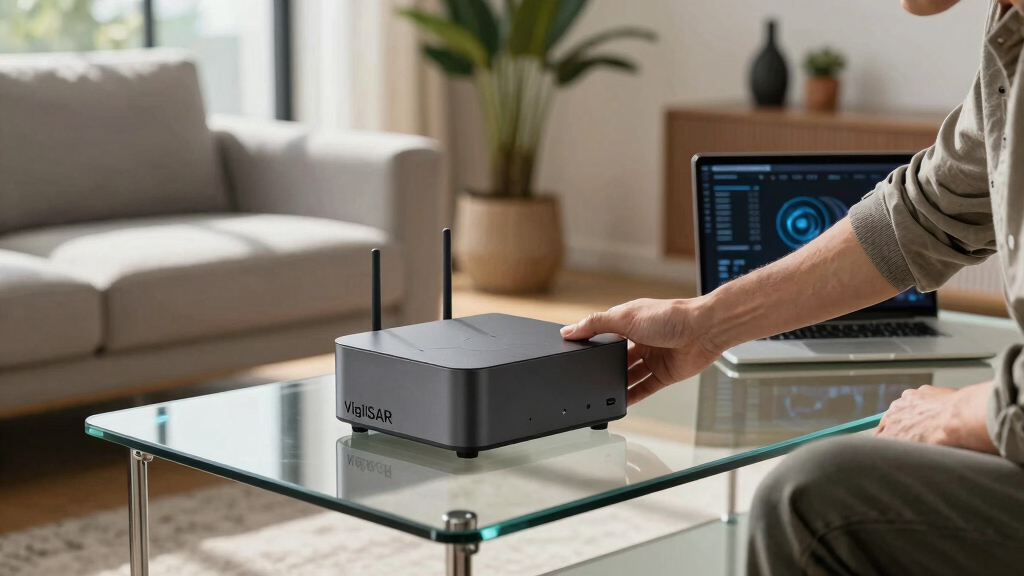
synthetic aperture radar (SAR) marine vessel detection device
As an affiliate, we earn on qualifying purchases.
As an affiliate, we earn on qualifying purchases.
Evolution of SAR Technology and Maritime Monitoring
Synthetic-aperture radar (SAR) has long been recognized for its all-weather, day-and-night imaging capabilities, making it vital for remote sensing applications. Historically, SAR images are maps of radar scattering, requiring advanced AI and data fusion techniques to interpret effectively. VigilSAR builds on this foundation by integrating detection algorithms with transponder data to identify anomalies.
The platform’s core concept—detecting objects that appear on radar but lack transponder signals—is rooted in the longstanding ‘dark-object’ problem in maritime surveillance. While SAR has been used for various applications like disaster monitoring and infrastructure assessment, its use in detecting non-transmitting vessels is a recent development, driven by advances in AI and data fusion. The European Space Agency’s Sentinel-1 data, which is publicly available, provides a proven foundation for this capability, although commercial deployment is still evolving.
Previous efforts in maritime surveillance relied heavily on AIS and ADS-B signals, which are susceptible to being turned off or falsified. VigilSAR’s approach aims to fill this gap, offering a more reliable means of identifying vessels that attempt to evade detection.
“Our platform enhances maritime awareness by highlighting anomalies that traditional systems may overlook, especially under adverse weather or darkness.”
— VigilSAR product spokesperson

TPX A-01-01 Motorcycle Radar and Laser Detection System Version 2.0,1 Pack , Black
- Detects All Radar and Laser Bands: Detects police radar and laser signals
- 360-Degree Coverage: Provides full radar and laser protection
- Waterproof Design: Resistant to water and weather
As an affiliate, we earn on qualifying purchases.
As an affiliate, we earn on qualifying purchases.
Operational Capabilities and Commercial Deployment Details
While VigilSAR has demonstrated the core detection capability using publicly available SAR data, details about its commercial deployment, pricing, and integration with existing maritime security systems remain undisclosed. It is not yet clear how widely the platform is being adopted or tested in operational environments.
Furthermore, the robustness of its AI algorithms across different geographic regions and vessel types is still under evaluation, and the full extent of its detection accuracy and false-positive rates is not publicly confirmed.
AIS and ADS-B transponder signal detector
As an affiliate, we earn on qualifying purchases.
As an affiliate, we earn on qualifying purchases.
Next Steps for Validation and Broader Adoption
VigilSAR is expected to continue pilot programs and seek broader operational testing with maritime authorities and security agencies. Further validation of its detection accuracy, especially in complex maritime environments, will be critical before wider deployment.
Additionally, the company behind VigilSAR may reveal more details about pricing, integration, and capabilities in upcoming briefings or industry conferences. Monitoring these developments will be key for stakeholders interested in all-weather maritime surveillance solutions.

Cobra RAD 480i Laser Radar Detector, Long Range Detection, Bluetooth, Black
- Front and Rear Detection: LaserEye technology detects signals from both ends
- Shared Alerts: Connects to Drive Smarter community for live updates
- Apple CarPlay & Android Auto: View and interact with alerts on vehicle display
As an affiliate, we earn on qualifying purchases.
As an affiliate, we earn on qualifying purchases.
Key Questions
How does VigilSAR detect vessels that are not transmitting transponder signals?
It fuses synthetic-aperture radar (SAR) imagery with transponder data like AIS and ADS-B signals. When a vessel appears on radar but has no corresponding transponder signal, it is flagged as a potential ‘dark’ vessel.
What are the main applications of VigilSAR?
Its primary uses include maritime security, law enforcement, illegal fishing detection, sanctions enforcement, and search-and-rescue operations.
Is VigilSAR publicly available or only for defense agencies?
Currently, VigilSAR is positioned as a defense and intelligence product. Its commercial deployment details and pricing are not publicly disclosed, and it is offered through briefing requests rather than a self-serve platform.
What are the limitations of SAR-based detection?
SAR imagery requires interpretation through AI, and false positives can occur. Its effectiveness depends on data fusion quality and operational validation, which are still being refined.
When will VigilSAR be widely deployed?
Widespread deployment depends on ongoing validation, customer interest, and operational testing. No specific timeline has been announced yet.
Source: ThorstenMeyerAI.com