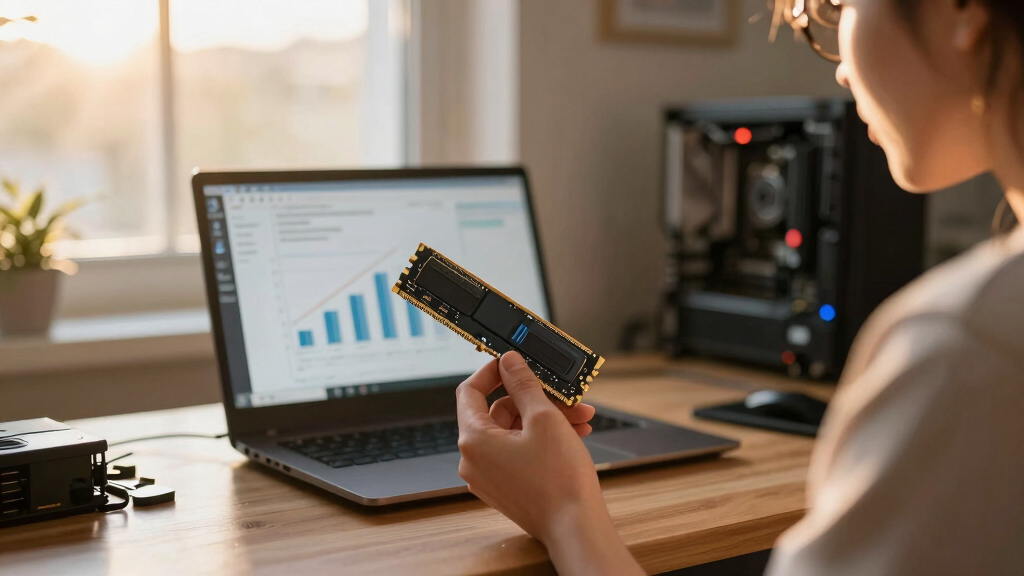

📊 Full opportunity report: The Memory Squeeze: Why Your RAM Bill Doubled on ThorstenMeyerAI.com — validation score, market gap, and execution plan.

Get hardware and tech essentials delivered free with Prime
- Fast, free delivery on millions of items
- Prime Video, Amazon Music and more included
- Member-only deals all year
TL;DR
DRAM prices have doubled or more in 2026 due to a deliberate industry shift toward AI memory products. This has caused shortages, increased costs, and supply chain impacts for PC components.
DRAM prices have surged roughly 90% in the first quarter of 2026, with 32GB DDR5 kits now costing over $370, and 64GB kits exceeding $600. This dramatic increase is driven by a fundamental industry shift toward producing high-margin memory for AI applications, rather than meeting consumer demand. The result is a global shortage affecting PC builders, with memory now accounting for up to 35% of total build costs, according to HP.
Since mid-2025, the cost of consumer DRAM has doubled, tripled, or even sextupled depending on the configuration. The primary cause is a strategic reallocation of manufacturing capacity by the three dominant DRAM producers—Samsung, SK Hynix, and Micron—who are redirecting wafer output from traditional consumer RAM to High Bandwidth Memory (HBM) used in AI accelerators like Nvidia’s GPUs.
This shift is economically driven: HBM modules sell for $60 to $100 each, compared to just $5 to $10 for standard DDR5, offering three to five times higher revenue per wafer. However, HBM’s physical design is inefficient, consuming three to four times the wafer area per bit compared to DDR5, effectively reducing overall consumer RAM output. As a result, HBM now accounts for about 23% of total DRAM wafer production, up from 19% last year, with AI applications expected to absorb roughly 20% of all DRAM capacity in 2026.
Unlike past shortages, which eased once new capacity was added, this crisis is sustained by a deliberate industry decision to prioritize higher-margin AI memory products. Supply growth is below historical norms, with IDC estimating only 16% increase in DRAM capacity in 2026, and new fabs are not expected to come online until 2027–2028. Industry players are managing scarcity by maintaining high prices and long-term contracts, with some suppliers locking in multi-year commitments through 2030, reducing the availability of memory for consumers.
Why your RAM bill doubled
“Doubled” is the polite version — consumer DRAM is running 3–6× its 2024 lows. The boom-bust cycle that always brought cheap RAM back isn’t coming this time, because the factories that make your RAM now make something far more profitable instead.
HBM
This is the quiet tax on the whole AI era. Relief isn’t forecast before 2028, and even then prices may settle 30–50% above pre-crisis levels. Buy what you genuinely need now; don’t panic-buy capacity you won’t use. You can’t out-wait the fab math — but, as this series will show, you can shrink what you need. Next: HBM Ate the Fab.
Why the Memory Crunch Is Reshaping the PC Market
This development significantly impacts consumers and PC builders, as memory has become a major component cost. The shortage and price hikes threaten to slow PC upgrades and increase costs for manufacturers. Additionally, the industry’s focus on high-margin AI memory indicates a long-term shift in manufacturing priorities, which could lead to persistent shortages and higher prices for years to come. The concentration of market power among three firms and their history of collusion adds a layer of complexity to the supply dynamics, raising questions about market competition and transparency.
As an affiliate, we earn on qualifying purchases.
Industry Shift Toward AI Memory Drives Prices Higher
Historically, memory shortages have been temporary, resolved by ramping up production. However, in 2026, the industry is deliberately reallocating wafer capacity from consumer RAM to high-margin AI memory modules like HBM. This transition is driven by the lucrative economics of AI hardware, where manufacturers earn significantly more per wafer. The three main DRAM producers—Samsung, SK Hynix, and Micron—control about 95% of the market and have prioritized AI memory production over consumer products, with no immediate plans to increase supply for the latter.
Meanwhile, demand for AI hardware continues to grow rapidly, with hyperscalers placing large, open-ended orders, and companies like Micron locking in multi-year supply contracts. This has resulted in a supply-demand imbalance that is unlikely to be resolved quickly, with new capacity not expected until at least 2027–2028 and current supply growth well below historic levels.
“Memory now accounts for about 35% of our PC build costs, up from 15–18% earlier this year.”
— HP spokesperson
As an affiliate, we earn on qualifying purchases.
Unresolved Questions About Market Dynamics
It remains unclear whether the current high prices are solely due to supply constraints or if tacit collusion among the dominant firms continues to play a role. Additionally, the full impact of long-term contracts and capacity discipline on future supply and prices is still developing. The extent to which new manufacturing capacity will alleviate shortages once it becomes available in 2027–2028 also remains uncertain.
As an affiliate, we earn on qualifying purchases.
Expected Industry Developments and Market Outlook
Manufacturers are likely to continue prioritizing AI memory production through 2026 and beyond, with new fabs expected to come online around 2027–2028. Consumers and PC builders should prepare for sustained high prices and limited supply of consumer RAM. Industry analysts will closely monitor capacity expansions, pricing trends, and potential regulatory scrutiny given the market concentration. Additionally, more detailed investigations into supply chain practices may emerge as the market evolves.
As an affiliate, we earn on qualifying purchases.
Key Questions
Why have DRAM prices increased so dramatically in 2026?
Prices have surged due to a strategic industry shift toward producing high-margin AI memory modules like HBM, which consumes more wafer area and reduces supply of consumer RAM. This, combined with limited new capacity and long-term supply contracts, has created a supply shortage and price increases.
Will the prices go down once new factories start production?
It is uncertain. New capacity is expected around 2027–2028, but current supply management practices and high demand for AI memory may keep prices elevated for some time. The industry’s focus on high-margin products suggests a prolonged period of tight supply for consumer RAM.
How does this affect PC builders and consumers?
Higher RAM prices increase overall build costs and may delay upgrades. Some manufacturers are passing costs onto consumers through price hikes, and shortages could lead to limited availability of certain memory modules in the near term.
Is this shortage related to collusion among manufacturers?
There is no current evidence of collusion in 2026. The market’s current dynamics are attributed to deliberate capacity reallocation toward AI memory, driven by economic incentives, not illegal coordination. However, the market concentration raises ongoing concerns about competition.
Source: ThorstenMeyerAI.com
Halloween Picks
halloween
As an affiliate, we earn on qualifying purchases.