
🔍 Read the full analysis: Portable Power Station Shopping For 2027: 15 Picks For Camping And Backup on ThorstenMeyerAI.com

Get hardware and tech essentials delivered free with Prime
- Fast, free delivery on millions of items
- Prime Video, Amazon Music and more included
- Member-only deals all year
TL;DR
The source guide compares 15 portable power stations for camping and backup, highlighting tradeoffs between capacity, output, weight and recharge speed. It names the Anker SOLIX S2000 and Jackery Explorer 300 as picks for different needs, but provides incomplete product details and no dated 2027 testing or full model list.
ThorstenMeyerAI.com’s 2027 buying guide compares 15 portable power stations for camping and home backup, naming the Anker SOLIX S2000 as its overall pick and the Jackery Explorer 300 for lighter-duty portability. The recommendations focus on balancing battery capacity, power output, recharge options and weight, though the supplied guide excerpt does not identify all 15 models or provide a dated testing record.
The guide says the Anker SOLIX S2000 has 2,010 watt-hours of capacity and 1,500 watts of output, which it considers suitable for heavier backup needs and off-grid use. It describes the Jackery Explorer 300 as a compact choice for day trips and small electronics. Those are the clearest model-specific recommendations in the source material; it does not provide prices, weights, test results or a complete ranked list in the excerpt.
The article frames capacity and output as different measures: watt-hours indicate how much energy a station stores, while watts indicate the load it can run at a given time. It also advises checking surge output for motor-driven appliances, such as refrigerators, and matching the station’s ports to the devices that need charging.
On batteries, the guide favors LiFePO4 chemistry for frequent use, citing a typical lifespan of 3,000 or more charge cycles, compared with roughly 500 to 800 cycles for lithium-ion models. It also points readers to AC charging speed and solar input limits, saying faster recharging can matter during outages or extended trips. These figures and comparisons are presented by the guide, not independently verified in the supplied material.
The 15 picks
- 1
 Jackery HomePower 3600 Plus Power Station, 3584Wh, 3600W AC OutputView on Amazon →
- 2
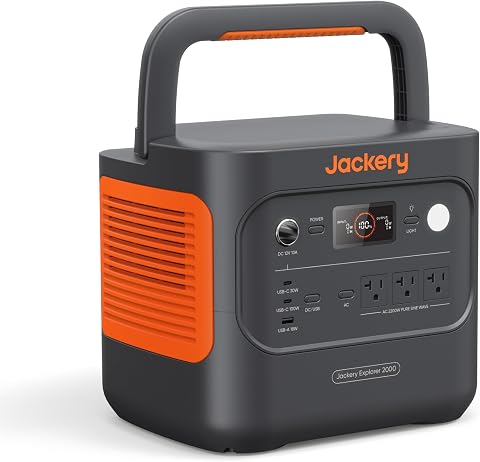 Jackery Explorer 2000 v2 Portable Power Station, 2042Wh, 2200W AC OutputView on Amazon →
- 3
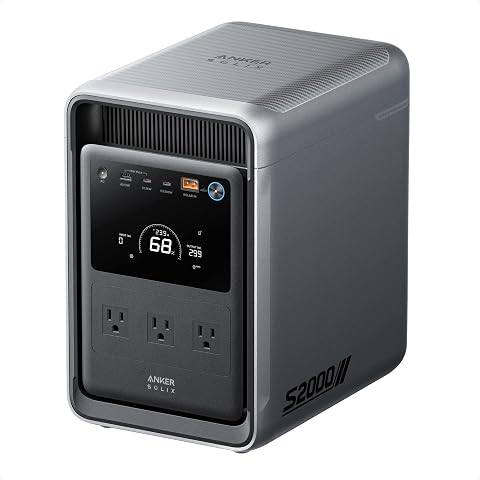 Anker SOLIX S2000 Portable Power Station, 2010Wh, 1500WView on Amazon →
- 4
 EcoFlow Delta 3 Portable Power Station, 1024Wh, 1800WView on Amazon →
- 5
 Jackery Explorer 1000 v2 Portable Power Station 1070Wh 1500WView on Amazon →
- 6
 BLUETTI Elite 100 V2 Portable Power Station for Camping 1024Wh 1800WView on Amazon →
- 7
 BLUETTI Portable Power Station AC180, 1152Wh LiFePO4 Battery Backup with 2 18…View on Amazon →
- 8
 BLUETTI Elite 30 V2 Portable Power Station 288Wh 600W LFP Solar GeneratorView on Amazon →
- 9
 Jackery Explorer 300 Portable Power Station, 293Wh Lithium Battery, Solar Gen…View on Amazon →
- 10
 Portable Power Station 500W, 519Wh Solar Generator BackupView on Amazon →
- 11
 Portable Solar Generator 300W with 60W Solar PanelView on Amazon →
- 12
 ALLWEI Portable Power Station 300W, 280Wh Solar Generator with Pure Sine Wave…View on Amazon →
- 13
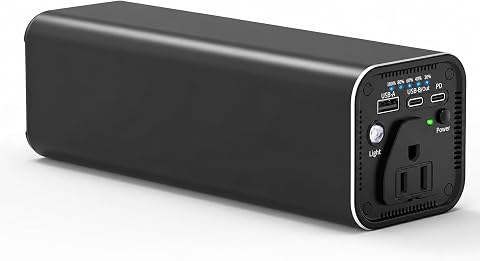 Zealott Portable Power Station 31200mAh 112.3Wh with 120W AC and 65W USB-C PDView on Amazon →
- 14
 MARBERO Portable Power Station 88Wh, 120W Surge, Solar Generator 24,000mAhView on Amazon →
- 15
 HOWEASY Portable Power Station, 120W (240W Peak) Solar GeneratorView on Amazon →
Matching Stations to Real Loads
The recommendations address a practical buying decision: a station with a large battery may offer longer runtime but can be difficult to carry, while a lighter unit may not have enough stored energy or output for appliances. That difference matters for campers choosing what they can transport and for households deciding whether a unit can support essential devices during an outage.
The guide’s focus on watts, watt-hours and surge demand can help readers avoid treating capacity as a substitute for appliance compatibility. However, buyers still need to confirm their own device requirements and the exact specifications of any model before relying on it for backup. Portable stations also do not guarantee uninterrupted power; runtime depends on load, conversion losses, battery condition and available recharging.
Products Worth Considering

Logitech MX Mechanical Wireless Illuminated Keyboard, Tactile Quiet, Graphite

Ledger Flex Crypto Wallet

Trezor Safe 7 Crypto Hardware Wallet with Bluetooth and Color Touchscreen
As an affiliate, we earn on qualifying purchases.
The Guide’s Buying Criteria
The source says it assessed the 15 products by power-to-weight ratio, battery chemistry, inverter efficiency, solar input and expandability. It describes its approach as focused on practical use rather than headline specifications, including whether a unit can recharge quickly and whether additional battery packs or replacement parts are available. The excerpt does not provide the underlying test protocol, measurements or evidence for those assessments.
Its other central distinction is use case. Small stations under 300Wh are described as suited to USB-C charging and light electronics, while larger units are framed for longer backup. The guide names the Jackery HomePower 3600 Plus as a high-capacity option that may be difficult for one person to move, but gives no weight or detailed performance results for that model in the supplied text.
“The primary tradeoff in this category is weight versus runtime.”
— ThorstenMeyerAI.com guide
Missing Model and Test Details
The supplied source excerpt does not include the full 15-product list, the ranking of each station, current prices or complete specifications. It also does not state when the guide was published or provide independent test data, named test conditions, or evidence supporting its claims about performance and durability. The reference to shopping for 2027 does not establish that every model or specification has been checked against current manufacturer information.
Readers should verify the exact model number, continuous and surge output, usable capacity, charging limits, warranty and battery chemistry with the manufacturer or seller. The source’s claims about powering refrigerators or other appliances are not guarantees of runtime; actual results depend on the appliance’s draw and startup surge, as well as the station’s condition and setup.
Verify Models Before Buying
The next useful step for shoppers is to compare the full product list against current manufacturer specifications and prices, then match those details to the devices they expect to run. For backup planning, calculate the combined load and likely runtime rather than relying on a general product label; for camping, account for the station’s weight and how it will be recharged.
No later update, testing schedule or product announcement is identified in the source material. The recommendations should be treated as a shopping guide, not a guarantee of performance. Portable power stations can be costly, and their usable capacity and output vary by model and operating conditions.
Key Questions
Which power station does the guide name as its overall pick?
The guide names the Anker SOLIX S2000, listing 2,010Wh of capacity and 1,500W of output. The supplied excerpt does not include independent test results or current pricing.
Which model is recommended for lighter trips?
The guide identifies the Jackery Explorer 300 as a compact option for day trips and light electronics. Check its current specifications to confirm that its output and ports fit your devices.
What is the difference between watt-hours and watts?
Watt-hours (Wh) describe stored energy and help estimate runtime. Watts (W) describe the power a station can supply at once, so they help determine whether it can run a particular device.
Does LiFePO4 chemistry mean a station will last a specific number of years?
No. The guide cites 3,000 or more charge cycles as a typical figure for LiFePO4 batteries, but cycle ratings are not the same as a guaranteed lifespan. Usage, storage, temperature and the manufacturer’s terms affect longevity.
Can a portable power station keep a refrigerator running during an outage?
It depends on the refrigerator’s running demand and startup surge, the station’s output and usable capacity, and how long power is needed. Confirm the appliance and station specifications; runtime is not guaranteed by a capacity rating alone.
Source: ThorstenMeyerAI.com