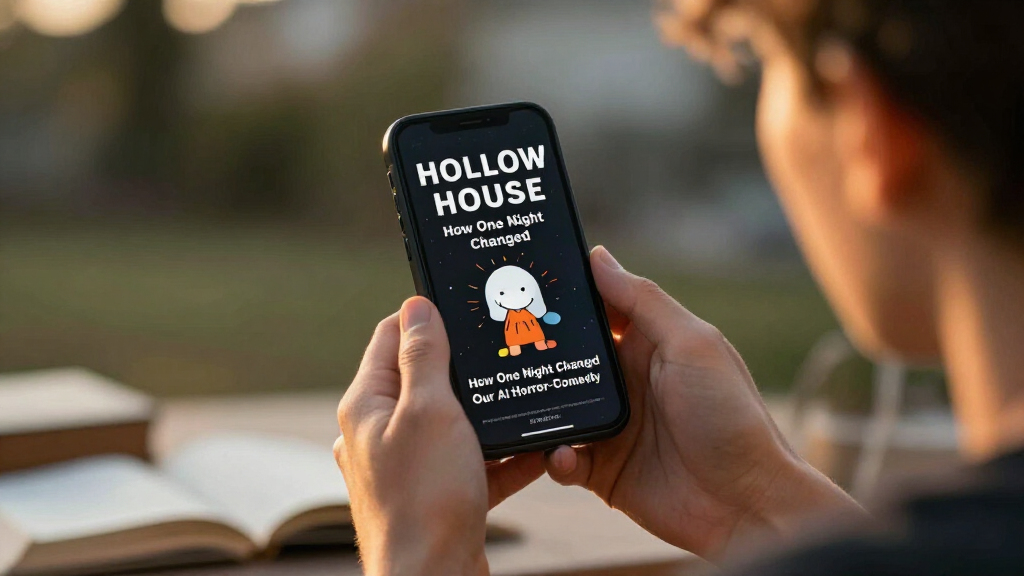
🔍 Read the full analysis: Hollow House: How One Night Changed Our AI Horror-Comedy on ThorstenMeyerAI.com

Get hardware and tech essentials delivered free with Prime
- Fast, free delivery on millions of items
- Prime Video, Amazon Music and more included
- Member-only deals all year
TL;DR
Thorsten Meyer says he made the 97-second AI horror-comedy Hollow House overnight on October 27, after rejecting an attractive but slow first cut. The account describes three versions, 2,220 Higgsfield credits and a final approach using three segments generated by one model with the full cast as references.
Thorsten Meyer has published Hollow House, a 97-second AI-generated horror-comedy, alongside an account of how he reworked it three times overnight after deciding the first version was boring. Meyer says the film, its characters, voices and sets were generated with AI tools, but the key creative decisions—especially the pacing and final edit—were made by people.
According to Meyer’s October 28 account on ThorstenMeyerAI.com, work began in the early evening of October 27 and continued until about 1:30 a.m. The finished short follows staff at an extreme haunted attraction as they confront a ghost who does not respond to a visitor’s safe word. The workers treat the supernatural problem like a workplace issue, including asking whether the ghost signed a waiver.
The first cut used 20 shots and ran 2 minutes 15 seconds. Meyer says the images looked good, but the sequence averaged 5.6 seconds per cut and lacked the brisk rhythm he wanted for comedy. A second version used 66 fast cuts and ran 2 minutes 21 seconds. The final version was assembled from three roughly 30-second segments generated with one model supplied with references for the full cast; it runs 1:37.
Meyer reports that all three versions used 2,220 Higgsfield credits, which he values at roughly $95 under his plan, along with about 2,100 ElevenLabs characters for music and sound effects. The source account also describes character reference images, generated start frames and video clips. These production details come from Meyer; the article does not provide an independent audit of the tools, costs or workflow.
Why the First Cut Failed
Meyer’s account points to a practical limitation in AI-generated filmmaking: consistent images did not guarantee an effective film. He says the first cut preserved faces, costumes and the haunted-house lighting, but its longer shots and sparse sound undercut the comic timing. The decisive change was not simply generating more footage; it was recognizing that the structure needed a different pace.
The case also shows how much human direction can remain in a production built from generated material. Meyer identifies three decisions as decisive: rejecting the first cut, giving a single model references for the cast, and applying the final colour grade. The models produced images, voices and sets, while a person judged what was working, revised the process and selected the final form.
For readers following generative video, the short offers a specific account of both capability and friction. Meyer says the tools could create a coherent cast and atmosphere, but struggled with particular actions and speech details. That distinction matters: a finished AI-made short does not establish that the underlying process is reliable or effortless. It can involve repeated generation, review and workarounds, with costs that vary by platform and subscription.
Products Worth Considering

Logitech MX Mechanical Full-Size Wireless Mechanical Keyboard, Tactile Quiet Switches, Backlit Keys, Bluetooth, USB-C, Multi-Device, Graphit

Apple MacBook Air 15-inch Laptop with M5 Chip, 16GB Memory, 512GB SSD, and Liquid Retina Display

Trezor Safe 5 Crypto Hardware Wallet with Color Touchscreen, Black Graphite
As an affiliate, we earn on qualifying purchases.
From Character Sheets to Three Cuts
Before generating video, Meyer says he created eight character reference sheets using Nano Banana 2 through the Higgsfield platform. Each image was made at 2K resolution and cost two credits, according to his account. The references were intended to limit visual drift, such as changes to hair or costume between shots, and were used to guide later frames and clips.
For the first version, the creator made a list of 20 shots, generated a still for each, then animated them with Google’s Veo 3.1 fast mode. Meyer says Veo generated speech and sound with the video. He compared the result with a short that inspired the project, estimating that the other film had about 74 cuts in 2:14, or around 1.8 seconds per cut. That comparison is Meyer’s count, and he says his own first cut averaged 5.6 seconds.
The workflow also included checking generated dialogue. Meyer says he used OpenAI’s Whisper speech-recognition model to compare transcripts with the script. That review caught a shouted “HEY!” rendered as spoken letters and a garbled final line that needed another take. He reports further problems with a requested head turn, a floating character and a backward-bending stunt, describing alternative prompts or edits used to address some of them.
“terribly boring and amateurish”
— Thorsten Meyer, creator of Hollow House
What the Account Leaves Open
The production details are reported by Meyer, and the supplied account does not include independent confirmation of the credit total, dollar estimate or exact timing. It also does not give a separate breakdown of costs for each of the three versions, so the reported overall cost cannot be assigned to a particular stage of the workflow.
The source material describes the third version’s production method but does not fully detail how its three segments were edited together, how much manual post-production was involved, or which parts of the final sound and colour work were created outside the named AI services. The short’s stated premise and production approach are clear; a complete technical record is not provided.
Meyer says the structure was inspired by an AI horror-comedy short shared on X and says his script, characters and jokes are his own. The supplied information does not identify the other short or provide its creator’s account, so the relationship between the works cannot be independently assessed here.
Where the Film Goes From Here
The published account includes behind-the-scenes material such as character sheets, start frames, failed attempts and a contact sheet of the final cut, along with a link to the film. The source does not announce a follow-up short, a wider release plan or additional production milestones.
For now, the next step for viewers is to compare the finished 1:37 film with Meyer’s description of the three versions and the choices that separated them. Any further claims about the process—such as more detailed tool settings, post-production work or independently verified costs—would require additional information from the creator or the relevant platforms.
Key Questions
What is Hollow House?
Hollow House is a 1:37 horror-comedy short about a ghost joining the scare crew at an extreme haunted attraction. Creator Thorsten Meyer says its characters, voices and sets were AI-generated.
How many versions did Meyer make?
Meyer says he made three versions overnight. The first used 20 shots, the second used 66 fast cuts, and the final version was made from three roughly 30-second segments and runs 1:37.
How much did the production cost?
Meyer reports using 2,220 Higgsfield credits, which he estimates at about $95 under his plan, plus roughly 2,100 ElevenLabs characters for music and sound effects. The cost figures are his account and are not independently verified.
What changed between the first and final cuts?
Meyer says the first cut looked good but felt too slow, averaging 5.6 seconds per cut. He shifted the generation and editing approach, and says the final version’s pacing worked better for the horror-comedy.
What remains uncertain about the production?
The account does not independently verify the reported costs or provide a full breakdown of manual editing, sound work and other post-production. It also does not identify the AI short that Meyer says inspired the film’s structure.
Source: ThorstenMeyerAI.com