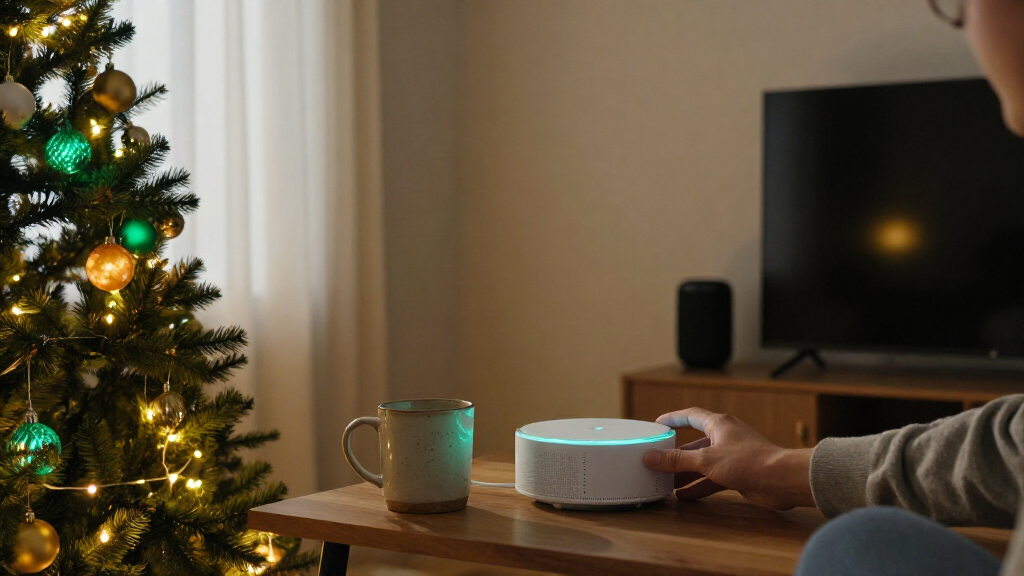

🔍 Read the full analysis: A Holiday Guide To AI Devices That Automate Your Home on ThorstenMeyerAI.com

Get hardware and tech essentials delivered free with Prime
- Fast, free delivery on millions of items
- Prime Video, Amazon Music and more included
- Member-only deals all year
TL;DR
AI-enabled home devices can interpret voice, motion, temperature and other signals to automate tasks, but their capabilities vary: some adapt to patterns while others follow rules users configure. Before buying, identify one problem to solve and check compatibility, offline behavior, privacy settings and how easily routines can be changed.
A consumer holiday shopping guide, the original analysis, advises people considering AI-powered home devices to focus on a specific household task, rather than a product’s AI label, and to check compatibility, offline behavior and data collection before buying. The guide notes that devices marketed as intelligent range from systems that may adapt to household patterns to timers that follow rules set by users.
The guide identifies smart speakers, thermostats, lights, cameras, locks and robotic vacuums as examples of AI devices for the home that can use software to respond to voice commands, motion, temperature readings, schedules or energy use. Depending on the device, those inputs may trigger actions such as adjusting heat, switching on a light or sending an alert. The guide cautions that a “smart” or AI label alone does not establish that a device learns from its owner.
To illustrate the difference, the guide contrasts a light programmed to turn on at a particular time, which follows a fixed schedule, with a thermostat that may adapt after repeated adjustments. It advises shoppers to consult product documentation about what information a device uses, how it uses that information, and whether users can review, edit or disable automatic adjustments.
The guide recommends starting with one routine that solves a recurring annoyance, such as turning off downstairs lights at bedtime or warming the home before a typical morning. It advises buyers to check which apps, hubs, phones and voice assistants a product requires, then test a routine for missed triggers, false alarms and delays. As an example, the guide says a motion-activated entry light may need sensitivity and timing adjustments to avoid reacting to a pet or switching on during daylight.
Choose a repeated chore first, then buy the device that solves it with a clear trigger and a reversible routine.
Check whether a feature learns from changing signals or simply follows a schedule you set.
Confirm Matter, hub, app, and assistant compatibility for the exact features you want.
Review data collection, storage, deletion, account security, and offline behavior before placing cameras, speakers, or sensors.
Treat energy savings as a result to measure in your own home, not a guarantee on the box.
Practical Checks Before You Buy
The guide says home automation may reduce repeated tasks, but a device that triggers at the wrong time can create new ones. It gives examples such as a motion sensor mistaking a pet for a person or a thermostat assuming a household keeps the same hours. Testing one routine, the guide recommends, can help assess reliability in the actual home before adding more devices.
According to the guide, compatibility and privacy can also affect whether a purchase works as expected. A device may depend on a particular app, hub or assistant, and some features may rely on an internet connection or cloud processing. The guide advises buyers to check what data a product collects and whether key functions remain available offline. It does not provide product-by-product privacy or reliability ratings.
Products Worth Considering

Apple MacBook Air 15-inch Laptop with M5 Chip, 16GB Memory, 512GB SSD, Liquid Retina Display, and 12MP Center Stage Camera (Midnight)

Logitech MX Creative Console with 9 Customizable Keys, Graphite

Apple MacBook Pro 14-inch with M5 Pro, 18-core CPU, 20-core GPU, 64GB RAM, 1TB SSD, Space Black
As an affiliate, we earn on qualifying purchases.
From Timers to Adaptive Devices
The guide distinguishes ordinary automation from adaptive behavior: a user-created timer repeats an instruction, while a device described as learning may change its actions based on patterns or changing conditions. It gives a thermostat responding to repeated schedule adjustments as an example, but does not identify a model or verify any product’s performance.
On that basis, the guide advises consumers to ask what signals a device uses and what action follows, rather than relying on broad marketing language. It also recommends checking whether a routine can be corrected when circumstances change, such as a late workday or a trip away from home. The material provides general selection guidance, not a list of newly released products, holiday prices or independent test results.
Product Claims Need Specifics
The consumer guide does not identify particular devices, manufacturers, prices, release dates or independent tests. It does not quantify energy savings or establish how widely devices support offline operation. Because claims that a product learns household habits may depend on its model and settings, the guide recommends consulting product-specific documentation before drawing conclusions.
The guide also does not provide a complete list of supported standards or services, specify what data individual products collect, or describe how long companies retain it. Those details remain questions for individual product listings and privacy policies, rather than confirmed facts about the market as a whole.
Test One Routine at Home
The guide’s suggested next step is to choose a simple task, select the signal that should trigger it, and verify that the device works with the household’s existing setup. It recommends running the routine for about a week and noting missed activations, false triggers, delays and remaining manual steps. Users can then revise or disable the rule before deciding whether another device would help.
For holiday shoppers, the guide recommends checking each product’s requirements and controls before purchase, then reviewing its behavior in ordinary daily use. The source material reports no specific product launch, sale or future announcement.
Key Questions
What makes a home device AI-powered?
According to the consumer guide, the label may refer to software interpreting signals such as voice, motion, temperature or energy use and triggering an action. The guide cautions that capabilities vary: some devices may adapt to patterns, while others simply follow a schedule or rule configured by the user.
How can I tell if a device learns or just follows a schedule?
The guide recommends checking the product’s explanation of how it uses inputs and whether it changes behavior based on patterns. A light programmed to turn on at 6:30 p.m. follows a fixed rule; an adaptive feature may adjust its behavior. Look for controls that let you review, edit or switch off automatic changes.
What should I check before buying a smart-home device?
The guide advises confirming that the product works with your existing app, hub, phone and voice assistant. It also recommends checking which functions require an internet connection, what data the product collects and whether its routines can be changed. The guide suggests starting with one clear household task.
Can smart-home devices work without internet?
The guide makes no general claim that these devices work offline. It says offline behavior can depend on the product and feature, so shoppers should check the manufacturer’s documentation to see which controls remain available without a connection.
How should I test an automated routine?
The guide recommends running it for about a week and watching for missed triggers, false alarms and delays. Adjust the rule or turn it off if it does not solve the problem reliably. As an example, it notes that a motion sensor may need changes to its sensitivity or the hours when it is active.
Source: ThorstenMeyerAI.com