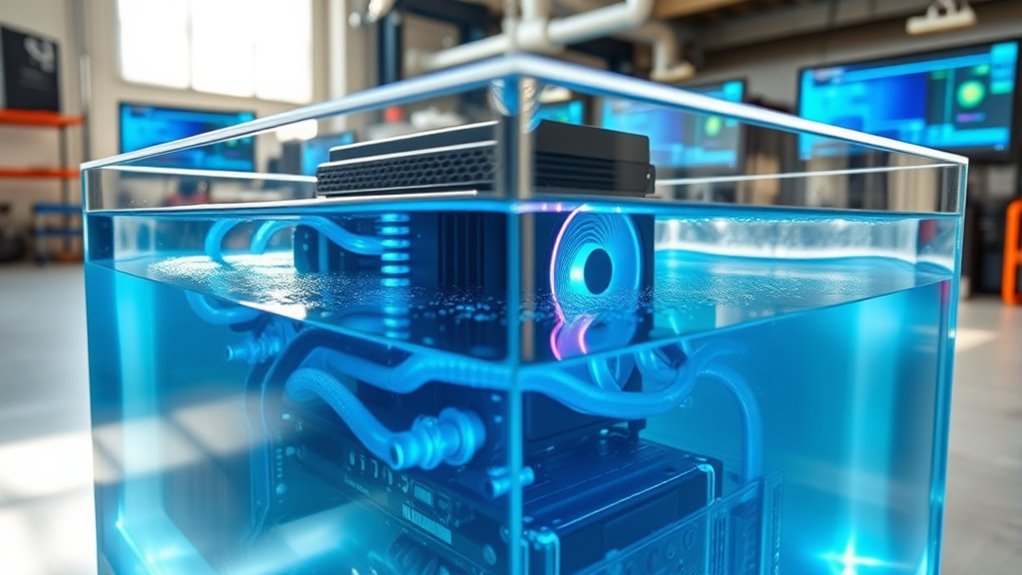

Implementing DIY immersion cooling can drastically cut your mining costs in hot climates by efficiently managing heat and reducing energy consumption. By submerging your hardware in non-conductive fluid, you prevent overheating and thermal throttling, which means less reliance on fans and air conditioning. This method lowers cooling expenses and improves hardware longevity. If you keep exploring, you’ll discover detailed steps to set up your own system and maximize savings in challenging environments.

Get hardware and tech essentials delivered free with Prime
- Fast, free delivery on millions of items
- Prime Video, Amazon Music and more included
- Member-only deals all year
Key Takeaways
- Immersion cooling provides efficient heat dissipation, reducing reliance on expensive air conditioning in hot climates.
- DIY setups with dielectric fluids lower cooling costs and improve hardware performance stability.
- Proper system design prevents leaks and ensures consistent circulation, maximizing cost savings.
- Using immersion cooling extends hardware lifespan, decreasing replacement and maintenance expenses.
- It enables high-density mining operations without overheating, optimizing energy use and lowering operational costs.
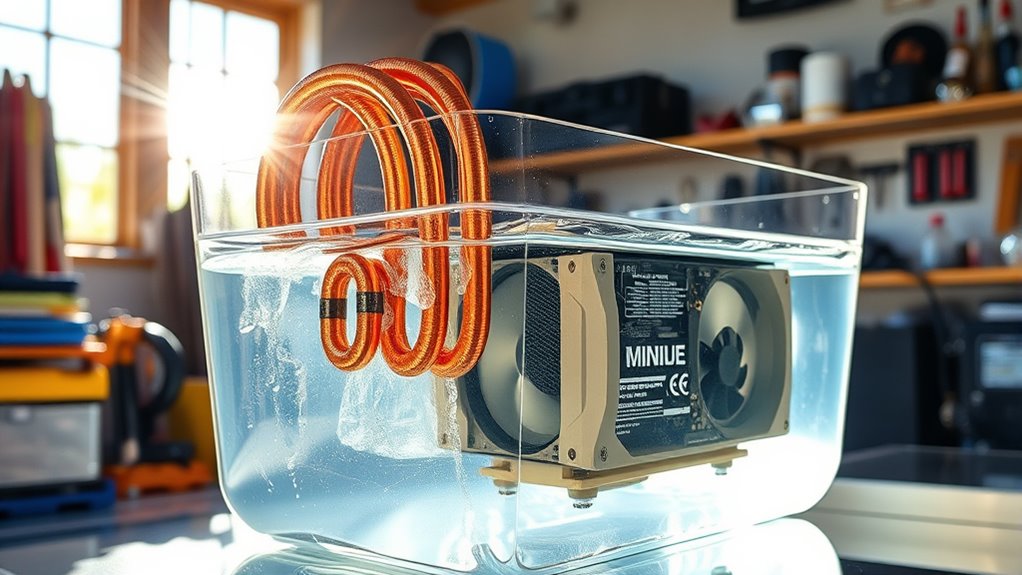
Ever wondered how to keep your crypto mining hardware running cooler and more efficiently without breaking the bank? DIY immersion cooling offers a compelling solution, especially if you’re operating in hot climates or managing high-density mining farms. Instead of relying on traditional air cooling, you fully submerge your mining hardware in a dielectric, non-conductive fluid that absorbs heat directly from the components. This method delivers more effective heat transfer, preventing thermal throttling and overheating, which are common issues with air-cooled setups. Plus, you don’t need specialized hardware built specifically for immersion; most standard ASIC miners can be adapted with some modifications.
Setting up a DIY immersion cooling system involves a few key steps. First, carefully place your ASIC miner inside a tank, using a spacer or rack to prevent direct contact with the bottom and allow fluid flow around all sides. Then, slowly fill the tank with dielectric fluid until the miner is fully submerged, leaving some headspace to avoid spills. Connect tubing from the tank to a pump, then to a radiator, and back to the tank, making sure all connections are secure with hose clamps. Before powering your miner, run the pump alone to check for leaks and ensure smooth fluid circulation. Once everything looks good, turn on your miner and closely monitor temperatures during the first 5 to 10 minutes to catch any signs of overheating or system malfunctions. Incorporating proper system design can significantly improve the efficiency and safety of your immersion setup.
Immersion cooling offers rapid, uniform heat transfer, keeping your miners at ideal temperatures even under heavy workloads. It avoids typical air cooling problems such as inconsistent temperature control and thermal throttling, ensuring your equipment runs at peak performance without slowdowns. This method also markedly cuts down on energy consumption by reducing reliance on power-hungry fans and ventilation systems. As a result, you’ll see lower electricity bills and reduced cooling costs, especially in hot climates where air cooling becomes less effective and more expensive. Additionally, maintaining a stable temperature environment minimizes hardware stress, extending the lifespan of your equipment and decreasing the frequency of repairs or replacements. Immersion cooling also helps prevent dust buildup and reduces the risk of electrical shorts, ensuring safer operation over time. Despite its advantages, DIY immersion cooling does come with challenges. You’ll need to source safe, compatible dielectric fluids—these can be costly or hard to find—and ensure your system is leak-proof to prevent damage. Proper design of the cooling loop is essential, including an adequate flow rate and radiator capacity to dissipate heat effectively. You’ll also need to adapt your miner’s sensors or fans to work with the submerged setup, as traditional air-cooled components won’t function properly underwater. Regular maintenance is necessary to monitor fluid quality and system performance over time. Overall, with careful planning and execution, DIY immersion cooling can drastically reduce your mining costs and improve efficiency, making it a smart choice for miners in challenging environments.
dielectric fluid for immersion cooling
As an affiliate, we earn on qualifying purchases.
As an affiliate, we earn on qualifying purchases.
Frequently Asked Questions
How Long Does DIY Immersion Cooling Systems Typically Last?
Your DIY immersion cooling system typically lasts between 5 to 10 years, depending on maintenance and component quality. Regularly check and replace dielectric fluids, clean heat exchangers, and inspect pumps for wear. Proper temperature control and using durable materials extend its lifespan. By following a consistent maintenance schedule and ensuring all connections are leak-proof, you maximize your system’s longevity and efficiency, making your investment worthwhile over the years.
What Safety Precautions Are Necessary During Installation?
During installation, you need to prioritize safety precautions. Make certain you’re using non-conductive dielectric fluids and store them in well-ventilated areas. Wear proper PPE and train personnel on handling fluids safely. Protect hardware components from fluid intrusion, ensure compatibility, and maintain cleanliness. Prepare the environment with ample space, proper ventilation, and heat rejection systems. Install leak detection, fire suppression, and emergency shutdown systems, and follow local safety regulations to prevent accidents.
Can Immersion Cooling Be Used With Existing Mining Hardware?
Think of your hardware as a ship needing a new, efficient coolant system. Yes, immersion cooling can work with your existing mining hardware if you choose the right fluids and containers. You’ll need to guarantee compatibility and make some adjustments, but it’s doable. Proper setup and maintenance are key. With the right approach, you can boost performance, extend hardware life, and enjoy quieter, more energy-efficient mining.
What Are the Environmental Impacts of DIY Cooling Liquids?
When considering the environmental impacts of DIY cooling liquids, you should be aware that improper disposal can cause soil and water contamination, especially if chemicals are toxic or non-biodegradable. Leaks pose risks to the environment, and water-based mixtures can increase electrical hazards. To minimize harm, you need proper handling, disposal, and regulatory compliance. Using eco-friendly, closed-loop systems helps reduce environmental risks and promotes sustainability.
How Does Immersion Cooling Affect Hardware Warranty Coverage?
You should know that immersion cooling can complicate your hardware warranty coverage. Many warranties cover defects caused by standard use, but improper installation or unauthorized modifications—common in DIY setups—may void your warranty. Always check your manufacturer’s guidelines and approved coolants. Staying compliant and maintaining detailed records helps protect your warranty. If you follow the rules, you can enjoy the benefits of immersion cooling without risking your warranty coverage.
DIY immersion cooling kit for mining hardware
As an affiliate, we earn on qualifying purchases.
As an affiliate, we earn on qualifying purchases.
Conclusion
As you explore DIY immersion cooling, you’ll find that cooling your mining setup in hot climates isn’t just a solution—it’s a coincidence waiting to happen. Imagine the surprise when your equipment runs cooler and more efficiently, all thanks to your homemade system. By embracing this approach, you’re not only slashing costs but also turning a potential problem into an unexpected advantage. Sometimes, the best ideas come when you least expect them, making your mining journey even more rewarding.
submersible mining hardware cooling tank
As an affiliate, we earn on qualifying purchases.
As an affiliate, we earn on qualifying purchases.
immersion cooling pump and radiator set
As an affiliate, we earn on qualifying purchases.
As an affiliate, we earn on qualifying purchases.
Halloween Picks
halloween
As an affiliate, we earn on qualifying purchases.