
When choosing a U.S. crypto exchange, prioritize platforms with strong security measures like multi-factor authentication and cold storage, and confirm they hold proper licenses from regulators such as FinCEN or state authorities. Compare fee structures to find low-cost options that suit your trading style, and verify that the exchange supports the assets you want to trade. Besides safety and cost, consider the available features and compliance — stay tuned to discover how to select the best fit for your goals.
Key Takeaways
- Verify the exchange’s security features, such as multi-factor authentication and cold storage practices.
- Ensure the platform holds proper regulatory licenses and complies with federal and state regulations.
- Compare trading and withdrawal fees to find a cost-effective option aligned with your trading volume.
- Check the asset selection and trading tools offered to match your investment and experience level.
- Confirm the exchange’s security audits, insurance coverage, and reputation for safeguarding user assets.
Assessing Security Measures and Regulatory Compliance

When choosing a U.S. crypto exchange, evaluating security measures and regulatory compliance is vital to safeguard your assets. You should look for platforms like Coinbase, Kraken, or Gemini, which prioritize security through features like multi-factor authentication (MFA). These exchanges often store most assets in cold storage, reducing hacking risks. Check if they have extensive insurance policies that protect your digital assets against theft or breaches. Additionally, ensure they undergo regular security audits and penetration testing to identify vulnerabilities. Regulatory compliance is equally important; reputable exchanges must have the necessary licenses, such as state money transmitter licenses, and follow federal regulations from FinCEN and the SEC. Transparent reporting and adherence to security standards indicate a trustworthy platform that puts your assets’ safety first. Moreover, understanding the security protocols employed by exchanges can help you better assess their commitment to protecting your investments.
Comparing Fee Structures and Cost Efficiency
Understanding the fee structures of U.S. crypto exchanges is essential for maximizing your investment efficiency. Different platforms charge various fees based on transaction type, volume, and services. Some exchanges, like Coinbase, have higher trading fees but offer a wide range of cryptocurrencies. Others, like Kraken, provide lower maker fees but higher instant buy costs. Be aware of withdrawal fees and minimums, which can add up over time. Fee schedules often include maker and taker fees, deposit and withdrawal costs, and staking charges. To compare, consider this snapshot:
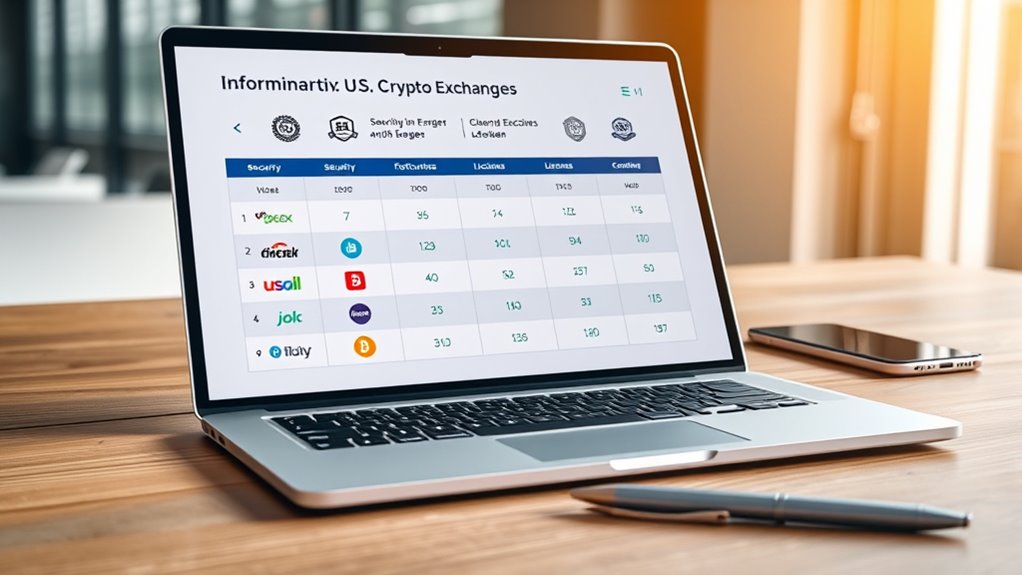
| Exchange | Trading Fees | Withdrawal Fees | Special Charges |
|---|---|---|---|
| Coinbase | 0%–2.99% | Varies | Staking fees |
| Kraken | 0.40% (Pro) | Low | Margin trading |
| Gemini | 0.35% | Moderate | Insurance fees |
| Crypto.com | Up to 3% | High | Native token perks |
Additionally, understanding the regulatory licenses that exchanges hold can help ensure compliance and security for your assets.
Evaluating Asset Selection and Trading Capabilities

A key factor in choosing a crypto exchange is the variety of assets and the trading features it offers. You want a platform that provides access to a broad selection of cryptocurrencies, enabling diversification and strategic flexibility. Look for exchanges like Coinbase and Crypto.com that support hundreds of tokens, including popular and emerging assets. Trading capabilities also matter; active traders benefit from advanced tools such as real-time charts, margin trading, and APIs for automation. If you’re new, a user-friendly interface with simple order types is essential. Consider whether the exchange offers features like staking, lending, or derivatives, which can enhance your trading options. Evaluating these aspects guarantees you select a platform aligned with your trading goals and experience level. Inspirational quotes about fatherhood can also provide motivation and guidance as you navigate your trading journey.
Frequently Asked Questions
How Do Exchanges Handle User Privacy Beyond Security Protocols?
You’re often protected by exchanges through strict data privacy policies that limit sharing your personal info and anonymize transactions. Many platforms implement privacy features like encrypted data storage and minimal data collection. Some also offer optional identity verification, giving you more control over your privacy. Regular audits and compliance with regulations guarantee they handle your data responsibly, so your personal info stays secure and private beyond basic security protocols.
What Are the Dispute Resolution Processes for Transaction Errors?
Don’t worry if you make a transaction error; most exchanges have dispute resolution processes. You typically start by filing a complaint through their customer support, providing details of the mistake. Many platforms offer a formal review process, and some have dedicated dispute teams. While resolution times vary, staying proactive and providing clear evidence increases your chances of a quick fix. Always read the platform’s policies to understand their specific procedures.
How Frequently Do Exchanges Update Their Security and Compliance Policies?
Exchanges typically update their security and compliance policies at least annually or whenever new threats or regulations emerge. You should regularly check their official announcements or security pages for updates. Leading U.S. platforms like Coinbase, Kraken, and Gemini often implement updates quickly after industry developments or regulatory changes. Staying informed helps you guarantee your assets remain protected and that you’re compliant with current standards.
Are There Any Hidden Fees Not Listed in the Fee Schedules?
Yes, some exchanges may have hidden fees not listed upfront. You might encounter charges for currency conversions, inactivity fees, or high withdrawal costs, especially with certain payment methods. Always read the fine print and check for additional costs beyond the advertised fee schedule. To avoid surprises, review the platform’s terms, ask customer support about any unclear fees, and compare multiple exchanges to find the most transparent options.
How Do Exchanges Ensure Compliance With Evolving U.S. Regulations?
Exchanges stay compliant by regularly updating their policies to match U.S. regulations. They conduct internal audits, implement KYC and AML procedures, and work with legal experts to adapt quickly. You’ll see them obtaining necessary licenses, submitting to security audits, and publishing transparency reports. This proactive approach helps exchanges avoid legal issues, protect your assets, and maintain trust while steering through evolving regulations.
Conclusion
Choosing the right crypto exchange is like finding a safe harbor in a storm—you want security, fair fees, and reliable trading options. By evaluating security measures and regulatory licenses, comparing costs, and analyzing available assets, you’ll navigate the crypto seas confidently. Remember, a well-chosen exchange is your sturdy vessel, helping you sail smoothly toward your financial goals. Stay vigilant, do your research, and steer wisely to guarantee a secure and profitable journey.