You might have heard about the LIBRA token's shocking 85% drop shortly after its launch, especially with the backing of the Argentine President. The situation worsened when reports surfaced about a staggering $87 million withdrawal by the development team. This betrayal raised serious questions about the token's future and stability. With a majority of its supply controlled by just a few addresses, what does this mean for investors and the broader cryptocurrency landscape?

Get hardware and tech essentials delivered free with Prime
- Fast, free delivery on millions of items
- Prime Video, Amazon Music and more included
- Member-only deals all year
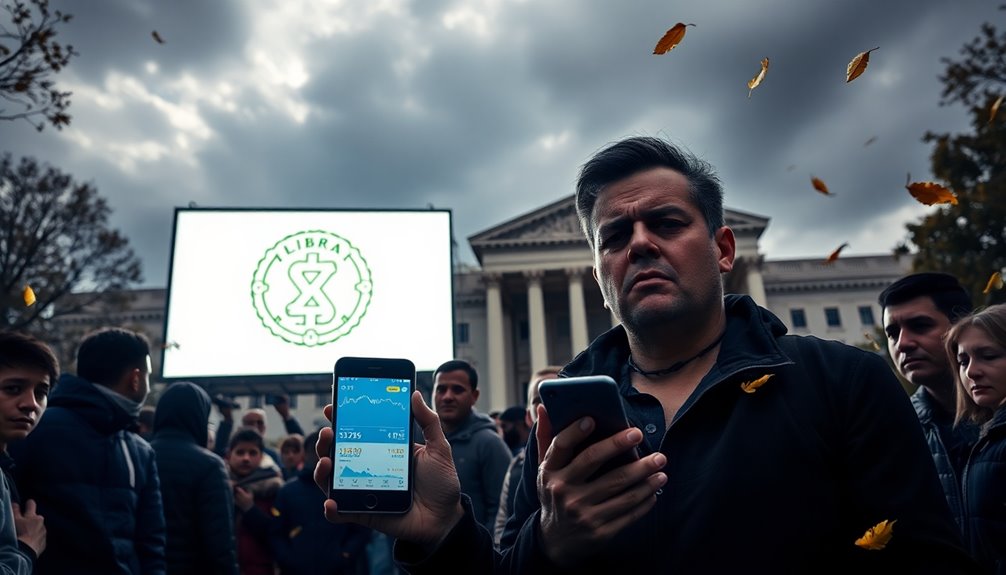
As LIBRA Token launched with a promising fully diluted valuation of $4.5 billion, few could have predicted the steep decline that followed. Initially, it seemed like a golden opportunity, but the excitement quickly turned into despair as the token experienced an 85% price drop, devastating its market capitalization.
You might've felt the shock ripple through the crypto community when developers pulled $87 million in USDC and SOL from liquidity pools, a move that many saw as a blatant act of betrayal. This incident triggered widespread concerns about the LIBRA token crash, heightening the anxiety among investors.
Centralization concerns soon came to the forefront, as reports indicated that 82% of LIBRA's supply was concentrated in just a few addresses. You could sense the unease among investors, with such a significant proportion of the token controlled by a select few raising red flags about the project's sustainability. This concentration likely fueled fears, leading many to panic sell their holdings.
The trading volume spiked, reflecting a wave of desperation that swept across the market. If you were among the top 100 holders, you likely faced average losses exceeding 56% from your initial purchase price of $1.6. For retail investors, the experience was even more brutal, as the collapse triggered a staggering $4.5 billion loss in capital within a matter of days.
The sentiment across the cryptocurrency landscape soured, with many feeling disillusioned and questioning the viability of similar projects. As the crash unfolded, technical indicators painted a grim picture. The Relative Strength Index (RSI) plummeted from 70 to 15, signaling extreme overselling.
The Moving Average Convergence Divergence (MACD) confirmed a bearish trend as the MACD line fell below the signal line. You could also see the price drop below the lower Bollinger Band, indicating heightened volatility. On platforms like Binance, trading volumes soared to $2.1 billion, a clear sign of panic selling.
The repercussions of LIBRA's decline rippled through the broader market, impacting other cryptocurrencies, including memecoins like DOGE and SHIB. Even major players like Bitcoin and Ethereum felt the strain as market sentiment turned bearish.
The Crypto Fear & Greed Index plummeted, reflecting a shift in investor psychology. As you navigated this tumultuous landscape, it became evident that the high volatility associated with meme coins posed significant risks, leaving many to reconsider their investment strategies in this unpredictable market.
cryptocurrency wallet hardware ledger
As an affiliate, we earn on qualifying purchases.
As an affiliate, we earn on qualifying purchases.
cryptocurrency trading security hardware
As an affiliate, we earn on qualifying purchases.
As an affiliate, we earn on qualifying purchases.
cryptocurrency investment tracking app
As an affiliate, we earn on qualifying purchases.
As an affiliate, we earn on qualifying purchases.
cryptocurrency portfolio management software
As an affiliate, we earn on qualifying purchases.
As an affiliate, we earn on qualifying purchases.
Fall Picks
fall essentials
As an affiliate, we earn on qualifying purchases.