
TL;DR

Get hardware and tech essentials delivered free with Prime
- Fast, free delivery on millions of items
- Prime Video, Amazon Music and more included
- Member-only deals all year
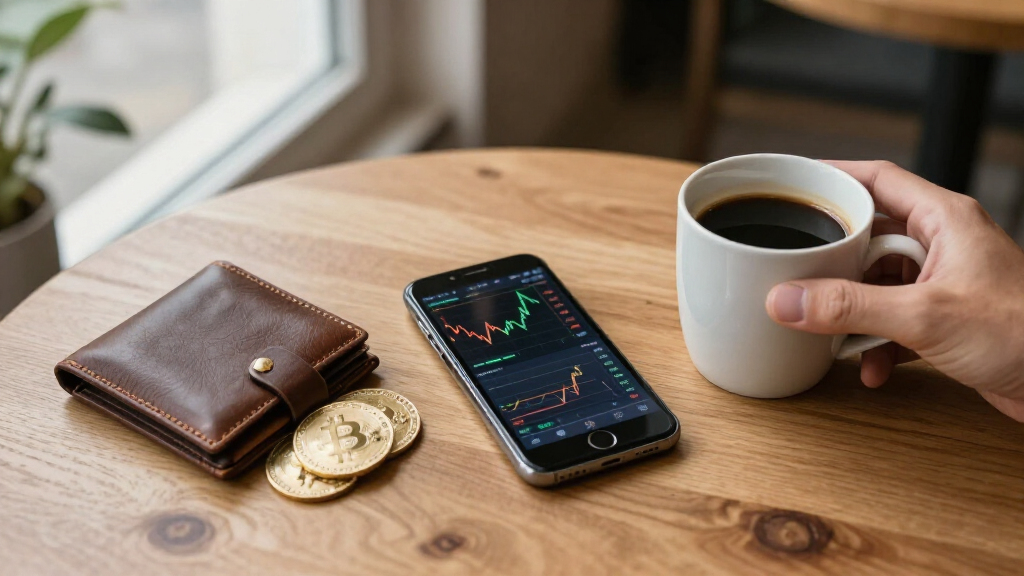
Bitcoin is not dead today: BTC trades at $78,861, up 1.0% over 24 hours, while the Crypto Fear & Greed Index reads 69, or Greed [1]. The snapshot shows an active market, but volume, liquidations, ETF flows, and network data still need verification before anyone can make a broader claim about Bitcoin’s health.
A supposedly dead asset is trading at $78,861, climbing 1.0% in 24 hours, and sitting beside a sentiment gauge marked Greed. That is the September 1, 2026 snapshot, and it makes the latest Bitcoin obituary sound more like a fire alarm triggered by burnt toast than evidence of a collapsed building [1].
This article gives you a clear answer for today while separating three ideas that often get mashed together: Bitcoin’s market price, its investment case, and the operation of its network. Bitcoin has no CEO, quarterly earnings call, or central office where the lights can suddenly go dark. Its price can tumble while miners keep producing blocks, just as its price can surge while leverage and weak liquidity make the market fragile.
The available figures offer a useful pulse, not a full medical chart. They do not include spot trading volume, ETF flows, liquidations, funding rates, weekly performance, or current network measurements. Those gaps matter, and this is not financial advice: crypto remains highly volatile, historical recoveries promise nothing, and you can lose a large share of any money exposed to it.
Bitcoin traded at $78,861 and gained 1.0% over 24 hours on September 1, 2026, so today’s available price data does not support the claim that it is dead.
The Fear & Greed Index reading of 69 describes a greedy market mood, not network security, future returns, or a reliable trading signal.
Hyperliquid’s 4.1% gain and TRON’s 1.5% decline created a 5.6-point spread, showing active rotation within the top-10 ranking.
A serious Bitcoin failure case would require several structural problems at once, such as lost network security, broken liquidity, failed infrastructure, and s…
Before reacting, verify spot volume, leverage, liquidations, ETF flows, macro conditions, network operation, and access instead of relying on one price candle.
| Coin | Price (USD) | 24h |
|---|---|---|
| Bitcoin (BTC) | $78,861 | +1.0% |
| Ethereum (ETH) | $2,475 | +1.3% |
| Tether (USDT) | $1 | -0.0% |
| BNB (BNB) | $690 | +0.6% |
| XRP (XRP) | $1.39 | +1.7% |
| USDC (USDC) | $1 | -0.0% |
| Solana (SOL) | $104 | +1.1% |
| TRON (TRX) | $0.33 | -1.5% |
| Figure Heloc (FIGR_HELOC) | $1 | — |
| Hyperliquid (HYPE) | $84.24 | +4.1% |
Data: CoinGecko · Fear & Greed 69/100 (Greed) · 2026-09-01
Today’s numbers give you a clear verdict
Is Bitcoin dead today? No—the supplied September 1, 2026 snapshot shows BTC at $78,861, up 1.0% over 24 hours, while the Crypto Fear & Greed Index reads 69, or Greed [1]. Those figures describe an active, positive day, not a market vanishing into silence.
According to CoinGecko’s point-in-time market snapshot, Bitcoin also remains the largest asset in the listed ranking [1]. A live quoted price, a measurable daily move, and active comparison with other assets show that price discovery is taking place. The obituary fails its simplest test: the market still has a pulse.
Suppose you opened a trading app after seeing a dramatic social post that said Bitcoin was finished. Instead of a black screen and frozen order book, you would find a $78,861 quote and a green 1.0% daily change. That does not make Bitcoin safe, cheap, expensive, or destined to rise; it only shows that the dramatic claim does not match today’s reported price action.
The contrast works both ways. A green day does not prove long-term strength, just as a red day does not prove protocol failure. Bitcoin trades around the clock, so its 24-hour percentage shifts as the comparison point moves. Treat the number like one frame from a film, not the entire plot.
As an affiliate, we earn on qualifying purchases.
The top-10 board shows rotation, not a shutdown
Is Bitcoin dead today? The top-10 board says the market is mixed but active: six named volatile assets posted gains, TRON fell 1.5%, two dollar stablecoins stayed near $1, and Figure Heloc had no reported 24-hour figure [1]. That pattern looks like market rotation, not a synchronized failure.
| Asset | Price | 24-hour move |
|---|---|---|
| Bitcoin | $78,861 | +1.0% |
| Ethereum | $2,475 | +1.3% |
| Tether | $1 | -0.0% |
| BNB | $690 | +0.6% |
| XRP | $1.39 | +1.7% |
| USDC | $1 | -0.0% |
| Solana | $104 | +1.1% |
| TRON | $0.33 | -1.5% |
| Figure Heloc | $1 | — |
| Hyperliquid | $84.24 | +4.1% |
Hyperliquid gained 4.1%, making it the largest 24-hour gainer in the group, while TRON lost 1.5% and ranked as the largest decliner [1]. The distance between those moves was 5.6 percentage points. When different assets move at different speeds and in different directions, traders are still making distinctions rather than abandoning everything at once.
Imagine a portfolio holding equal amounts of Bitcoin, Hyperliquid, and TRON. The screen would show green beside two positions and red beside one, even though all three sit under the crypto label. That small scene explains why a broad headline can mislead you: crypto is a crowded train station, not a single train moving on one track.
The two stablecoins tell a different story. Tether and USDC remained around $1, which fits their price-stability role, but this table alone says nothing about reserves, redemption conditions, or trading depth. It reports prices and daily changes; it does not certify the health of every system behind them.
As an affiliate, we earn on qualifying purchases.
A Greed reading tells you the mood, not the future
Is Bitcoin dead today? A Fear & Greed reading of 69 says traders were leaning toward Greed, while BTC was up 1.0% in the same snapshot [1]. That combination argues against a panic label, yet neither number measures whether miners, exchanges, custody systems, or the protocol are healthy.
Sentiment gauges work like the noise inside a packed stadium. The roar tells you how the crowd feels, but it cannot tell you whether the concrete beneath the seats is sound. A Greed score can accompany rising prices and crowded positions, while fearful sentiment can appear near either further losses or a rebound.
Bitcoin is not dead merely because its price is falling, volatility is elevated, or sentiment is fearful. On this snapshot, though, the price is rising and sentiment is Greed. The common misconception says mood creates a verdict; the reality is that mood supplies context and sometimes exposes how aggressively traders have leaned in one direction.
Consider two alerts arriving on your phone within a minute. One says, Bitcoin surges as optimism returns; the other warns, Greed may signal overheating. Both can describe the same data because each adds an interpretation. The clean fact is narrower: the index measured 69, and no standalone sentiment reading can identify a market bottom, a peak, or tomorrow’s direction.
Use sentiment as a temperature reading, not a trade button. When excitement gets loud, check whether volume, leverage, and spot demand support it. When fear fills the screen with red candles, apply the same discipline instead of treating dread as proof that the network has failed.
As an affiliate, we earn on qualifying purchases.
Here is what a genuine Bitcoin failure would look like
Bitcoin would look structurally dead only if several load-bearing parts failed together: security, block production, liquidity, access, and participation. A red price candle, even a brutal one, measures what buyers and sellers agreed on at that moment; it does not prove that Bitcoin’s transaction rules or network stopped working.
Think of Bitcoin as a bridge with a busy toll market beside it. The toll price can swing wildly while the bridge still carries traffic. A market drawdown concerns the toll price; a structural failure means cracked supports, closed entrances, missing crews, and no safe path across.
- Network security weakens persistently: Mining participation and the computing power protecting transaction history deteriorate for an extended period.
- A protocol flaw resists repair: A vulnerability undermines transaction history or Bitcoin’s monetary rules.
- Liquidity and price discovery break: Buyers and sellers can no longer trade through dependable venues at workable spreads.
- Access collapses across regions: Custody failures, exchange breakdowns, and coordinated restrictions block broad participation.
- People abandon the system: Developers, users, miners, and capital providers leave for a sustained period.
A hypothetical 35% price drop could be painful without meeting any item on that list. Blocks could still be produced, holders could still transfer BTC, and liquid markets could continue operating. A functioning network does not erase investment losses, but it shows why price weakness and technical death are different claims.
Bitcoin’s supply rules cap total issuance at 21 million BTC, and the April 2024 halving cut the block subsidy from 6.25 BTC to 3.125 BTC [2]. Scarcity helps define the system, but scarcity alone does not create demand. A limited-edition object can still lose buyers; protocol rules are one beam in the bridge, not the whole structure.
Today’s market snapshot contains no reported evidence of those combined failures, but it also lacks live hash rate, difficulty, block production, and incident data. The honest verdict stays narrow: today’s prices do not support the death claim, while current network health still needs its own verified measurements.
As an affiliate, we earn on qualifying purchases.
Check these five signals before trusting the next obituary
Today’s snapshot answers the headline but cannot support a full health verdict because it omits spot volume, derivatives data, funding, open interest, liquidations, ETF flows, weekly return, all-time-high distance, and live network data. Treat the $78,861 price as one bright dashboard light, not the whole instrument panel.
- Verify price across a named venue and time window. Bitcoin trades continuously, so record the exchange or data provider, currency, timestamp, and comparison point. A 24-hour move viewed at breakfast can differ from the number shown after lunch.
- Compare spot demand with leverage. Check spot and derivatives volume, funding rates, open interest, and forced liquidations. A fast move driven by automatic closures can look stronger or weaker than underlying buyer demand.
- Read regulated-product flows carefully. Daily Bitcoin ETF inflows or outflows can reveal demand through brokerage channels, but redemptions can also reflect rebalancing, profit-taking, or arbitrage. Current September 2026 figures need live confirmation.
- Inspect network operation. Review hash rate, mining difficulty, block production, fees, and reported technical incidents. Rising mining participation can support a security argument, but it cannot promise a higher market price.
- Check access and infrastructure. Look for exchange failures, custody incidents, new restrictions, banking disruptions, and major regulatory actions. One broken venue is serious for its users without automatically meaning the global network has stopped.
Here is why the leverage check matters. Suppose a trader controls a $100,000 position using only $10,000 of capital. A move against that position can trigger an automatic sale, which adds another market order and can push the price harder in the same direction. A chain of liquidations can turn a sliding candle into a waterfall without proving that long-term demand disappeared.
The same care applies to claims about money leaving the market. A drop in market capitalization does not equal the amount of cash withdrawn, because market cap multiplies the latest price by circulating supply. If the last traded price falls, the displayed value of every unit falls with it, even though nobody sold every unit.
Missing data is not evidence of danger, and it is not permission to assume safety. It is a boundary around the verdict. Before publication or any personal decision, verify the current values behind each of these five checks and label anything that remains unknown.
ETFs and the halving changed access, not Bitcoin’s risk
Is Bitcoin dead today? The 2024 ETF launch and halving made the market easier to access and new supply slower, but neither event guarantees demand, liquidity, or future gains [2]. They changed the plumbing around Bitcoin; they did not replace volatility with a smooth escalator.
US spot Bitcoin ETFs launched in January 2024, allowing investors to gain regulated brokerage exposure without managing private keys directly [2]. For someone who already uses a retirement or brokerage account, buying a regulated product can feel more familiar than moving coins to a hardware wallet. That convenience expands access while adding fund fees, market-hour differences, and reliance on custodial systems.
An ETF outflow is also less dramatic than the phrase institutions are abandoning Bitcoin suggests. A portfolio manager might redeem shares to rebalance risk, take profits, raise cash, or close an arbitrage trade. Sustained outflows can pressure demand, but the current flow total for September 1, 2026 is not included here and should not be guessed.
The April 2024 halving reduced the subsidy paid for each mined block from 6.25 BTC to 3.125 BTC [2]. Imagine a mining operation with humming fans, hot metal racks, and a power bill that arrives like clockwork: its output per block fell while many operating costs remained. More efficient hardware and cheaper energy gained value, yet the halving did not command buyers to pay a higher price.
Institutional access and reduced issuance can support a long-term investment argument, but they also create fresh links to macro conditions, regulated finance, and professional leverage. Interest rates, bond yields, dollar strength, and appetite for risky assets can still shake the market. Wider access changes who can enter; it does not remove the door to losses.
Build a calm response before the screen turns red
The practical response is to separate a market pulse from a personal decision. Today’s 1.0% rise and Greed score of 69 describe the crowd, while your cash needs, time horizon, portfolio concentration, and ability to absorb a sharp loss describe your risk [1]. One is public data; the other lives in your balance sheet.
Start by writing down what would make your position unsafe before the market becomes noisy. A person saving a home deposit needed in six months faces a different problem from someone using a small amount of long-term risk capital. The same Bitcoin candle can be a minor wobble for one person and a financial emergency for the other.
- Set a loss boundary: Decide how much exposure your finances can withstand without threatening rent, debt payments, taxes, or emergency savings.
- Separate facts from headlines: Record the price, time window, volume, leverage, flows, and network data before reacting to a dramatic claim.
- Watch concentration: A volatile asset can dominate portfolio risk even when it represents a smaller share of the money invested.
- Review custody: Direct ownership, exchange balances, and regulated products carry different operational risks.
- Use a written decision rule: Base any action on your existing plan rather than a sudden burst of fear or greed.
Bitcoin can remain operational while your investment loses substantial value. Network survival and personal financial safety are separate tests.
That warning cuts through the common misconception. Asking only is whether Bitcoin alive? leaves out the question that affects your daily life: can you tolerate its volatility without being forced into a bad decision? Bitcoin has suffered deep drawdowns before and later recovered, but past recovery does not guarantee another one.
This article does not tell you to buy, sell, or hold BTC. It gives you a way to keep a green 1.0% move from creating false confidence and a future red candle from creating blind panic. Calm comes from knowing which facts would change your view before the market starts shouting.
Frequently Asked Questions
Is Bitcoin actually dead today?
No, not based on today’s reported market data. Bitcoin trades at $78,861 and is up 1.0% over 24 hours, while sentiment reads Greed at 69 [1]. A wider structural verdict still requires current liquidity, network, ETF-flow, and infrastructure data.
Does a Fear & Greed score of 69 mean Bitcoin will keep rising?
No. A reading of 69 describes the market’s current mood, not its next direction. Greed can appear during strong demand, crowded leverage, or both, so you need volume and positioning data before drawing a wider conclusion.
Why can Bitcoin rise while TRON falls?
Crypto assets have different buyers, liquidity, narratives, and trading positions. On September 1, Bitcoin gained 1.0% while TRON lost 1.5% and Hyperliquid gained 4.1% [1]. That split is a concrete example of capital rotating within the market rather than every asset moving as one block.
Could Bitcoin still fall sharply from here?
Yes. Bitcoin remains a highly volatile asset, and one positive day does not set a floor or predict the next move. Macro shocks, leverage, weaker demand, regulation, security incidents, or infrastructure failures can all pressure its price.
Is now a good time to buy Bitcoin?
No market pulse can answer that for you. The decision depends on your risk tolerance, time horizon, cash needs, concentration, custody plan, and ability to withstand severe losses. This article reports market conditions and offers a framework; it does not provide personal financial advice.
Do spot ETFs and Bitcoin halvings guarantee higher prices?
No. Spot ETFs broaden regulated access, and the halving reduces new issuance, but demand still sets the other side of the equation. Fees, liquidity, macro conditions, risk appetite, and market positioning can outweigh a simple scarcity story.
What should you watch after today’s market pulse?
Watch spot volume, derivatives leverage, liquidations, ETF flows, macro news, network security, exchange solvency, and regulation. Compare several signals instead of searching for one magic indicator. Confirm timestamps and providers because Bitcoin trades continuously and its 24-hour change keeps moving with the clock.
Conclusion
The crisp takeaway is simple: Bitcoin is not dead today based on the available September 1 snapshot, but $78,861 and a 1.0% gain cannot certify its broader health. Keep price, investment risk, and network operation in separate boxes. That small habit protects you from both cheerful hype and black-bordered obituaries.
Before you react to the next dramatic alert, check the full dashboard and return to your written risk limits. Volatility can cause severe losses, no past rebound promises another, and no sentiment score can make a personal decision for you. One candle may light up the screen like a flare; it should not pull the fire alarm by itself.
Halloween Picks
halloween
As an affiliate, we earn on qualifying purchases.