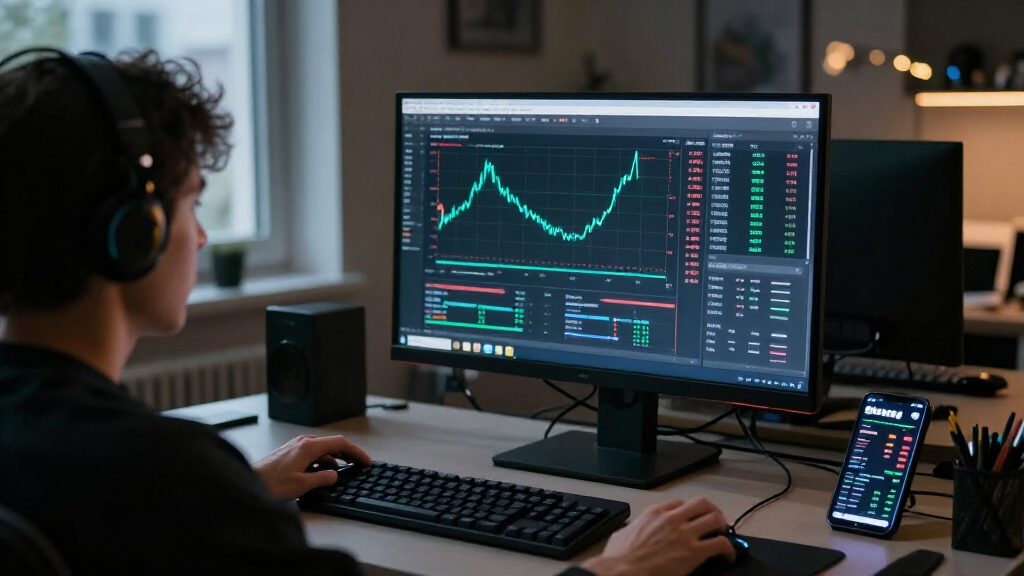

🔍 Read the full analysis: How AI Evaluated A Viral “100X Trade” Strategy Across 13,000 Tests on ThorstenMeyerAI.com

Get hardware and tech essentials delivered free with Prime
- Fast, free delivery on millions of items
- Prime Video, Amazon Music and more included
- Member-only deals all year
TL;DR
ThorstenMeyerAI.com reports that two simulated versions of a viral Polymarket 5-minute crypto strategy lost money across about 13,000 test windows on BTC, ETH, SOL and XRP. The paired trade that aimed to lock in profit filled on both sides just three times in 9,486 attempts; the test used simulated funds, not real trades.
ThorstenMeyerAI.com says two simulated strategies based on a viral Polymarket “100x trade” lost money across about 13,000 test windows on four cryptocurrencies. In the larger paired-bid test, both sides filled just three times in 9,486 attempts, while the account reports a paper loss of $280; no real funds were used.
The test examined the mechanism behind a YouTuber’s reported trades on Polymarket’s five-minute BTC Up/Down market. The source says the video showed a $1 trade returning $50, alongside examples described as 48x and 100x, and that transaction hashes could be checked on PolygonScan. The YouTuber had not established whether the result could be repeated, saying it was a rare event and that he did not yet have results. ThorstenMeyerAI.com presents its report as a follow-up to that question.
In the paired version, the bot placed 2-cent bids on both Up and Down. Under the market’s binary payout, one side settles at $1 per share and the other at $0. If 50 shares on each side were both bought for 2 cents apiece, the winning side would pay $50 against a $2 total cost, for a $48 net gain. But that outcome depends on both bids filling. The test reports three double-fills among 9,486 paired attempts, or 0.032%. It records 1,297 loser-only fills, 22 winner-only fills and 8,162 attempts with neither side filled.
A second version placed bids after the market close only on the side the bot’s price feed identified as the winner. The source reports eight fills from 3,482 posts, with four fills settling and all four losing. The test’s paper-fill model required a real taker to sell into a simulated bid. Its author attributes the losses to a timing gap: the bot’s price reading shortly after close could differ from the price used for Polymarket’s official settlement.
Rare Fills Undercut the Trade
The results illustrate why a striking one-off return does not establish that a trade can be repeated. The proposed paired strategy depended on finding stale orders on both sides of a market near its close. According to the report, double-fills were exceptionally rare, while the more common one-sided fill left the simulated bot holding the losing position.
That imbalance matters to anyone evaluating viral trading demonstrations: the high-return examples may be genuine, but they do not reveal how often the setup appears or what happens on unsuccessful attempts. The test provides a reported forward sample rather than a guarantee about all future market conditions. Its findings are limited to the tested period, coins, execution assumptions and strategy rules. They do not establish how a real account would perform, including the effects of fees, latency, available capital or changing liquidity.
The author describes the strategies as net-negative and says no cancel timing made the paired version profitable. These are results from the publisher’s own simulated experiment, not an independent audit or a forecast. Crypto markets and prediction-market positions can carry a risk of losing funds; the report itself used simulated money only.
Products Worth Considering

Ledger Nano Gen5 Crypto Wallet with Touchscreen, Black

Ledger Nano X Bluetooth Crypto Hardware Wallet

Ledger Flex Crypto Wallet – Neptune Blue
As an affiliate, we earn on qualifying purchases.
Polymarket’s short-duration crypto markets ask whether a coin’s price will finish above or below its opening level for a specified window. In the source’s description, the winning outcome pays $1 per share and the losing outcome pays nothing. The trade reconstructed by the report attempted to buy both outcomes cheaply, so that a completed pair would pay out regardless of which direction won.
The source says the original large return came from buying the winning side at a very low price after the outcome had effectively been decided. It proposes stale liquidity as a possible explanation: an order may have remained on the book after it was no longer current, allowing another trader to buy it cheaply. That can create an opportunity in principle, but the key question is whether such orders appear often enough—and whether the trader can capture them without being filled on the losing side instead.
The report is identified as Part 4 of an ongoing series and is dated May 21, 2026. Its authors say the two strategies ran for two days across BTC, ETH, SOL and XRP in 24 parallel experiments. The available source gives aggregate counts and outcomes but does not provide enough methodological detail here to independently reproduce every test.
“This is going to take time because this is a rare event… probably I didn’t have anything for you in this video about the results.”
— The YouTuber, as quoted by ThorstenMeyerAI.com
Limits of the Simulated Test
The report does not establish how the strategies would perform with real orders or under different market conditions. It says the work used simulated money and a paper-fill model in which a bid filled only when a real taker sold into it. The source does not provide a complete independent audit of the model, all parameter choices or the underlying trade-level data in the material supplied.
It is also unclear how the reported outcomes would change after transaction costs, latency, order competition, market impact or different settlement timing. The author says the post-close version’s price reading sometimes disagreed with Polymarket’s official resolution, but the supplied report does not give a full breakdown of those discrepancies or the official settlement process for each test. The results therefore describe this particular setup and sample, not every strategy that might target stale orders.
Further Testing and Settlement Data
The report is presented as Part 4 of an ongoing series, but the source material does not give a date for another installment or specify a planned next experiment. Further evidence would need to show the full methodology and trade-level results, including how prices were sampled, how orders were timed and how simulated fills were matched to market activity.
For now, the published test’s next implication is a question for replication: whether independent testing across more periods and with transparent settlement and execution data produces similar fill rates. Until that work is available, the roughly 13,000-window result should be read as a reported simulation, not proof of future performance or a reason to risk real funds.
Key Questions
What was the viral Polymarket strategy?
It attempted to buy both Up and Down shares cheaply in a five-minute crypto market. If both sides filled at low prices, the winning side’s payout could exceed the combined cost, regardless of which outcome settled.
How often did both sides fill in the test?
ThorstenMeyerAI.com reports three double-fills in 9,486 paired attempts, or 0.032%. The report says loser-only fills occurred much more often: 1,297 times.
Did the testing use real money?
No. The publisher says both strategies were tested with simulated money. Its paper-fill model required a real taker to sell into a simulated bid, but the experiment did not involve the author’s real funds.
Why did the post-close strategy lose?
The report says the bot chose a side using a price reading taken shortly after the market closed, before the final settlement price was locked in. In the four fills that settled, the bot’s identified winner did not match the official outcome.
Does this prove the strategy can never work?
No. The report describes losses for two implementations over a two-day simulated test on four coins. It does not prove how every implementation or future market period would perform, and real trading carries a risk of loss.
Source: ThorstenMeyerAI.com