TL;DR
Bitcoin is not dead today. On August 28, 2026, BTC traded at $79,533, down 0.7% in 24 hours, with the Crypto Fear & Greed Index at 73/100 (‘Greed’). A small daily decline reflects weaker short-term demand, not a failing network — blocks, liquidity, and trading all continue normally.
Bitcoin has been declared dead hundreds of times over the years — after every crash, every exchange blowup, every brutal winter. So when you wake up to a red candle and see BTC at $79,533, down 0.7% on the day, it’s fair to ask the question again: is Bitcoin dead today?
Short answer: no. Not even close. Today’s numbers paint a picture of a calm, liquid, slightly-bored market — not a funeral. The Crypto Fear & Greed Index sits at 73 out of 100, which reads as “Greed”. That’s the opposite of panic.
In this pulse, you’ll get the actual data for August 28, 2026, a framework for judging “dead or alive” that works on any future date, and the warning signs that would genuinely matter. No predictions. No hype. Just the scoreboard.
On August 28, 2026, Bitcoin traded at $79,533 (-0.7% in 24h) with the Fear & Greed Index at 73/100 (Greed) — a calm market, not a dying one.
No top-10 coin moved more than 2% today; the biggest decliner was XRP (-1.9%) and the biggest gainer was Figure Heloc (+3.4%), and both major stablecoins held…
Judge Bitcoin’s health by network function — block production, hash rate, liquidity, stablecoin pegs — not by daily price moves.
An exchange failure, ETF outflow, or miner stress hurts businesses around Bitcoin; it does not by itself mean the protocol is dead.
Past survival through 50%+ drawdowns is a historical fact, not a guarantee of future returns — volatility and severe losses remain real risks.
| Coin | Price (USD) | 24h |
|---|---|---|
| Bitcoin (BTC) | $79,533 | -0.7% |
| Ethereum (ETH) | $2,509 | -0.2% |
| Tether (USDT) | $1 | +0.0% |
| BNB (BNB) | $704 | -0.7% |
| XRP (XRP) | $1.43 | -1.9% |
| USDC (USDC) | $1 | +0.0% |
| Solana (SOL) | $106 | -0.7% |
| TRON (TRX) | $0.34 | +0.9% |
| Figure Heloc (FIGR_HELOC) | $1.04 | +3.4% |
| Hyperliquid (HYPE) | $84.54 | +0.4% |
Data: CoinGecko · Fear & Greed 73/100 (Greed) · 2026-08-28
Today’s Verdict: The Numbers Say Bitcoin Is Very Much Alive
Bitcoin is not dead on August 28, 2026 — it traded at $79,533, down 0.7% in 24 hours, per CoinGecko market data. That’s a shrug, not a collapse. To understand why, it helps to calibrate what “normal” looks like: Bitcoin’s historical daily volatility routinely runs 3–5%, and drawdowns of 50%+, sometimes 80%+ have occurred multiple times without the network missing a beat. Against that baseline, -0.7% isn’t just “not death” — it’s statistically indistinguishable from noise. A market that’s dying doesn’t drift; it breaks.
Look at the wider board and the story stays the same. Ethereum sits at $2,509 (-0.2%). BNB at $704 (-0.7%). Solana at $106 (-0.7%). These are fractional moves — the kind of day where traders check the charts twice and go make coffee. The biggest decliner in the entire top 10 was XRP at -1.9%. The biggest gainer was Figure Heloc at +3.4%. Why does low dispersion matter? Because crisis markets are violent and correlated — everything dumps at once as forced sellers hit bids. When assets move independently in small increments, it tells you positioning is unhurried and no one is being liquidated en masse. Dispersion is a liquidity signature.
Now layer in sentiment. The Crypto Fear & Greed Index reads 73/100 — “Greed”. This matters because the index aggregates momentum, volatility, volume, and social signals — it’s a distillation of how the crowd is actually positioned, not how it’s talking. When a market is genuinely dying, that gauge bleeds toward single digits and stays there for weeks, because fear compounds when there’s no bid. Greed at 73 means investors are still leaning in, maybe too comfortably — which carries its own risk (complacency), but complacency is a risk of the living, not the dead.
Markets feel like weather. A 0.7% down day is light drizzle on a Tuesday — not a hurricane. If Bitcoin were dead, you’d see double-digit daily crashes, evaporating liquidity, and Fear readings pinned near zero. Today shows none of that. The honest interpretation: demand softened slightly in the last 24 hours, sellers had a marginal edge, and nothing structural changed. That’s it.

Bitkey Bitcoin Hardware Wallet – The Most Secure Way to Buy, Store and Manage Bitcoin
- Bitcoin Exclusive Design: Dedicated hardware wallet for Bitcoin
- All-in-One App Management: Compare prices, send, receive, and track
- Enhanced Security: Three-key self-custody system, no seed phrases
As an affiliate, we earn on qualifying purchases.
As an affiliate, we earn on qualifying purchases.
The Top-10 Scoreboard: Who’s Up, Who’s Down, Who Doesn’t Care
The top-10 cryptocurrencies by market cap on August 28, 2026 show a market drifting sideways with almost no dispersion — which is itself evidence of health. When things break, moves get violent and correlated. Today they’re just… quiet.
| Asset | Price | 24h Change |
|---|---|---|
| Bitcoin (BTC) | $79,533 | -0.7% |
| Ethereum (ETH) | $2,509 | -0.2% |
| Tether (USDT) | $1.00 | 0.0% |
| BNB (BNB) | $704 | -0.7% |
| XRP (XRP) | $1.43 | -1.9% |
| USDC (USDC) | $1.00 | 0.0% |
| Solana (SOL) | $106 | -0.7% |
| TRON (TRX) | $0.34 | +0.9% |
| Figure Heloc (FIGR_HELOC) | $1.04 | +3.4% |
| Hyperliquid (HYPE) | $84.54 | +0.4% |
Two details deserve a second look — and each carries more information than the headline numbers do.
First, the stablecoins: USDT and USDC both holding perfectly at $1.00. Stablecoins are the plumbing of crypto — most trading pairs settle through them, most institutional flow enters the market through them, and most leveraged positions are collateralized with them. That’s why their pegs matter so much: in every real crypto crisis (USDC’s brief depeg during the March 2023 banking scare, Terra’s collapse in 2022), a stablecoin wobble amplified panic because traders suddenly couldn’t trust their safe asset. Pegs holding at $1.00 while prices drift means capital is parked inside the system waiting, not fleeing it. That distinction — “parked” versus “gone” — is a big part of the difference between a correction and an exodus.
Second, gainers exist. TRON up +0.9%, Hyperliquid up +0.4%, Figure Heloc up +3.4%. A dead market doesn’t produce green entries in the top 10 — and not just for symbolic reasons. Selective gains mean there’s still discretionary capital being actively allocated, that buyers are making distinctions between assets rather than dumping everything indiscriminately. Compare that to a genuine crisis day, when the entire board flushes red at once and liquidation cascades wipe out leveraged traders by the thousands. The tradeoff worth noting: quiet boards like today’s tell you the market is healthy but they tell you nothing about direction. Low dispersion is a snapshot of stability, not a forecast of it.

Cryptocurrency Trading Logbook: Log| Track| Monitor| Research
As an affiliate, we earn on qualifying purchases.
As an affiliate, we earn on qualifying purchases.
How to Actually Judge “Dead or Alive” in 60 Seconds
“Is Bitcoin dead” is the wrong question if you only check price. Here’s why: price aggregates demand, sentiment, and macro conditions into one number, which means it moves for dozens of reasons that have nothing to do with whether the system functions. ETF outflows, a hawkish central bank, or one large holder taking profit can each knock several percent off the price while every block still gets mined on schedule. Conversely, a failing network would eventually show in price — but by then you’d have had much earlier, clearer signals. Price is the last domino, not the first.
So the real test is whether Bitcoin still works — and you can run that test yourself in about a minute, on any date, without trusting anyone’s opinion. It’s the difference between reading headlines and reading the machine.
- Check block production. Open any block explorer. Are new blocks arriving roughly every 10 minutes? If yes, the network is alive. Full stop. This is the single most important check because it’s binary: either transactions are settling or they aren’t, and every other function — payments, exchanges, custody — depends on it.
- Check hash rate. Is substantial mining power still securing the chain? Hash rate is an estimate, but a collapse would be obvious. The implication matters: hash rate represents real-world capital (hardware, electricity) that miners can’t quickly redeploy elsewhere, so sustained high hash rate is evidence that the people with the most skin in the game still consider the network economically viable.
- Check liquidity. Are exchanges quoting tight spreads with real order-book depth? Dead markets have empty books. Wide spreads and thin depth mean your exit gets worse precisely when you need it — illiquidity is what turns a paper loss into a trapped position.
- Check stablecoin pegs. USDT and USDC holding at $1.00 — like today — means the market’s plumbing works. It also means capital is choosing to stay inside crypto’s rails rather than exit to banks, which is a revealed-preference signal no survey can replicate.
- Check sentiment extremes. Fear & Greed at 73 (Greed) is normal market noise. Readings near 0 sustained for weeks would be a genuine distress signal — the duration matters more than the level, because a single panic day is normal while prolonged extreme fear means buyers have structurally stepped away.
Think of it like checking whether a hospital patient is healthy. Price is mood. Network function is heartbeat. A patient can be in a bad mood with a perfectly strong pulse — which is exactly today’s situation: BTC down 0.7% in price, with blocks, liquidity, and stablecoins all functioning normally. The practical payoff of this framework is that it separates the two things headlines deliberately blur: a bad day for investors versus a bad day for the system. The first happens weekly. The second has never happened.
What would real warning signs look like? A persistent consensus failure — nodes and miners disagreeing about the chain’s state for hours or days. Sustained inability to produce blocks. A catastrophic cryptographic compromise that would force a painful, trust-eroding hard fork. Or coordinated restrictions severe enough to kill practical access across major markets. Each of these shares one trait: they attack the machine itself, not the mood around it. None of them describes August 28, 2026.
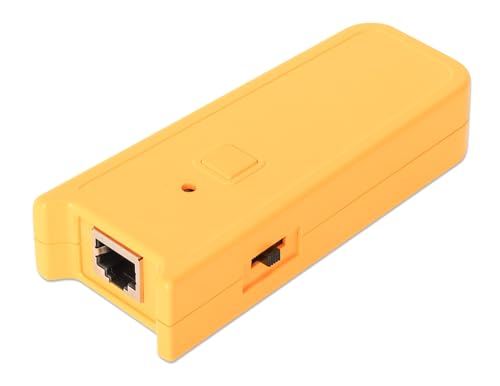
Intellinet Ethernet Cable Port Detector Tester Tool – Locates Port Connections, LED Indicates – for RJ45 Keystone Jacks and Patch Panels with LEDs – 3 Yr Mfg Warranty – 780179
- Port Connection Locator: Identifies RJ45 port connections
- Three Mode Operation: LED lights, flashes, or stays on
- Compatible Devices: Works with specific Intellinet jacks and patch panels
As an affiliate, we earn on qualifying purchases.
As an affiliate, we earn on qualifying purchases.
Why Bitcoin Keeps Getting Killed (and Keeps Not Dying)
Bitcoin’s obituaries are a genre of their own. Journalists, analysts, and executives have pronounced Bitcoin dead repeatedly since 2011 — after the Mt. Gox collapse, after the 2018 winter, after the 2022 bear market that followed Terra and FTX. Each time, the network kept producing blocks roughly every 10 minutes, like a heartbeat monitor that ignores the drama in the room. Worth asking: why do intelligent people keep getting this wrong? Mostly because they evaluate Bitcoin with the wrong mental model — treating it like a company that can go bankrupt or a currency that can be hyperinflated, when it’s neither.
Why does it survive? Structure. Bitcoin launched in 2009 with no central operator. Its supply is capped at 21 million BTC, and new issuance is cut roughly every four years through halvings — the April 2024 halving reduced the block subsidy from 6.25 BTC to 3.125 BTC. No CEO can shut it down, no quarterly earnings miss can bankrupt it, and no single government can switch it off. The deeper point is that Bitcoin’s design trades efficiency for resilience: there’s no fast way to upgrade the protocol, no leader to make quick decisions, no support line to call. That slowness is a feature — it’s exactly what makes capture or unilateral shutdown so hard — but it’s also a genuine tradeoff, since the network adapts to problems at the pace of rough consensus rather than executive order.
That’s also why “dead” claims usually conflate different things. An exchange collapse, a custodian failure, or an ETF outflow is a problem for a business built around Bitcoin — not the protocol itself. When FTX imploded in 2022, Bitcoin’s price cratered, but the chain never stopped. The distinction has real implications for you as a holder: losses from counterparty failures (leaving coins on an exchange) are avoidable with self-custody, while losses from price declines are not avoidable — only manageable through sizing. Confusing the two categories leads people to either panic unnecessarily or, worse, to feel falsely safe holding funds on a fragile intermediary during stress.
One honest caveat: past survival is not a guarantee of future returns. Bitcoin doesn’t generate cash flow like a bond or a company, so its price can’t be anchored to earnings or coupons — it rests entirely on scarcity, security, liquidity, adoption, and market expectations, all of which can shift. Resilience is a fact about its history, not a promise about your portfolio. Prices are volatile, and severe losses remain possible.

CRYPTO TECHNICAL ANALYSIS FOR BEGINNERS: Master Chart Reading, Identify Winning Setups, and Build Confidence in the Crypto Market—Even If You’re Starting from Scratch
As an affiliate, we earn on qualifying purchases.
As an affiliate, we earn on qualifying purchases.
What Fear & Greed at 73 Actually Tells You (and What It Doesn’t)
A Fear & Greed Index reading of 73/100 — “Greed” means market participants are optimistic, maybe complacent. The index blends price momentum, volatility, trading volume, social media chatter, and dominance into one gauge — which is both its strength and its limitation. As a composite, it smooths out any single noisy input; but precisely because it’s a blend, it can’t tell you why the crowd feels a certain way, and it lags fast-moving events. Today it says the crowd leans greedy while prices drift slightly down — a mild disconnect worth unpacking.
Here’s the practical read. Extreme readings are contrarian signals in the folk wisdom of trading: Extreme Fear historically clusters near bottoms, Extreme Greed near local tops. The mechanism behind the folklore is coherent — extreme greed implies leverage and euphoria already deployed, leaving little dry powder to push prices higher, while extreme fear implies sellers exhausted and sellers-to-come already out. But treat that as weather folklore, not physics: the timing is unknowable, extremes can always get more extreme, and sentiment gauges don’t predict price. No one — not this index, not any analyst — can reliably call tops or bottoms.
What the reading does confirm today is that panic is absent, and that’s the part relevant to the “is Bitcoin dead” question. Dying markets don’t produce Greed readings. They produce Fear readings that stay pinned near zero for weeks while volume dries up and exchanges quietly restrict withdrawals — a feedback loop where fear reduces activity, which reduces liquidity, which deepens fear. Compare a real crisis: late 2022, when the index sat deep in Extreme Fear for months after FTX’s collapse. That’s what distress looks like on this gauge, and crucially it’s the persistence, not any single print, that made it a signal. 73 is not that — not remotely.
The takeaway for you: use sentiment as a temperature check, not a trading signal. A Greed reading with a -0.7% day on BTC simply means the market is calm and mildly optimistic. The subtle risk of Greed readings is what they do to your behavior, not the market’s: comfortable crowds tempt people into oversized positions and neglected risk management right when downside is least expected. If you’re making decisions, base them on your own time horizon, risk tolerance, and position sizing — because crowd sentiment can flip in a single afternoon.
The Honest Risks: What Could Actually Hurt Bitcoin From Here
Calling Bitcoin alive today doesn’t mean the risks are fake. It means the risks are different from “death” — and understanding that difference is what separates sober risk management from headline-driven panic. Here are the ones that genuinely matter, ranked by how directly they hit, with the tradeoffs each one carries.
- Leverage flushes. Futures open interest and funding rates can turn a routine dip into a liquidation cascade: falling prices trigger forced selling, which forces more selling. The tell is that rapid crashes often reflect mechanical deleveraging, not fading adoption — which is why they tend to be sharp but short, while conviction-driven declines are gradual but durable. Knowing which one you’re in changes everything about how to read a red day.
- ETF flow reversals. Spot Bitcoin ETFs, approved in the US in January 2024, became a major bridge to institutional money. Sustained outflows pressure price — but they can’t stop the underlying network. The nuance is double-edged: ETFs brought in buyers who move on macro signals rather than conviction, so the same channel that stabilized demand also imported traditional-finance volatility and reflexive selling pressure.
- Miner economics. Post-halving, each block pays 3.125 BTC. If BTC’s price falls too far, inefficient miners capitulate and sell reserves, intensifying short-term pressure. The tradeoff: Bitcoin’s difficulty adjustment lets the network adapt — hashrate falls until remaining miners are profitable again — so the system self-corrects, but the correction process itself can add selling pressure and temporarily weaken security at the margin.
- Regulation. Governments can restrict exchanges, banking access, and mining within their borders. Globally eliminating a decentralized network is far harder — but coordinated restrictions could still dent adoption and price by raising friction and shrinking the addressable market. The realistic scenario isn’t prohibition; it’s a patchwork that pushes activity into friendlier jurisdictions and raises compliance costs for everyone else.
- Custody failures. Exchange insolvency, phishing, and lost private keys have destroyed more individual wealth than any protocol failure ever has. This risk is also the most preventable on the list — but prevention comes with its own tradeoff: self-custody removes counterparty risk and replaces it with personal responsibility, where one lost seed phrase is unrecoverable. There is no risk-free option, only a choice about which risk you’re better equipped to manage.
Notice what’s missing from that list: a kill switch. There isn’t one. The realistic bad scenario isn’t Bitcoin going to literal zero — that would require demand and liquidity to vanish almost everywhere at once, and even under heavy restrictions, black-market demand has historically persisted. The realistic bad scenario is a painful, extended drawdown: months or years underwater, negative compounding on your patience and your psychology. That distinction should drive your actual decisions — a very large loss is far more plausible than a perfect zero, so size your exposure for the scenario that can actually happen, not the headline that grabs attention.
Frequently Asked Questions
Is Bitcoin dead today, August 28, 2026?
No. Bitcoin traded at $79,533 (-0.7% in 24 hours) with the Fear & Greed Index at 73/100 (Greed). Blocks continue to be produced, markets are liquid, and stablecoins are holding their $1 pegs. A small daily decline is normal volatility, not a sign of death.
Why is Bitcoin down today?
BTC fell 0.7% in 24 hours — a routine move well within normal volatility. Common short-term drivers include macro conditions, ETF flows, leveraged liquidations, and shifting risk appetite. A move this small rarely has a single clean cause, and current figures and developments should not be over-interpreted from one quiet day.
What would actually prove Bitcoin is dead?
Genuine death markers would be a persistent consensus failure, a sustained inability to produce blocks, a catastrophic cryptographic compromise, or the disappearance of market liquidity across all major venues. Price weakness, ETF outflows, or an exchange failure — however painful — do not meet that bar.
Should I buy the dip if Bitcoin is only down 0.7%?
A 0.7% dip isn’t a dip — it’s noise. Whether to buy anything depends on your financial circumstances, time horizon, risk tolerance, and diversification. Bitcoin remains highly volatile with real risk of severe loss, and this article is market reporting, not financial advice.
What does a Fear & Greed reading of 73 mean?
A reading of 73/100 falls in the “Greed” zone, meaning market participants are optimistic. It’s a sentiment temperature check, not a price predictor. It does confirm one thing: there is no panic in this market today — dying markets show Extreme Fear readings near zero, not Greed at 73.
Can Bitcoin go to zero?
Theoretically possible, practically improbable. Reaching literal zero would require demand and liquidity to vanish almost everywhere at once. A very large loss is far more plausible than a perfect zero, which is why position sizing and risk management matter more than binary predictions.
Conclusion
So, is Bitcoin dead today? No. It’s trading at $79,533, the network is running, stablecoins are pegged, and the crowd is greedy enough to be comfortable. That’s a living market having a quiet day — nothing more, nothing less.
Remember the framework: price is mood, network is heartbeat. The next time a headline shouts that Bitcoin is dead, spend sixty seconds on the checklist — blocks, hash rate, liquidity, stablecoins. And size every position as if a deep drawdown could start tomorrow, because in this market, it always can. This is not financial advice; it’s a scoreboard, and today the scoreboard says: alive.