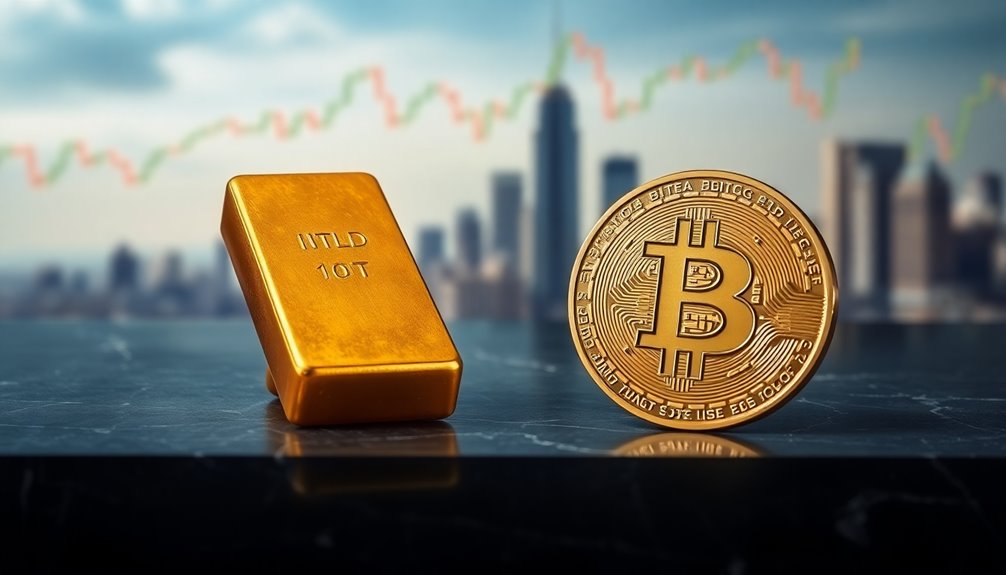

As 2025 nears, the battle between Bitcoin and gold as safe havens intensifies. You might find yourself wondering which asset aligns better with your investment goals. Gold offers historical stability and a solid hedge against inflation, while Bitcoin tempts with its potential for high returns, despite the volatility. With each option catering to different investor profiles, the choice isn't straightforward. So, which one could ultimately prove to be the safer bet?
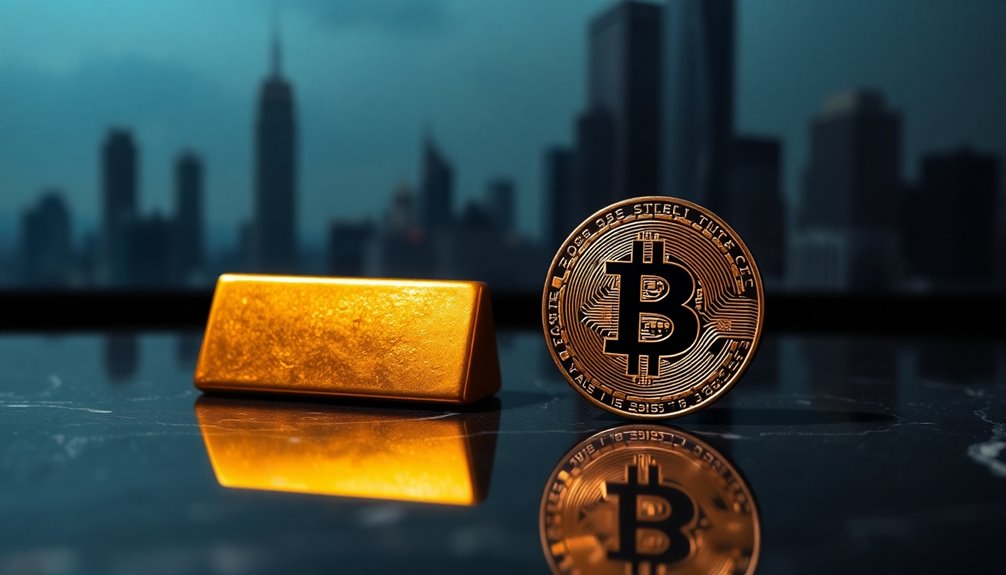
As you consider safe haven investments in 2025, the debate between Bitcoin and gold becomes increasingly relevant. Historically, gold has been a go-to choice for conservative investors because of its stability and scarcity. For centuries, it's held its ground as a reliable store of value, particularly during times of geopolitical uncertainty. Gold's price movements are generally moderate and predictable, allowing you to feel more secure in your investment. Additionally, gold's limited supply ensures that its intrinsic worth remains strong, making it a robust choice during economic fluctuations. Moreover, gold IRAs offer tax-deferred growth, allowing investors to maximize their returns over time.
On the other hand, Bitcoin's allure lies in its potential for high returns, albeit with a hefty dose of volatility. While it can lead to significant gains, it can just as easily result in steep losses. This variability makes Bitcoin a riskier option, appealing primarily to those with a higher risk tolerance. You'll need to weigh your financial goals carefully when considering which asset to invest in.
In terms of market capitalization, gold dwarfs Bitcoin, with over $19 trillion compared to Bitcoin's $1.91 trillion. This difference indicates a long-standing trust in gold, whereas Bitcoin is still carving out its niche in the financial landscape. Growing institutional interest in Bitcoin could enhance its legitimacy, but it remains subject to a rapidly evolving regulatory environment, which adds another layer of uncertainty.
When it comes to practical advantages, Bitcoin shines in areas like digital portability and divisibility. You can easily transfer Bitcoin across borders with minimal fees, making it a convenient choice for those who value flexibility. Plus, its blockchain technology offers transparency and reduces the risks associated with counterfeiting—issues that gold still faces with physical storage and authenticity.
Current market performance shows gold has surged by 9% early in 2025, outpacing Bitcoin's modest 3% increase. If you're looking for an inflation hedge, gold has a proven track record, while Bitcoin behaves more like a risk asset, influenced by market trends rather than inherent stability.
As you navigate this complex landscape, consider your own risk tolerance, investment goals, and preferences. Younger investors may gravitate towards Bitcoin as the digital asset landscape evolves, while more conservative investors may stick with gold. Ultimately, your decision should reflect your financial strategy, balancing potential rewards against the inherent risks of each asset.
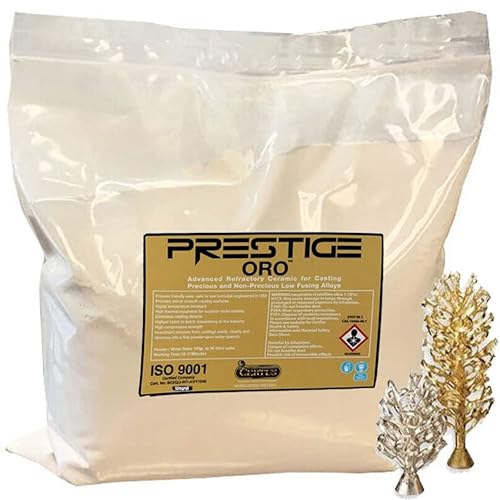
Prestige ORO Premium Gypsum-Bonded Investment Powder – Smooth, Bubble-Free Castings for Gold, Silver, Brass & Bronze – 5 lb
PREMIUM QUALITY INVESTMENT: Gypsum-bonded powder for flawless castings of alloys up to 22K, including yellow & white gold,…
As an affiliate, we earn on qualifying purchases.
As an affiliate, we earn on qualifying purchases.

Bitkey Bitcoin Hardware Wallet – The Most Secure Way to Buy, Store and Manage Bitcoin
BITCOIN EXCLUSIVE: Bitkey is designed from the ground up exclusively for Bitcoin, offering a dedicated hardware wallet solution…
As an affiliate, we earn on qualifying purchases.
As an affiliate, we earn on qualifying purchases.

IROLD 24k 9999 Fine Gold Bar, 2.5 Ounces, Ingot, Gold Bullion
As an affiliate, we earn on qualifying purchases.
As an affiliate, we earn on qualifying purchases.

The Ultimate Beginner's Guide to Cryptocurrency: A Simple, Step-by-Step Education on Crypto and Blockchain Fundamentals for a Stress-Free Path to Trading
As an affiliate, we earn on qualifying purchases.
As an affiliate, we earn on qualifying purchases.