
You're probably aware that the IMF is closely watching El Salvador's Bitcoin reserves. They're pushing for regulatory changes to ensure financial stability as part of a significant loan agreement. With the liquidation of the Fidebitcoin trust fund and a demand for transparency on Bitcoin holdings, the government faces tough decisions. How will this impact the nation's bold cryptocurrency strategy and its future? The answers might surprise you.
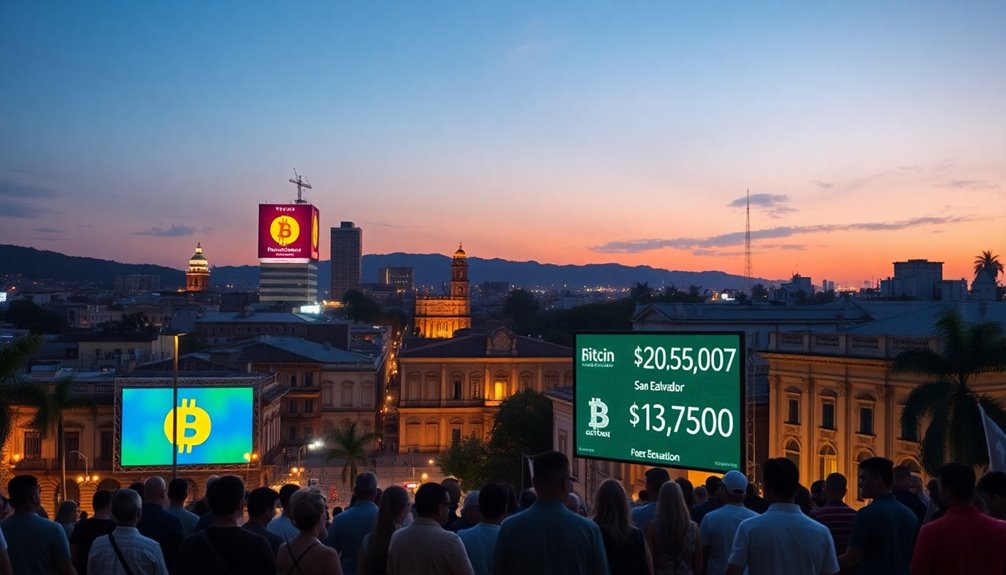
As El Salvador grapples with its ambitious Bitcoin initiative, the International Monetary Fund (IMF) has stepped in with a $1.4 billion loan, imposing conditions that significantly reshape the country's approach to cryptocurrency. This agreement requires El Salvador to amend its Bitcoin laws, making the acceptance of Bitcoin voluntary for businesses rather than mandatory. Although Bitcoin remains legal tender, the government's newfound restrictions indicate a notable policy shift.
Under the IMF's guidance, you'll notice public sector restrictions barring government entities from engaging in Bitcoin transactions. This means that you won't see public institutions dabbling in crypto purchases any longer. Meanwhile, businesses in the private sector can now decide whether to accept Bitcoin, giving them the flexibility to operate without the previous government mandate. While these changes may seem like a setback, they also provide room for a more cautious approach to cryptocurrency.
Public sector restrictions mean government entities will no longer engage in Bitcoin, while private businesses gain the freedom to choose its acceptance.
Additionally, the trust fund known as Fidebitcoin must be liquidated as part of this agreement. This step raises questions about the future of El Salvador's strategic Bitcoin reserve, which currently stands at approximately 6,100 BTC. It's worth noting that, despite the IMF's restrictions, the government has continued to buy Bitcoin, showcasing a commitment to maintaining its crypto assets. However, the future of these holdings is clouded by regulatory uncertainty, especially since the amendments remove the classification of Bitcoin as a currency.
As part of the conditions, the government must disclose all Bitcoin holdings and provide audited financial reports. This push for financial transparency is essential, especially given the economic challenges El Salvador faces. Regular reviews by the IMF will ensure compliance, making it clear that the organization has a vested interest in how El Salvador manages its Bitcoin reserves.
While government involvement in promoting Bitcoin is diminishing, private sector adoption can still thrive. You might see businesses voluntarily embracing Bitcoin, but the overall enthusiasm could wane due to economic struggles and regulatory changes. Global market trends will also play a crucial role in shaping the landscape of Bitcoin in El Salvador.
In this evolving environment, the IMF's oversight will significantly influence El Salvador's economic policies. As you watch these developments unfold, remember that the path forward for Bitcoin in El Salvador remains uncertain, with both opportunities and challenges at every turn.
Top picks for "eyes salvador x2019"
As an affiliate, we earn on qualifying purchases.