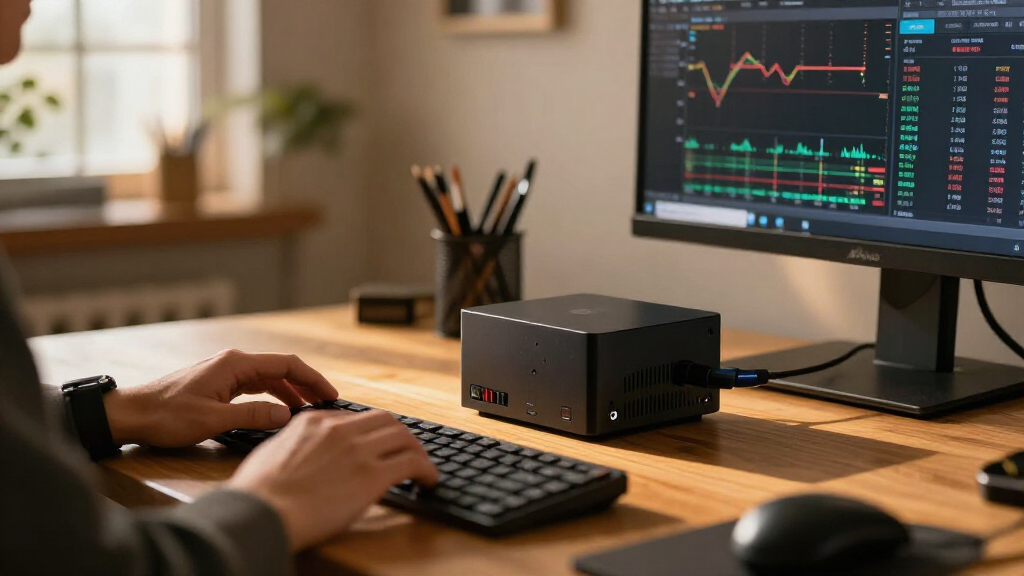

🔍 Read the full analysis: Top 10 AI Mini PCs For 2027 on ThorstenMeyerAI.com

Get hardware and tech essentials delivered free with Prime
- Fast, free delivery on millions of items
- Prime Video, Amazon Music and more included
- Member-only deals all year
TL;DR
ThorstenMeyerAI.com ranks 10 mini PCs for local AI workloads, emphasizing memory, sustained cooling and upgrade options. The supplied material gives detailed specifications for only a few models, so the remaining entries and some performance claims cannot be independently verified from it.
ThorstenMeyerAI.com has published a 2027 guide to 10 AI mini PCs, ranking compact desktops by their reported suitability for local AI workloads, as detailed in the original analysis. It names the GMKtec EVO-X3 with an AMD Ryzen AI Max+ 395 as its top pick, while stressing that memory capacity, bandwidth and cooling can matter as much as processor speed.
The guide says the EVO-X3 stands out for its reported 128GB of LPDDR5X memory, which its author argues can help run larger local language models without frequent data swapping, a consideration also covered in this guide to AI mini PCs for local workloads. It presents the GEEKOM GT13 MAX, listed with an Intel Core Ultra 9 185H, as an alternative for buyers who value Intel’s software ecosystem and port selection. These are the source’s assessments, not independently verified test results in the material provided.
Other named devices include the GEEKOM A9 Max, which the guide credits with a larger chassis and vapor-chamber cooling, and the GMKtec K15, described as offering Oculink for an external GPU connection. The smaller GMKtec K17 is presented as a space-saving choice with less thermal headroom. The supplied source does not list all 10 products, their full specifications, or a complete ranking.
The guide says its selection criteria include NPU performance, memory bandwidth, thermal behavior, ports and the ability to handle quantized 7-billion- and 13-billion-parameter language models, factors also considered in this roundup of AI-enabled mini PCs. It says devices with less than 16GB of soldered memory were excluded. However, the source provides no benchmark tables, test conditions or measured inference speeds to substantiate the stated comparisons.
The 10 picks
- 1
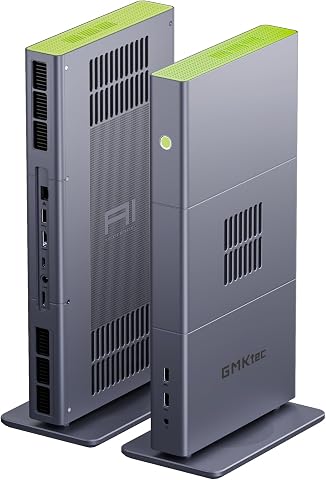 GMKtec EVO-X3 Mini PC with AMD Ryzen AI Max+ 395, 128GB LPDDR5X RAM, and 2TB…View on Amazon →
- 2
 GMKtec EVO-X3 Mini PC with AMD Ryzen AI Max+ 395, 128GB LPDDR5X, and 2TB PCIe…View on Amazon →
- 3
 GMKtec EVO-X2 Mini PC with AMD Ryzen AI Max+ 395View on Amazon →
- 4
 GMKtec EVO-X2 AI Mini PC with AMD Ryzen AI Max+ 395View on Amazon →
- 5
 GEEKOM A9 Max AI Mini PC with AMD Ryzen AI 9 HX 470, 32GB DDR5 RAM, and 2TB SSDView on Amazon →
- 6
 GEEKOM GT15 Max Business & Professional Mini PC with Intel Core Ultra 9, 32GB…View on Amazon →
- 7
 GEEKOM GT1 Mega AI Mini PC with Intel 14th Gen Core Ultra 9, 32GB DDR5, 1TB N…View on Amazon →
- 8
 GMKtec K15 AI Mini PC Oculink Intel Ultra 5 125U 32GB DDR5 512GB SSD, Desktop…View on Amazon →
- 9
 Glorlin Mini PC with AMD Ryzen 7 Pro 8845HS, 16GB DDR5 RAM, 500GB PCIe 4.0 SS…View on Amazon →
- 10
 GMKtec K17 Mini AI PC with Intel Core Ultra 5 226V, 16GB LPDDR5XView on Amazon →
Memory and Cooling Shape Local AI
The list highlights a practical constraint for people running AI models on their own computers: peak processor specifications do not tell the whole story. Models need memory to hold their working data, and limited bandwidth or capacity can slow inference or restrict which models fit. In a compact system, heat can also reduce performance during sustained workloads.
For buyers, that means the right device depends on the task. A small PC for occasional image generation or office AI may not need the same memory capacity as one intended for larger local language models. External GPU support may offer an upgrade path, but it adds hardware costs and depends on software and connection compatibility. The guide’s rankings are a starting point, not a substitute for workload-specific benchmarks.
Products Worth Considering

Apple MacBook Pro 14-inch (2021) – M1 Pro Chip, 10-Core CPU, 16-Core GPU, 16GB RAM, 1TB SSD, Space Gray

Apple MacBook Pro 16.2-inch with M5 Pro, 18-core CPU, 20-core GPU, 48GB Memory, 2TB SSD, Space Black
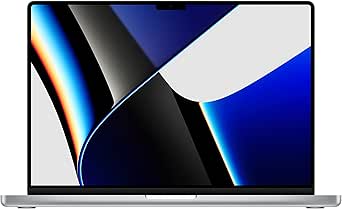
Apple MacBook Pro 16-inch with M1 Pro, 10-core CPU, 16-core GPU, 16GB RAM, 1TB SSD, Silver
As an affiliate, we earn on qualifying purchases.
How the Guide Ranks Compact PCs
The source frames its roundup around local AI use rather than general desktop performance. It distinguishes among the NPU, designed for certain efficient AI tasks; integrated graphics, which may handle some generative workloads; and software support, which varies by vendor and application. It names AMD’s Ryzen AI software and Intel’s OpenVINO as examples of different software ecosystems, without supplying comparative test results.
Its selection method favors devices with higher memory capacity or a lower-cost entry point, and gives added weight to systems with Oculink or Thunderbolt connections. The source argues that Oculink can be useful for attaching an external GPU. It also cautions that a chip’s advertised NPU TOPS figure does not by itself establish real-world performance: cooling and sustained operating speeds matter. These are the guide’s criteria and explanations, not a standardized independent rating.
“Memory bandwidth is the primary bottleneck for local AI performance.”
— ThorstenMeyerAI.com guide
Missing Models and Test Evidence
The supplied source names fewer than 10 products, despite the guide’s title, and does not provide a complete ranked list. It also leaves out publication date, prices, availability by region and product configurations. Specifications and descriptions are attributed to the guide and have not been independently confirmed here.
Performance assertions—including comparisons between memory types, NPU capabilities and cooling systems—are not accompanied by reproducible benchmarks, workloads, ambient temperatures or noise readings. The phrase “acceptable token-per-second rates” appears as a selection goal, but no measured rates are reported. Actual results can vary by model quantization, software versions and system configuration.
Verify Specs Before Choosing
Readers considering one of these systems should check the manufacturer’s current specification sheet for the exact processor, memory configuration, ports, cooling design and warranty. They should also look for independent tests using the same AI software and models they intend to run, including sustained-load performance and fan noise. The source material does not identify a follow-up release or testing schedule, so a fuller assessment depends on the complete list and verifiable product-level benchmarks becoming available.
Key Questions
Which mini PC does the guide rank first?
The guide names the GMKtec EVO-X3 with an AMD Ryzen AI Max+ 395 as its top pick, citing its reported 128GB of LPDDR5X memory. That ranking is the source’s assessment, not an independently verified result.
Does the source provide all 10 models?
No. The supplied material names the EVO-X3, GEEKOM GT13 MAX, GEEKOM A9 Max, GMKtec K15 and GMKtec K17, but does not identify the other five entries or provide a complete ranking.
What specifications does the guide say matter most?
It emphasizes memory capacity and bandwidth, thermal management and software compatibility, alongside NPU performance and expansion ports. Which factor matters most depends on the intended AI workload.
Can an Oculink port add AI performance?
The guide says the GMKtec K15’s Oculink connection can support an external GPU. That setup may expand compute options, but performance depends on the GPU, enclosure, connection and software, and adds cost.
Are the rankings based on published benchmark results?
The supplied source describes selection criteria but includes no reproducible benchmark tables or measured inference speeds. Treat its performance comparisons as attributed claims until results and test conditions are available.
Source: ThorstenMeyerAI.com