
📊 Full opportunity report: Exploring 'SINGULARITY': The Fusion Of Particle Geometry And AI Innovation on ThorstenMeyerAI.com — validation score, market gap, and execution plan.
TL;DR
The ‘SINGULARITY’ project showcases a novel fusion of particle geometry and AI to create immersive environments. This innovative work is detailed in the original analysis. This development highlights new possibilities in design, data visualization, and AI interfaces, with ongoing technical and practical challenges.
‘SINGULARITY’ is a pioneering project that combines particle geometry mapping with AI-driven environment design. Recently showcased live, it exemplifies how advanced algorithms can shape immersive spaces that challenge traditional notions of form and function. This development matters because it pushes the boundaries of AI application in creative and technical environments, offering new insights into the future of intelligent design spaces.
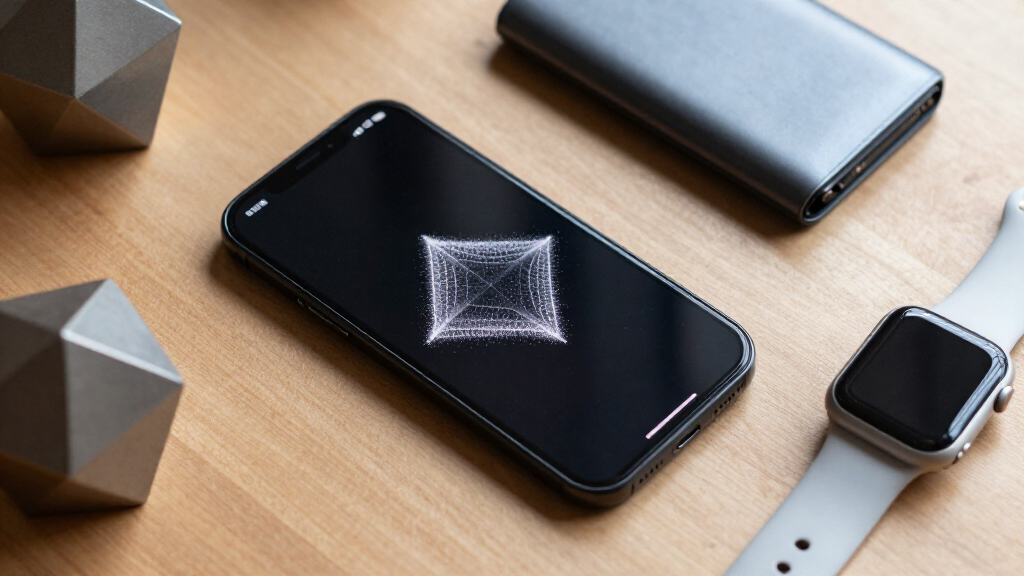
The ‘SINGULARITY’ project, detailed by Thorsten Meyer, involves transforming a stark black room into a visual symphony of data and geometry. For a detailed analysis, see Glimpse: SINGULARITY. Using Particle Geometry Mapping, the design integrates complex data structures into tangible visual forms, creating an environment that reacts to AI algorithms in real time. This process navigates technical challenges such as maintaining aesthetic coherence while handling high computational loads, illustrating a sophisticated blend of art and technology.
According to Meyer, the project aims to explore how advanced algorithms can influence spatial design, making environments more interactive and data-rich. The live demonstration showcased how the environment responds dynamically to inputs, emphasizing the potential for these techniques in AI interfaces and data visualization. While the project is still in experimental phases, it signals a significant step toward more intelligent, adaptive spaces.
Exploring ‘SINGULARITY’
The fusion of particle geometry and AI innovation turns a stark black room into a responsive visual field—mapping data into form, motion and immersive spatial experience.
Data becomes geometry. Geometry becomes space.
‘SINGULARITY’ connects algorithmic intelligence with particle-based visual systems. Instead of treating data as a chart on a screen, the project converts it into an environment that can change with inputs, relationships and computational rules.
Particles as spatial material
Complex structures are expressed through points, fields and geometric relationships, allowing information to occupy an immersive visual space.
Algorithms shape behavior
AI-driven rules interpret incoming signals and influence form, density, movement and interaction in real time.
The room becomes an interface
The resulting environment is neither static artwork nor conventional dashboard—it is an adaptive surface for understanding data.
From raw input to an intelligent environment
The project’s conceptual pipeline links information, algorithmic interpretation and spatial feedback in one continuous loop.
Data input
Signals, parameters and user actions enter the system.
AI interpretation
Algorithms identify patterns and determine responses.
Particle mapping
Abstract information becomes geometric relationships.
Spatial rendering
The mapped system appears as an immersive field.
Feedback loop
New inputs reshape the environment continuously.
‘SINGULARITY’ exemplifies how particle geometry and AI can coalesce into immersive spaces that challenge our understanding of form.
Anonymous researcher / project commentaryStatic spaces versus adaptive spaces
The breakthrough is not a single visual effect. It is the move from predetermined composition to an environment whose appearance and behavior can evolve while it is being experienced.
| Design dimension | Traditional space | ‘SINGULARITY’ model | Development status |
|---|---|---|---|
| Visual form | Fixed composition | Generated particle geometry | Demonstrated |
| Data relationship | Displayed separately | Embedded into spatial form | Demonstrated |
| Responsiveness | Limited or scripted | Algorithmic, real-time reaction | Refining |
| Scalability | Established workflows | High computational demand | Unresolved |
| User role | Viewer or occupant | Potential active input source | Exploring |
High creative promise meets real technical friction
The concept opens pathways for architecture, virtual reality, art installations, AI interfaces and data visualization. Yet practical deployment still depends on performance, stability, integration and cost.
Relative development emphasis
Conceptual assessment based on the project description—not measured performance benchmarks.
What must be solved next?
Where the experiment could lead
Creative coding
Algorithmic form-making establishes the visual language.
Particle mapping
Data structures become dynamic spatial geometry.
AI adaptation
Rules connect changing inputs to visual responses.
Immersive interface
Users encounter information as an inhabitable system.
Intelligent spaces
Architecture and digital worlds become responsive and data-rich.
Bottom line: ‘SINGULARITY’ is a persuasive prototype for treating space itself as an AI interface. Its significance lies in the fusion: information is no longer merely presented—it is translated into an environment that can behave.
Transformative Potential of AI-Driven Spatial Design
This development is significant because it exemplifies how AI and particle-based geometry can revolutionize environmental design and data visualization. It offers a glimpse into future applications where spaces are not static but adapt in real time, enhancing user engagement and understanding of complex data. Such innovations could impact fields ranging from architecture and art to virtual reality and AI interface design, making environments more intuitive and responsive.
Geometry Part 1: QuickStudy Laminated Reference Guide (Quick Study Academic)
As an affiliate, we earn on qualifying purchases.
As an affiliate, we earn on qualifying purchases.
Advances in AI and Geometric Data Visualization
Recent years have seen rapid progress in AI-driven design tools and geometric data visualization. Projects like ‘SINGULARITY’ build on prior innovations in data mapping and immersive environments, pushing beyond traditional digital art into functional spaces that respond to AI algorithms. This project reflects a broader trend toward integrating complex data structures into tangible, interactive forms, aligning with ongoing research in AI-assisted architecture and creative coding.
While still experimental, ‘SINGULARITY’ demonstrates how these technologies can be combined to create dynamic, data-rich environments, offering new ways to visualize and interact with information. The project also addresses technical challenges such as maintaining aesthetic coherence amid complex data flows, a key concern in the development of intelligent environments.
“‘SINGULARITY’ exemplifies how particle geometry and AI can coalesce into immersive spaces that challenge our understanding of form.”
— an anonymous researcher

Machine Learning Pocket Reference: Working with Structured Data in Python
As an affiliate, we earn on qualifying purchases.
As an affiliate, we earn on qualifying purchases.
Technical and Practical Challenges Remain
It is not yet clear how scalable or practical the ‘SINGULARITY’ environment will be for real-world applications. Technical issues such as computational load, stability, and user interaction mechanisms are still being addressed. Additionally, the extent to which such environments can be integrated into existing architectural or virtual spaces remains uncertain, with ongoing research needed to evaluate usability and cost-effectiveness.
AUGMENTED AND VIRTUAL REALITY SYSTEMS ENGINEERING : Display technologies spatial computing and interactive environments
As an affiliate, we earn on qualifying purchases.
As an affiliate, we earn on qualifying purchases.
Next Steps in Development and Application
Future developments will focus on refining the technology to improve stability and scalability. Researchers plan to test the environment in varied settings, exploring potential applications in virtual reality, art installations, and AI interface design. Further collaboration with industry partners may also help translate this conceptual framework into practical tools for designers and technologists.

Devices: A manual of architectural + spatial machines
- Condition: Used Book in Good Condition
As an affiliate, we earn on qualifying purchases.
As an affiliate, we earn on qualifying purchases.
Key Questions
What is ‘Particle Geometry Mapping’?
Particle Geometry Mapping is a technique that uses complex data structures to create visual representations of geometric forms, enabling dynamic and immersive environments driven by AI algorithms.
How does ‘SINGULARITY’ differ from traditional design spaces?
‘SINGULARITY’ incorporates real-time data and AI responsiveness, transforming static environments into interactive, adaptive spaces that react to user inputs and data flows.
Can this technology be applied outside art or research?
Potentially, yes. Applications could include virtual reality environments, architectural visualization, or AI-assisted interactive displays, though practical deployment is still under development.
What are the main challenges facing this technology?
Key challenges include managing high computational demands, ensuring stability, and integrating these environments into existing physical or digital infrastructures.
Source: ThorstenMeyerAI.com