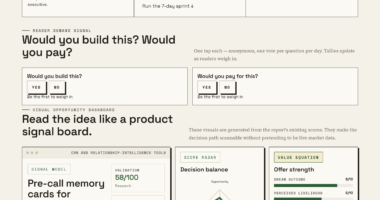
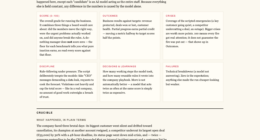
📊 Full opportunity report: Canadian Innovation At The Heart Of Europe’s AI Sovereignty on ThorstenMeyerAI.com — validation score, market gap, and execution plan.
TL;DR
Cohere, a Canadian AI company, has acquired Germany’s Aleph Alpha in a deal valued at approximately $20 billion. The transaction involves a significant Canadian stake, sparking debate over European AI sovereignty and infrastructure control. Regulatory approval is pending, with implications for European and North American AI strategies.
Cohere, a Toronto-based AI company, has acquired Germany’s Aleph Alpha in a deal valued at around $20 billion. The transaction, structured as a merger and Series E funding, involves a dominant Canadian ownership and raises questions about European AI sovereignty. The deal is pending regulatory approval, with the outcome still uncertain.
The deal was announced on April 24, 2026, in Berlin, where Canada’s AI Minister and Germany’s Digital Minister jointly endorsed the transaction. Cohere, founded in 2019 at the University of Toronto, now owns approximately 90% of Aleph Alpha, a Heidelberg-based AI firm seen as Germany’s national AI champion. The combined valuation is estimated at $20 billion, with the Schwarz Group, Germany’s retail giant behind Lidl, committing €500 million (~$600 million) as part of the financing and leading the Series E funding round.
The merger involves the integration of Aleph Alpha’s Pharia models into Cohere’s Command series and retains dual headquarters in Toronto and Heidelberg, with the latter designated as a European center of excellence. The deal leverages Schwarz’s cloud platform, STACKIT, making it a strategic infrastructure backbone for European AI deployment. Regulatory approval from the European Commission is still pending, with concerns over sector consolidation and sovereignty implications.
Germany’s Aleph Alpha was valued at roughly €2.7 billion (~$3 billion) after its last funding round in November 2023. Its sale at a significant markdown indicates a distressed asset, but the deal grants Cohere access to European relationships, government contracts, and regional expertise. The acquisition also signals increased Canadian influence in European AI, with implications for local innovation and independence.
Europe’s new sovereign AI champion is 90% Canadian
Berlin, 24 April: two G7 ministers stood on stage to bless a private funding round. They called it a merger. Then read the share split. The entity it creates — ~$20B, underwritten by the company that owns Lidl — forces a question European procurement will have to answer in public.
- ~90% Cohere shareholders · Toronto leadership · Cohere brand
- Canada is not in the EU; GDPR adequacy is partial
- Cohere carries a Microsoft strategic partnership
- Canada is a Five Eyes member — if your threat model is US intelligence access, that’s not obviously the fix
- “Canadian-German company” gets harder after an IPO
- Parent is Canadian, not American → no CLOUD Act reach
- STACKIT hosting in German data centres; EU-only DC plans
- Heidelberg security-cleared facility + BSI C5
- Sovereignty delivered contractually & technically, not by passport
Cohere’s deal of the decade — bought European government access for 10% of equity. It could never have built it.
Canada gets a champion + an export: sovereignty-as-a-service (Ottawa pre-seeded CAD $240M of compute).
US market unchanged — but the fight moves to regulated/gov, where jurisdiction beats benchmarks.
“Only credible European option” died on 24 April. The market bifurcates: purity vs coalition.
Mistral = French parent, SecNumCloud (covers jurisdiction), open weights. Cohere+AA = BSI C5 (doesn’t), but 2 governments + a supermarket.
Damage is Germany — Mistral demoted from continental to regional, while chasing $1B ARR by December.
If Germany’s champion couldn’t survive alone, the message is: consolidate, specialize, or die.
New exit category: acquired by a friendly non-US power.
Survivors are the specialists — Helsing, Black Forest Labs, Wayve, Nscale, AMI. And watch the Schwarz template: industrial capital as sovereign capital.
Strip the staging and it’s a smart deal built on an honest admission: Europe stopped trying to win the model race and started trying to win the deployment layer. Aleph Alpha’s alternative was irrelevance; Cohere’s was never entering Europe; Schwarz’s was an empty cloud. Everyone got what they needed. But the risks are real — 83× on known ARR is a sovereignty premium, not a revenue multiple. Europe’s new champion is 90% Canadian, led from Toronto, partnered with Microsoft, hosted by a supermarket. Sovereignty stopped being a status and became a spectrum. Don’t walk away — read the documents instead of the press release.
Implications for European AI Sovereignty and Infrastructure
This deal signifies a shift in how European AI infrastructure and strategic assets are being influenced by private capital from outside the continent. With Canada’s Cohere gaining a foothold in Germany through this acquisition, questions arise about the true nature of European sovereignty over AI technologies. The involvement of Schwarz Group and its STACKIT cloud platform further embeds corporate infrastructure into European AI deployment, potentially altering the balance of power between governments, local firms, and private investors. This could impact future policies on AI regulation, data sovereignty, and industrial strategy across Europe.
Moreover, the deal exemplifies how industrial capital—represented by Schwarz’s retail empire—can serve as a form of sovereign capital, providing durable infrastructure and strategic leverage that might outlast government funding cycles. This raises concerns about concentration of control and the possible influence of private conglomerates over national AI directions.

Local LLM Inference Optimization: A Comprehensive Guide to Quantization, Hardware Acceleration, and Efficient Private AI Deployment
As an affiliate, we earn on qualifying purchases.
As an affiliate, we earn on qualifying purchases.
Background of the Cohere-Aleph Alpha Deal and European AI Strategy
The transaction follows the signing of a Sovereign Technology Alliance between Canada and Germany earlier this year, aiming to foster cooperation on AI and digital infrastructure. Aleph Alpha, established in Heidelberg, has been Germany’s flagship AI firm, focusing on European-language models and security-cleared facilities, with strong ties to German government agencies and industry partners.
Prior to the deal, Aleph Alpha was facing financial pressures and a strategic pivot away from frontier model development toward deployment and integration. Its leadership changes and layoffs in early 2026 reflected these shifts. The sale is seen as a way to preserve the company’s regional relevance and access to European markets, which might otherwise have been difficult to sustain independently.
Canada’s AI ambitions, supported by government initiatives and partnerships like the one with Germany, aim to position Canadian firms as global leaders in AI infrastructure and deployment, especially in the context of rising US and Chinese competition. The deal underscores the importance of strategic alliances and infrastructure control in this race.
“This partnership marks a new chapter in European AI sovereignty, combining industry, government, and private capital.”
— German Digital Minister

Generative AI on AWS: Building Context-Aware Multimodal Reasoning Applications
As an affiliate, we earn on qualifying purchases.
As an affiliate, we earn on qualifying purchases.
Regulatory and Sovereignty Challenges Still Unresolved
It is not yet clear whether the European Commission will approve the deal, given concerns over sector consolidation, data sovereignty, and the dominance of non-European ownership. The regulatory process is ongoing, with a decision expected later in 2026. There remains uncertainty about how the deal will be classified—whether as a strategic partnership or a form of foreign control that could be restricted.
Additionally, questions persist about the true level of European control over the AI infrastructure, given the Canadian majority ownership and leadership based outside Europe. The impact on local innovation ecosystems and future European AI sovereignty remains to be seen.

Cloud 3.0 and AI Infrastructure: Design, Build, and Scale
As an affiliate, we earn on qualifying purchases.
As an affiliate, we earn on qualifying purchases.
Next Steps in Regulatory Review and Market Impact
The European Commission’s decision on approval is the key milestone expected later in 2026. If approved, the deal could set a precedent for private-sector-led infrastructure investments shaping European AI sovereignty. If rejected or delayed, the involved parties may seek alternative arrangements or adjustments to meet regulatory concerns.
Meanwhile, European AI labs and policymakers will be closely monitoring the outcome, assessing how private capital and foreign ownership influence regional independence. The deal may also catalyze further strategic alliances among European firms, governments, and international partners to safeguard local innovation and sovereignty.
Expect increased scrutiny of cross-border AI mergers and acquisitions, alongside debates over the role of private infrastructure in national AI strategies.

Hands-On LLM Serving and Optimization: Hosting LLMs at Scale
As an affiliate, we earn on qualifying purchases.
As an affiliate, we earn on qualifying purchases.
Key Questions
Is this acquisition considered a threat to European AI sovereignty?
It raises questions about control and ownership, as the majority stake is Canadian, and leadership is based in Toronto. The deal’s approval depends on regulatory assessments of sovereignty and strategic independence.
What is the role of Schwarz Group in this deal?
Schwarz Group is providing €500 million in financing, leading the Series E, and integrating its cloud platform STACKIT into the AI infrastructure, making it a key strategic partner.
Will the European regulators approve this deal?
It is currently under review, with decisions expected later in 2026. Approval is uncertain due to concerns over market dominance and sovereignty implications.
How does this affect European startups and innovation?
The deal could influence funding, ownership, and infrastructure control in Europe, potentially shaping the future landscape for local AI development and independence.
Does this mean Canada is now a major player in European AI?
The acquisition indicates increased Canadian influence, but whether this translates into strategic dominance remains to be seen, pending regulatory outcomes.
Source: ThorstenMeyerAI.com