

📊 Full opportunity report: Signal: Four Frontier-Class Open Models in Eight Weeks — China’s Release Cadence Is the Story on ThorstenMeyerAI.com — validation score, market gap, and execution plan.
TL;DR
Chinese laboratories released four frontier-class open models between late April and mid-June 2026, demonstrating an unprecedented release cadence. This rapid pace is reshaping the global AI landscape, especially for self-hosted and sovereign AI deployments.
Chinese AI labs have released four frontier-class open models in just over two months, marking a rapid, sustained release cadence that challenges Western dominance in open AI. This development is significant for AI deployment strategies worldwide, especially for those emphasizing sovereignty and cost-effective self-hosting.
Between late April and mid-June 2026, Chinese laboratories launched four major open-weight models: DeepSeek V4 on April 24, MiniMax M3 on June 1, and Kimi K2.7-Code and GLM-5.2 within days of each other in mid-June. These models are all downloadable, with most licensed under permissive, MIT-class licenses, and are priced significantly below Western APIs when hosted locally.
The Chinese models have quickly gained ground in capability rankings. BenchLM’s July 2026 rankings list DeepSeek V4 Pro at the top among Chinese models, with an overall score of 87, just six points behind the proprietary leader at 93. This positions DeepSeek as the most capable open-weight model close to the closed frontier, with GLM-5.1, Kimi K2.6, and Qwen models following behind.
Major Chinese labs—DeepSeek, Z.ai, Moonshot, and Alibaba—each focus on different strategic goals. DeepSeek emphasizes affordability, with V4 Pro featuring 1.6 trillion parameters but activating only 49 billion per pass, and a 1 million token context window. Z.ai’s GLM-5.2 leads in open-weight intelligence, while Moonshot’s Kimi line targets long-term agent stability, reducing token consumption for long-horizon tasks. Alibaba’s Qwen models are optimized for self-hosting on single GPUs, broadening accessibility.
Meanwhile, Western open-weight models have stagnated. Meta’s flagship open effort has stalled, and the leading open-source model, Ai2’s Olmo 3, trails Chinese models in raw capability. As of mid-2026, four of the five most capable open-weight model families are Chinese, reflecting a significant shift in the global AI landscape.
Four Frontier-Class Open Models in Eight Weeks
China’s Release Cadence Is the Story
Same-day-verified market pulse · July 13, 2026
The production line — spring 2026
The board this week — BenchLM overall score, July 2026
Gift & complication — the European read
The gift
Frontier-adjacent capability, permissive licenses, weeks-long refresh cycle. This cadence is what makes serious on-premises AI economically thinkable in 2026.
The complication
Still a dependency — geopolitical, not technical. Hosted Chinese APIs fall under Chinese data law; many Western agencies won’t touch the weights at all. Licensing generosity is a policy, not a law of nature.
The signal: if your infrastructure strategy assumes open models improve slowly, it’s already wrong. If it assumes the current licensing generosity is permanent, it’s unhedged.
Implications for Global AI Development and Deployment
This rapid release cadence indicates a notable shift in the AI development landscape, with Chinese labs demonstrating the ability to produce and deploy high-capability models at a faster rate. For organizations and governments seeking sovereign or local AI solutions, this means the open Chinese frontier offers more accessible, cost-effective options, reducing reliance on Western APIs and proprietary models.
However, the development also introduces dependencies on Chinese-origin models, which pose legal and geopolitical considerations. Many Western enterprises and agencies remain cautious to adopt Chinese models due to data sovereignty concerns and export restrictions, especially since hosted Chinese APIs are subject to Chinese data law.
Overall, this trend could influence the democratization of AI infrastructure but also contribute to geopolitical tensions and dependency risks, especially if licensing terms or export policies change unexpectedly.

PRIVATE AI INFRASTRUCTURE ON LINUX: Build, Secure, and Operate Self-Hosted LLM Servers with Ollama, Open WebUI, vLLM, Docker, RAG, and GPU Acceleration
As an affiliate, we earn on qualifying purchases.
As an affiliate, we earn on qualifying purchases.
Rapid Chinese Model Releases Reflect Strategic Hardware and Policy Moves
Over the past two years, Chinese AI labs have built a diverse and competitive open-weight model ecosystem, with each lab pursuing different strategic objectives. DeepSeek’s V4 Pro emphasizes affordability and large context windows, Z.ai’s GLM-5.2 leads in intelligence benchmarks, Moonshot’s Kimi models target long-term stability, and Alibaba’s Qwen family prioritizes self-hosting capabilities.
This rapid cadence appears partly driven by hardware scarcity and efficiency breakthroughs, which have encouraged Chinese labs to accelerate their release cycles. The timing also suggests a strategic response to US export controls, aiming to establish Chinese models as a key component of the global AI infrastructure.
Compared to the Western open field, which has experienced slower progress and stalled efforts, Chinese labs are now leading in raw capability and release frequency, influencing the competitive landscape.
“The Chinese labs are effectively operating a production line, not just isolated releases. This cadence is notable and indicates a shift in the pace of AI development.”
— an anonymous researcher
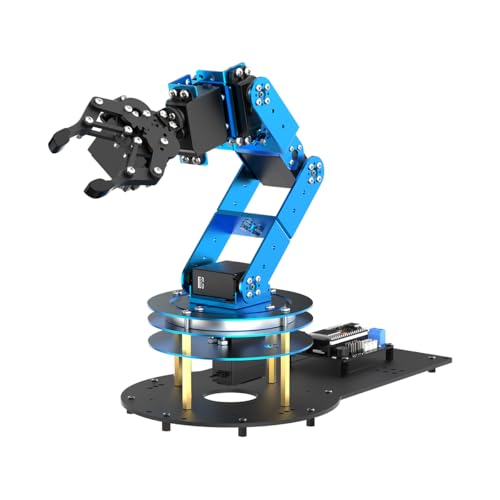
Robotic Arm Kit 6DOF Programming Robot Arm with 6 Servos, Handle, Mechanical Claw, etc, PC Software APP Control with Tutorial for Arduino STEM Education & Engineering Science Kits, LeArm Open Source
- Controller Type: ESP32 with Arduino compatibility
- Servos: 6 smart PWM digital servos
- Control Methods: App, PC software, wireless controller
As an affiliate, we earn on qualifying purchases.
As an affiliate, we earn on qualifying purchases.
Uncertainties Surrounding Long-Term Sustainability and Geopolitical Risks
It remains uncertain how sustainable this rapid release cycle will be for Chinese labs amid hardware, licensing, and geopolitical constraints. Changes in export policies and licensing terms could influence the availability and legality of these models for users outside China.
Additionally, the long-term competitiveness of Western open models continues to be uncertain, especially if Chinese labs maintain or accelerate their release pace and capability improvements.

LOCAL LLM DEPLOYMENT: Training, Fine-Tuning, & Offline Inference: The Complete Developer’s Guide to Building, Training, and Running Private Open-Source AI Offline (with full source code)
As an affiliate, we earn on qualifying purchases.
As an affiliate, we earn on qualifying purchases.
Next Steps in Chinese Model Development and Global Impact
Anticipate ongoing rapid releases from Chinese labs, with potential new models and updates in the coming months. Monitoring export policies, licensing changes, and Western responses will be important for understanding the evolving AI landscape. Further benchmarking and adoption decisions by enterprises and governments are expected to influence the future of open AI deployment.

Building AI-Powered Products: The Essential Guide to AI and GenAI Product Management
As an affiliate, we earn on qualifying purchases.
As an affiliate, we earn on qualifying purchases.
Key Questions
Why are Chinese labs releasing models so quickly?
The rapid cadence appears to be driven by hardware availability, efficiency improvements, and strategic efforts to establish Chinese models as a key component of the global AI ecosystem amid geopolitical considerations.
Can Western organizations safely adopt these Chinese models?
Many Western enterprises and agencies remain cautious due to legal, data sovereignty, and export restrictions, especially concerning hosted Chinese APIs and Chinese data laws.
Will this rapid release cycle continue?
Future release patterns are uncertain. Factors such as hardware supply, licensing policies, and geopolitical developments could influence the pace and frequency of releases.
How do Chinese models compare to Western open models?
Chinese models currently demonstrate higher raw capability and more frequent release cycles compared to Western open models, positioning them as leading open-weight models globally.
What does this mean for the future of AI sovereignty?
This trend could improve access to high-capability models but may also increase reliance on Chinese-origin models, raising strategic and geopolitical considerations.
Source: ThorstenMeyerAI.com