

📊 Full opportunity report: The SSD Squeeze: Why Storage Joined the Party on ThorstenMeyerAI.com — validation score, market gap, and execution plan.
TL;DR
Storage prices are rapidly increasing due to high demand from AI applications and wafer competition with high-bandwidth memory. Industry supply has tightened, causing significant price hikes across enterprise and consumer markets. The shortage is expected to persist, impacting future purchasing decisions.
SSD prices are surging as enterprise and consumer markets face unprecedented shortages, driven by increased demand from AI applications and deliberate supply constraints by major manufacturers. This shift marks a significant change from the previous decade of declining storage costs and has broad implications for the tech industry and consumers alike.
Recent data shows enterprise SSD contract prices have jumped by 53–58% in just one quarter at the start of 2026, with SanDisk doubling the price of its enterprise 3D NAND. Consumer SSDs, such as 2TB NVMe drives, now list at $300–480, nearly double their 2024 prices. These increases reflect a supply squeeze caused by manufacturing priorities and high demand from AI workloads.
Leading manufacturers like Samsung, SK Hynix, and Micron have scaled back NAND wafer production, citing strategic priorities and profitability. Micron has acknowledged it can meet only about 55–60% of customer demand, while Phison reports its entire 2026 NAND output is sold out, prioritizing higher-margin enterprise sales. New fabs are at least two to three years away, further constraining supply.
Simultaneously, AI’s growing storage needs are a major factor. High-end AI GPUs require around 16TB of NAND, and large AI server racks demand over 1,000TB. As AI shifts from training to inference, patterns such as retrieval-augmented generation increase storage traffic, actively consuming NAND rather than just storing data passively. The NAND market is forecast to grow over 100% in revenue in 2026, reinforcing the structural nature of this demand surge.
The SSD squeeze: storage joined the party
Storage was the last cheap thing in computing. Not anymore — a 2TB NVMe that was $120–150 in 2024 now lists at $300–480. And this time flash isn’t only collateral damage: AI eats storage directly.
both ways
Flash got hit twice — once as collateral sharing fabs with HBM, once directly as AI inference turned fast storage into something it consumes by the petabyte. That second force won’t fade; it grows with every model, every RAG pipeline, every cache that must live somewhere fast. Buy what you need now; favor TLC with DRAM cache, don’t overpay for Gen 5, watch for counterfeits. Relief isn’t forecast before late 2027. When the cheapest component in computing has a two-year waitlist, “commodity” no longer fits. Next: The High-End PC & Workstation Tax.
Impact of Storage Shortage on Industry and Consumers
The rising storage costs and shortages are affecting various sectors, including enterprise infrastructure, consumer electronics, and specialized markets such as automotive and industrial applications. Major cloud providers and hyperscalers are securing a significant portion of the limited supply, which can lead to increased prices and longer lead times for other buyers. This situation may influence the pace of AI development, increase costs for data-intensive applications, and result in reduced storage capacities in new devices.
For businesses and consumers, the current market conditions suggest that storage is less readily available and more costly. Strategic planning and timely procurement are advisable, as delays could result in higher costs. The deliberate supply restrictions by manufacturers—aimed at maintaining profit margins—add complexity to market dynamics and raise questions about the duration of the current shortages.

Samsung 990 PRO SSD 2TB NVMe M.2 PCIe Gen4, M.2 2280 Internal Solid State Hard Drive, Seq. Read Speeds Up to 7,450 MB/s for High End Computing, Gaming, and Heavy Duty Workstations, MZ-V9P2T0B/AM
MEET THE NEXT GEN: Consider this a cheat code; Our Samsung 990 PRO Gen4 SSD helps you reach…
As an affiliate, we earn on qualifying purchases.
As an affiliate, we earn on qualifying purchases.
Recent Trends in NAND and Memory Market Dynamics
Over the past decade, NAND flash and DRAM prices generally declined due to technological improvements and increased manufacturing capacity. However, recent developments have altered this trend. Major manufacturers such as Samsung, SK Hynix, and Micron have reduced wafer production targets, citing profitability and strategic considerations. This has led to a significant increase in contract prices for NAND over a short period.
Additionally, the rise of AI has created new demand patterns. High-performance AI GPUs and server architectures require large amounts of fast storage, positioning NAND as a critical component in AI processing. This structural demand, combined with limited new fab capacity, has contributed to a supply shortage that is expected to persist in the near term.
“We are adjusting wafer targets based on market demand and profitability considerations.”
— Samsung spokesperson

Gigastone 【NAS Certified】 1TB High Endurance SSD (2-Pack) Up to 550MB/s TLC Flash with SLC Caching 24/7 Reliable for Gaming/PC/NAS SSD 5-Year Warranty 2.5" SATA Internal Solid State Drives RAID Disk
[High Endurance Grade] : No.1 NAS SSD choice in heavy workloads NAS systems|24/7 superior NAS Cache with reliable…
As an affiliate, we earn on qualifying purchases.
As an affiliate, we earn on qualifying purchases.
Extent and Duration of the Storage Shortage
It remains uncertain how long the current supply constraints will continue. Industry sources suggest that new fabrication facilities will take at least two to three years to become operational, which indicates that supply limitations may persist for this period. There is ongoing discussion about whether the recent price increases are primarily due to deliberate supply management or actual manufacturing delays.
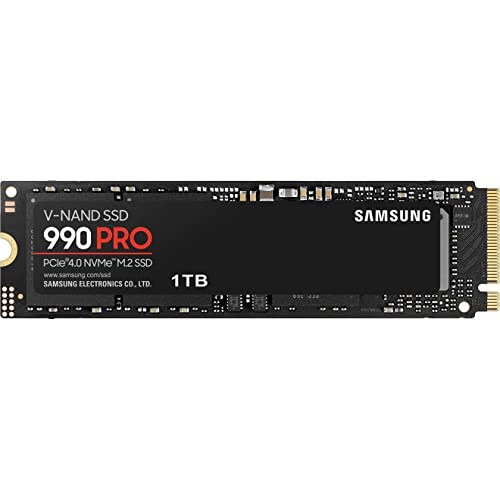
Samsung 990 PRO SSD 1TB PCIe 4.0 M.2 2280 Internal Solid State Hard Drive, Seq. Read Speeds Up to 7,450 MB/s for High End Computing, Gaming, and Heavy Duty Workstations, MZ-V9P1T0B/AM
HUGE SPEED BOOST: Get random read/write speeds that are 40%/55% faster than 980 PRO; Experience up to 1400K/1550K…
As an affiliate, we earn on qualifying purchases.
As an affiliate, we earn on qualifying purchases.
Future Market Developments and Industry Responses
Manufacturers are likely to continue prioritizing high-margin enterprise and AI-related sales, which could extend the duration of the shortage. Buyers should consider the potential for sustained higher prices and longer lead times, and plan their procurement strategies accordingly. Industry analysts expect that new fabrication capacity will gradually come online, but significant relief is unlikely before 2028. Meanwhile, some market participants are exploring alternative storage technologies that may help mitigate current supply pressures.

fanxiang 1TB PCIe 5.0 NVMe M.2 SSD,Up to 14000 MB/s,High Performance Solid State Drive for 8K Video Editing, AI Training,Gaming, PC, Laptop
Extreme PCIe 5.0 Performance:Utilizing the latest PCIe 5.0 interface, bandwidth is doubled to approximately 64 GT/s, delivering sequential read speeds up…
As an affiliate, we earn on qualifying purchases.
As an affiliate, we earn on qualifying purchases.
Key Questions
Why are SSD prices rising so rapidly now?
Prices are increasing due to a combination of high demand from AI applications, deliberate supply restrictions by manufacturers, and ongoing competition for wafer resources with high-bandwidth memory. These factors have contributed to a tightening of supply and subsequent price increases across the market.
When will new NAND manufacturing capacity be available?
Industry estimates suggest that new fabrication plants will require at least two to three years to become operational, indicating that supply constraints are likely to continue until at least 2028.
How is AI driving the demand for NAND storage?
AI workloads, especially training and inference tasks, require large volumes of fast storage. High-end GPUs may need around 16TB each, and large server racks can demand over 1,000TB. This increased demand is a key factor contributing to current supply pressures.
Should consumers buy storage now or wait?
Given the current market conditions, consumers are advised to purchase only what is urgently needed, as delays may lead to higher prices and limited availability. Planning ahead can help mitigate potential supply issues.
Will the shortage affect other types of storage like hard drives?
Yes, the supply constraints are impacting other storage types, including traditional hard drives, particularly for enterprise and industrial-grade models, as the overall supply chain adjusts to current market conditions.
Source: ThorstenMeyerAI.com