

📊 Full opportunity report: The European Union: Rules First, Cushion Always on ThorstenMeyerAI.com — validation score, market gap, and execution plan.
TL;DR
The European Union is implementing strict regulations, such as the AI Act, and reinforcing social protections to manage technological change and labor shifts. Its approach emphasizes rules and worker voice over ownership or wealth redistribution.
The European Union will enforce its AI Act starting August 2, 2026, imposing strict rules on AI used in employment, exemplifying its broader approach of regulating technological change before it occurs to cushion its impact on workers.
The AI Act classifies AI systems used in hiring, screening, and worker management as “high-risk,” requiring compliance with obligations such as risk management, transparency, and human oversight. Penalties for violations can reach €35 million or 7% of global turnover, marking the most comprehensive legal guardrails for AI use on workers globally.
Beyond AI regulation, the EU maintains a social market economy model rooted in worker voice, job preservation, and income guarantees. Instruments like co-determination, Kurzarbeit (short-time work), and dual vocational training underpin its strategy to shape and cushion the labor transition.
Rules First, Cushion Always
Europe’s instinct is to regulate a force before it builds it. Pair the AI Act with the social market economy and you get the European bet: pull four levers hard — and barely touch the fifth.
Independent commentary, produced with AI assistance under human editorial oversight. The views are the author’s own and may change. This is analysis, not policy, economic, investment, or legal advice. The EU AI Act timeline, Germany’s Neue Grundsicherung reform, Kurzarbeit, and labor data reflect publicly reported information as of mid-2026 and may change as implementation evolves. This phase maps differing approaches and endorses none; contested reforms are presented with competing views, not a verdict. Country and program names are referenced for analysis and imply no affiliation.
The EU’s approach signifies a shift towards preemptive regulation and social protections over ownership or wealth redistribution, aiming to shape the future of work in a way that prioritizes worker rights and income security. This model influences global debates on AI governance and labor policies, potentially setting standards for other jurisdictions.

The AI Compliance Playbook for HR: How to Adopt Automation Without Legal Risk or Bias
As an affiliate, we earn on qualifying purchases.
As an affiliate, we earn on qualifying purchases.
The EU’s social market economy, exemplified by Germany’s dual vocational training and Kurzarbeit, has historically prioritized worker protections and income stability. Recent reforms, such as Germany’s stricter Bürgergeld system, reflect a tightening of the income floor amid rising unemployment and economic shifts. Meanwhile, the rollout of the AI Act demonstrates a proactive regulatory stance, aiming to control AI’s impact on employment before widespread adoption.
“The AI Act aims to ensure that AI systems used in employment are transparent, accountable, and human-controlled, to protect workers’ rights.”
— European Commission spokesperson

AI for Calendar Mastery: Smart Scheduling Prompts and Time-Management Systems to Organize Meetings, Blocks, and Daily Plans with Less Stress (AI For Personal Productivity and Time Management Book 4)
As an affiliate, we earn on qualifying purchases.
As an affiliate, we earn on qualifying purchases.
Unclear Impact of Regulatory Tightening on Employment
It remains uncertain how the tightening of income support and employment protections will affect overall employment levels and economic growth in the EU. The long-term effects of stricter welfare reforms and AI regulations on job creation and innovation are still developing and subject to debate.

Practice Standard for Project Risk Management
- Condition: Used Book in Good Condition
As an affiliate, we earn on qualifying purchases.
As an affiliate, we earn on qualifying purchases.
Starting August 2, 2026, authorities will begin enforcing the AI Act’s requirements, with monitoring and potential adjustments based on early compliance challenges. Simultaneously, reforms to income support systems like Bürgergeld will be implemented, with ongoing evaluations of their effects on employment and social stability.
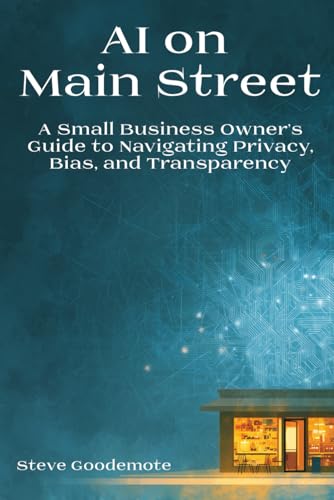
AI On Main Street: A Small Business Owner's Guide to Navigating Privacy, Bias, and Transparency
As an affiliate, we earn on qualifying purchases.
As an affiliate, we earn on qualifying purchases.
Key Questions
What is the EU’s AI Act and why is it significant?
The AI Act is the EU’s comprehensive regulation for artificial intelligence, set to enforce high-risk AI system rules from August 2, 2026. It is significant because it aims to establish legal guardrails around AI use in employment, prioritizing transparency, accountability, and human oversight.
How does the EU’s approach differ from other regions?
The EU emphasizes regulation and social protections before technological adoption, contrasting with approaches that focus on ownership or market-driven solutions. Its model relies on rules, worker voice, and income guarantees rather than wealth redistribution or equity sharing.
What are the potential impacts of tightening income support in Germany?
The reforms may reduce poverty support levels and increase job-search obligations, aiming to incentivize employment. However, critics argue they could push vulnerable populations into hardship, and the long-term effects on employment are still uncertain.
Will these policies prevent job losses caused by AI and automation?
While regulations and social protections aim to buffer workers from disruptions, it is still unclear how effective they will be in preventing job losses or adapting to rapid technological change. Ongoing assessments will determine their success.
Source: ThorstenMeyerAI.com