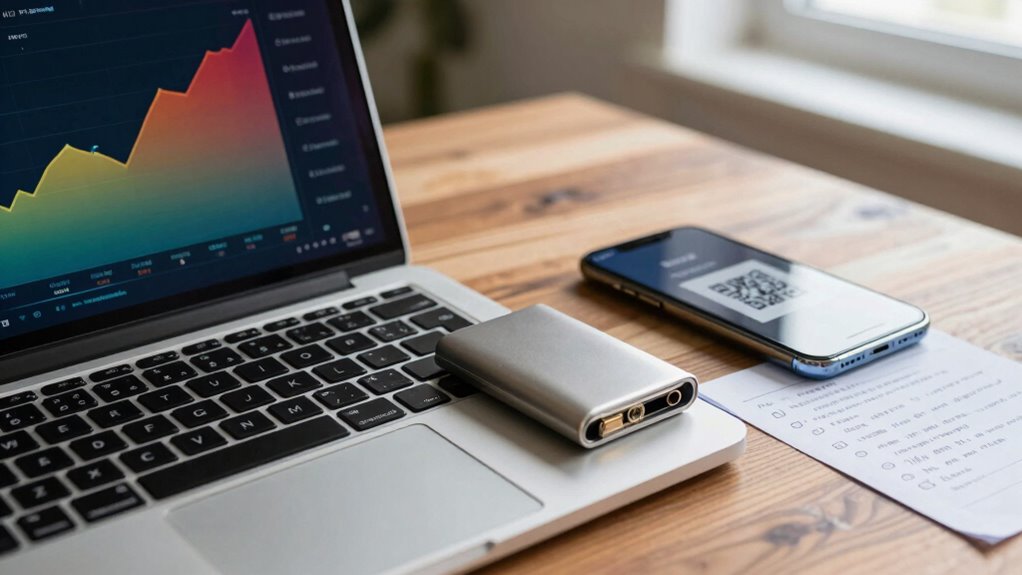

To move your crypto from an exchange to self-custody, first choose a reputable wallet suited for your needs, like a hardware or software option. Back up your wallet’s seed phrase securely offline. Log into your exchange account, verify your identity if needed, and copy your wallet’s address carefully. Do a small transfer first to guarantee everything works. Once confirmed, transfer your remaining funds and keep your private keys safe. Keep exploring for detailed steps to master the process fully.

Get hardware and tech essentials delivered free with Prime
- Fast, free delivery on millions of items
- Prime Video, Amazon Music and more included
- Member-only deals all year
Key Takeaways
- Choose a secure, reputable wallet suited for your needs, such as hardware or software.
- Transfer funds by copying the wallet address directly from your wallet app and verifying on a blockchain explorer.
- Send a small test amount first to confirm the transfer works correctly.
- Confirm the funds have arrived and verify your wallet balance and accessibility.
- Securely back up your seed phrase or private keys offline and store them in a safe location.
Ever wondered how to take full control of your cryptocurrency holdings? Moving from an exchange to self-custody might seem intimidating at first, but with a clear step-by-step approach, you can do it smoothly and confidently. The key is understanding security best practices and how to handle wallet recovery, guaranteeing your assets stay safe throughout the process.
First, choose a reputable wallet that suits your needs—hardware wallets are the most secure for long-term storage, while software wallets work well for active trading. Once you’ve selected a wallet, make sure to research its features thoroughly. Download the official app or purchase a hardware device directly from the manufacturer to avoid scams. Before transferring any funds, back up your wallet’s seed phrase or private keys securely. This backup is vital for wallet recovery if your device is lost or damaged, so store it offline in a safe location and never share it with anyone.
Next, you’ll want to prepare your exchange account for the transfer. Log in and verify your identity if needed, then navigate to the withdrawal section. Double-check the wallet address you’re transferring to—copy it directly from your wallet app to avoid errors. When initiating the transfer, start with a small amount first to confirm everything works correctly. Monitor the transaction on the blockchain explorer to ensure it’s confirmed before moving larger sums. This cautious approach helps prevent costly mistakes.
As your funds arrive in your new wallet, make sure they are correctly received and accessible. Take extra care during wallet recovery—test your seed phrase or private keys by restoring your wallet on a different device. This process verifies that your backup works and that you can regain access if necessary. Remember, security best practices involve never exposing your seed phrase or private keys online or to anyone you don’t trust completely. Additionally, choosing a hardware wallet with advanced security features can further safeguard your assets against potential threats.
Finally, once your funds are safely stored in your self-custody wallet, disable any unnecessary exchange accounts or enable two-factor authentication to further enhance security. Keep your hardware wallet firmware updated and periodically review your security measures. By maintaining good security habits and understanding wallet recovery procedures, you retain full control over your crypto assets and reduce the risk of loss due to hacks or mistakes. Moving your holdings from an exchange to self-custody empowers you to become the true custodian of your digital wealth, giving you peace of mind and greater autonomy over your investments.
Products Worth Considering

Trezor Safe 5 Crypto Hardware Wallet with Color Touchscreen, Black Graphite

Trezor Safe 7 Crypto Hardware Wallet

Ledger Flex + Folio Crypto Hardware Wallet
As an affiliate, we earn on qualifying purchases.
Frequently Asked Questions
What Are the Security Risks of Self-Custody?
Self-custody comes with security risks, mainly custody challenges and the need for robust security protocols. You might face challenges like losing access to your private keys or falling for scams. To stay safe, you must implement strong security protocols, such as using hardware wallets, enabling two-factor authentication, and regularly updating software. Without these measures, your assets could be vulnerable to theft or loss, making security your top priority.
How Do I Choose a Secure Wallet Type?
You should choose a wallet type that prioritizes security protocols, like hardware wallets or reputable software wallets with strong encryption. Hardware wallets are generally more secure because they store your private keys offline, reducing hacking risks. Look for wallets with features like multi-factor authentication and regular updates. Avoid wallets with poor security reviews or those lacking active development, ensuring your funds stay protected against potential threats.
What Are the Costs Involved in Moving Assets?
Did you know that asset transfer fees can range from a few dollars to over $50, depending on the network? When moving assets to self-custody, a cost analysis helps you understand potential fees like blockchain transaction costs and wallet setup expenses. These costs vary based on the cryptocurrency and network congestion, so it’s wise to research current fee structures before initiating your transfer to avoid surprises.
How Long Does the Transfer Process Typically Take?
The transfer duration usually takes a few hours to a few days, depending on network congestion and processing delays. You might experience some delays if the blockchain is busy or if the exchange’s withdrawal process takes longer. To speed things up, double-check all your transfer details, make sure your wallet is ready, and stay patient during peak times. Overall, expect a smooth process with occasional delays.
What Should I Do if I Lose My Private Keys?
Imagine losing your private keys and being unable to access your funds forever. If that happens, don’t panic. You should have a private key backup stored securely, like in a hardware wallet or encrypted offline location. If your keys are lost, unfortunately, your funds are likely gone. Always keep multiple secure backups and consider using a hardware wallet for added protection to prevent this heartbreaking scenario.
Conclusion
Moving your crypto assets to self-custody gives you greater control and security. While it might seem intimidating at first, following these steps simplifies the process and guarantees your funds are safer from exchange risks. Did you know that over 70% of crypto thefts happen through exchanges? Taking custody yourself can considerably reduce your vulnerability. So, take charge of your assets today—your future self will thank you for it.