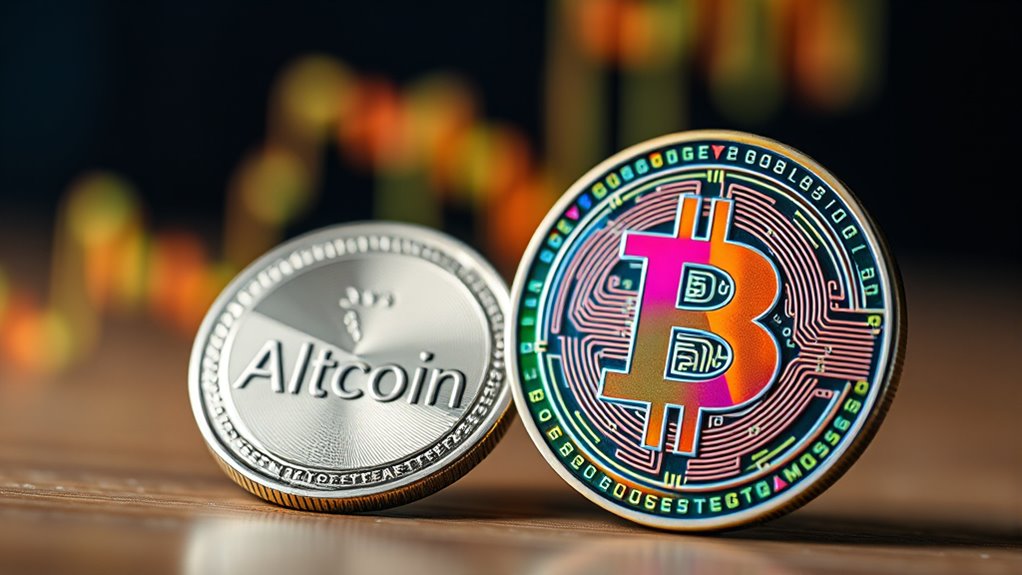

Altcoins are independent cryptocurrencies with their own blockchains, created through mining or forks, offering unique features and control. Tokens, on the other hand, are digital assets issued on existing platforms like Ethereum using smart contracts, supporting various utilities, assets, or rights within those ecosystems. Knowing the difference helps you understand their roles, risks, and investment potential. If you keep exploring, you’ll gain deeper insights into how each shapes the crypto world.
Key Takeaways
- Altcoins are independent cryptocurrencies with their own blockchains, while tokens are built on existing blockchain platforms via smart contracts.
- Creating an altcoin requires developing a new blockchain, whereas tokens are faster and cheaper to issue on current platforms like Ethereum.
- Altcoins serve as digital currencies or platforms for decentralized applications, while tokens often represent assets, utilities, or access rights within ecosystems.
- Regulation and legal classification differ: altcoins are often treated as currencies, tokens as securities or assets, affecting compliance strategies.
- Understanding these differences is essential for investors and developers to navigate market opportunities, risks, and regulatory requirements effectively.
Defining What Altcoins Are and Their Unique Features
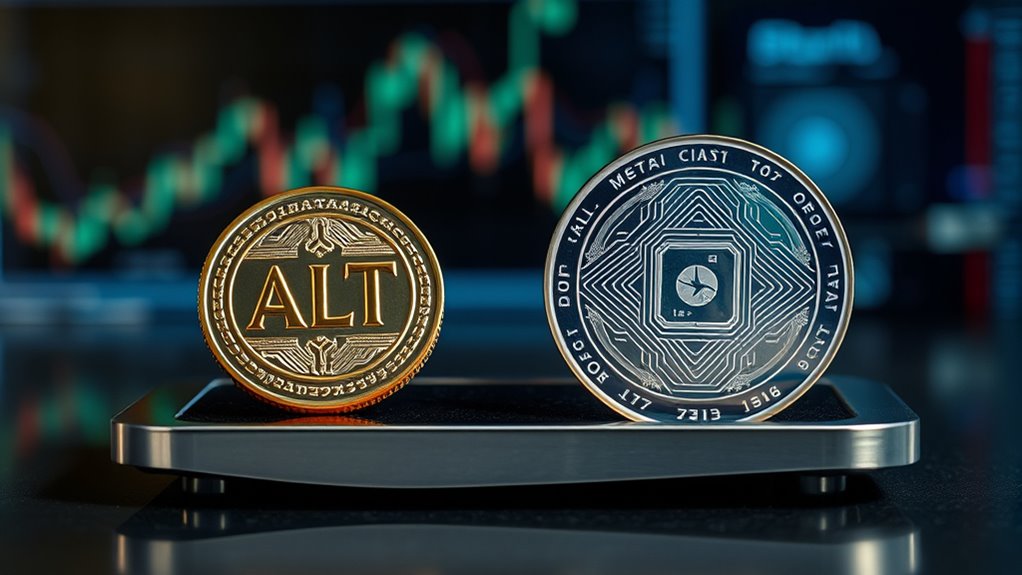
Altcoins are alternative cryptocurrencies to Bitcoin that operate independently from the Bitcoin network. They typically have their own blockchain, allowing them to function without relying on Bitcoin’s infrastructure. Examples include Ethereum, Litecoin, Ripple, and Cardano. These coins often serve specific purposes, like acting as digital currencies or enabling blockchain-based functionalities. You create most altcoins through mining or unique consensus mechanisms, which secure their networks. Unlike tokens, which depend on existing blockchains, altcoins build their own infrastructure, giving them unique features and potential for innovation. Their independence allows them to evolve separately, offering diverse use cases beyond simple transactions. Additionally, blockchain development enables the ongoing evolution and innovation of altcoins, expanding their capabilities and use cases. Altcoins play a crucial role in expanding the cryptocurrency ecosystem, providing alternatives and additional functionalities that Bitcoin alone doesn’t offer.
Exploring the Nature of Tokens and Their Role in Blockchain Ecosystems
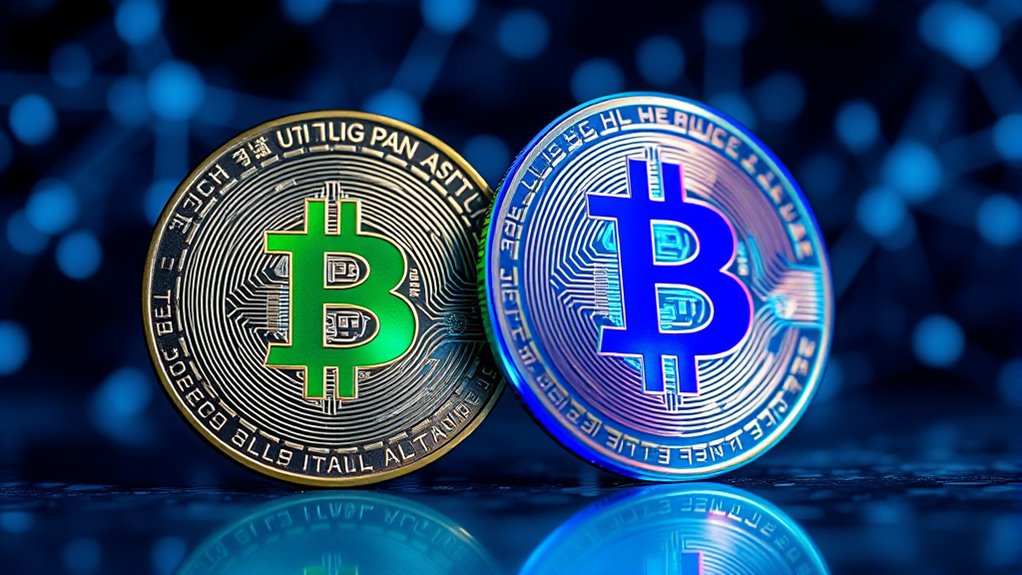
Tokens serve as versatile tools within blockchain ecosystems, functioning under various standards like ERC-20 to represent assets or utilities. They enable a wide range of roles, from raising funds during ICOs to granting access to services or representing digital assets. Understanding these standards and types helps you grasp how tokens support innovation and expand blockchain capabilities. Forsale 100
Token Standards and Types
Understanding token standards is essential because they define how tokens operate within blockchain ecosystems. These standards set the rules for token creation, transfer, and interaction, ensuring consistency and interoperability. The most common standard is ERC-20 on Ethereum, which enables fungible tokens used for currencies, assets, or utilities. Another standard is ERC-721 for non-fungible tokens (NFTs), allowing unique digital assets like art or collectibles. There are also standards like BEP-20 on Binance Smart Chain or TRC-20 on Tron, expanding token options across different blockchains. These standards streamline development, making it easier to create and deploy tokens with specific functionalities. Understanding the standards helps you grasp the diversity of token types and how they fit into various blockchain ecosystems, including token standards that define how tokens behave.
Ecosystem Utilities and Roles
Tokens serve a diverse range of functions within blockchain ecosystems, acting as digital representations of assets, utilities, or access rights. They enable specific interactions, such as transferring value, granting access, or representing ownership. For example, some tokens facilitate payments, while others give holders voting rights or access to services. Their roles vary across platforms, often tailored to particular needs. Additionally, the beneficial ingredients in certain tokens can influence their effectiveness and security in transactions.
How Altcoins Establish Their Own Blockchain Infrastructure

Altcoins establish their own blockchain infrastructure by developing a unique network from scratch or modifying an existing blockchain protocol. If they create a new network, you’ll see developers designing a blockchain with tailored features, consensus mechanisms, and security protocols suited to their goals. Alternatively, some altcoins fork an existing blockchain, tweaking code to introduce new functionalities or improvements, saving development time. This process involves setting up nodes, mining or validating transactions, and deploying network rules. By building independent infrastructure, altcoins gain control over their ecosystem, enabling specific use cases like faster transactions or enhanced privacy. This approach allows them to operate autonomously, without relying on another blockchain, giving them the flexibility to innovate and adapt to their community’s needs. Additionally, establishing their own infrastructure helps prevent trust issues that can arise with centralized or dependent networks.
The Functionality of Tokens on Existing Blockchains
Tokens on existing blockchains leverage smart contracts to create diverse functionalities quickly and securely. They can represent a wide range of assets or utilities, making them highly adaptable to different use cases. This interoperability enables seamless integration within the broader ecosystem, expanding what’s possible without building a new blockchain from scratch. Proper understanding of retirement planning can also help investors manage their digital assets more effectively and securely.
Smart Contract Creation
Smart contracts are self-executing programs that run on existing blockchains, enabling the creation and management of tokens without the need for a new blockchain infrastructure. When you want to create a token, you write a smart contract that defines its rules, properties, and behaviors, then deploy it on a blockchain like Ethereum. This contract governs how tokens are transferred, issued, or burned, automating these processes securely and transparently. You don’t need to build a new blockchain from scratch, which saves time and resources. Instead, you leverage the existing network’s security and stability. By using standards like ERC-20, you ensure compatibility with wallets and exchanges. This streamlined process makes token creation accessible, flexible, and adaptable to various use cases within established blockchain ecosystems. Additionally, smart contract standards facilitate interoperability and standardization across different tokens and platforms.
Asset Representation Flexibility
Because they operate on established blockchains, tokens offer remarkable flexibility in representing a wide range of assets and utilities. You can use tokens to symbolize everything from digital assets like art and collectibles to real-world assets like real estate or stocks. This versatility is made possible through smart contracts that define the token’s purpose and properties.
- Represent different asset types, including securities, commodities, or digital art
- Facilitate access to services like voting or membership rights
- Enable fractional ownership of high-value assets
This flexibility allows you to create tokens for nearly any purpose, expanding the possibilities within blockchain ecosystems. Unlike altcoins, which are limited to their native blockchains, tokens leverage existing infrastructure to represent diverse assets efficiently.
Ecosystem Interoperability
The ability of tokens to operate across different blockchain ecosystems highlights their impressive interoperability. This feature allows you to transfer assets or data seamlessly between various platforms, enhancing flexibility and usability. Tokens built on standards like ERC-20 or BEP-20 can be used on multiple compatible blockchains with the help of bridges or interoperability protocols. These tools enable cross-chain transactions, making it easier to access diverse DeFi services, NFTs, or digital assets without switching ecosystems. Interoperability reduces fragmentation, allowing you to combine the strengths of different blockchains. As a result, tokens become more versatile, supporting complex applications and expanding their reach within the broader crypto landscape. This interconnectedness is essential for fostering innovation and creating a cohesive blockchain environment. High transfer speeds also play a significant role in enabling smooth cross-chain operations and improving user experience.
Comparing Creation Processes of Altcoins and Tokens

Creating altcoins and tokens involves fundamentally different processes that reflect their distinct roles in the blockchain ecosystem. Altcoins are built by developing a new blockchain or modifying existing code, often using consensus mechanisms like mining or proof-of-stake. You might create an altcoin by launching a new network or fork, which requires significant technical expertise. Tokens, however, are created through smart contracts on an existing blockchain such as Ethereum. You can generate tokens easily by deploying a standardized contract like ERC-20, which requires less technical effort.
Creating altcoins requires developing new blockchains, while tokens are easily created via smart contracts on existing platforms.
- Altcoins involve creating a new blockchain or altering existing protocols.
- Tokens are issued via smart contracts on established blockchains.
- The ease of token creation makes them more accessible for developers.
Distribution Methods and Market Entry Strategies

Distribution methods and market entry strategies differ markedly between altcoins and tokens. As an investor or developer, you’ll notice that altcoins are typically launched through mining, pre-mined distributions, or initial coin offerings (ICOs), giving them direct control over their supply. They often require building a new blockchain or network, which involves significant technical effort. Tokens, however, are usually created via smart contracts on existing blockchains like Ethereum, making their distribution more straightforward through methods like ICOs, token sales, or airdrops. This ease of creation allows for rapid market entry. Additionally, tokens often leverage existing platforms and communities for distribution, while altcoins may rely on dedicated networks and exchanges. Understanding these differences helps you strategize effectively for deployment and investment.
Furthermore, the process of establishing an altcoin often involves a blockchain development phase, which can be resource-intensive but offers greater control over the project’s features and governance.
Practical Uses and Utility of Altcoins Versus Tokens
Understanding how altcoins and tokens are used in practical scenarios reveals their distinct roles within the blockchain ecosystem. Altcoins typically serve as digital currencies or platforms for specific functionalities, offering decentralized payment systems, smart contract execution, or network security. Tokens, on the other hand, often represent assets, rights, or utilities within existing platforms, enabling various applications. For example:
Altcoins operate independently as digital currencies, while tokens represent assets or utilities on existing blockchain platforms.
- Altcoins like Litecoin or Ripple facilitate transactions and network security.
- Tokens such as USDT or NFTs represent stablecoins or unique digital assets.
- Utility tokens grant access to services or funding through ICOs.
Altcoins function independently with their own blockchain, while tokens depend on established networks like Ethereum. This difference shapes their practical applications and how you might use or invest in them.
Regulatory Implications and Compliance Considerations

You need to understand that distinguishing between altcoins and tokens can be tricky for regulators, which complicates classification and compliance efforts. Issuers face significant risks if they overlook legal differences in how these assets are used or offered. Recognizing these distinctions is essential to avoid legal pitfalls and make certain proper adherence to evolving regulations. Additionally, understanding the types of yoga practices involved can help clarify the nature of certain tokens or altcoins that may be linked to specific platforms or communities.
Regulatory Classification Challenges
Regulatory classification of altcoins and tokens presents significant challenges because their differing structures and functionalities often blur the lines between securities, currencies, and commodities. This ambiguity makes it difficult for regulators to determine which rules apply. You may encounter issues like:
- *Determining if a token qualifies as a security based on its fundraising method or utility.*
- *Assessing whether an altcoin functions as a currency or asset, impacting anti-money laundering rules.*
- *Navigating the lack of consistent global standards, leading to regulatory uncertainty.*
These challenges require issuers and investors to stay vigilant, as misclassification can result in legal penalties. Clear distinctions are crucial for compliance, but overlapping features often complicate the process, emphasizing the importance of understanding each asset’s specific structure and purpose.
Compliance Risks for Issuers
Issuers of altcoins and tokens face significant compliance risks because their unique structures and functions often attract regulatory scrutiny. You need to understand how regulations view these assets to avoid legal issues. Altcoins, with their independent blockchains, might be classified as securities or commodities, depending on their use and distribution. Tokens, especially those issued through ICOs or STOs, can be considered securities if they meet certain criteria. Regulatory agencies focus on protecting investors and preventing fraud. To navigate this landscape, consider this table:
| Aspect | Compliance Consideration |
|---|---|
| Asset Type | Determine if security, commodity, or currency |
| Issuance Process | Ensure transparent, legal fundraising |
| KYC/AML Requirements | Implement strict customer verification |
| Market Conduct | Prevent manipulation and insider trading |
Legal Differences in Usage
Understanding the legal landscape surrounding altcoins and tokens is crucial because their differing structures lead to distinct regulatory implications. Altcoins, with their independent blockchains, often face regulations similar to traditional currencies, including anti-money laundering (AML) and know-your-customer (KYC) requirements. Tokens, built on existing platforms, are frequently classified as securities, leading to strict compliance rules.
You should consider:
- Altcoins may be subject to national currency regulations.
- Tokens, especially those sold through ICOs, can trigger securities laws.
- Both assets require compliance with tax reporting and anti-fraud measures.
Knowing these differences helps you navigate legal risks and avoid penalties. Properly understanding the regulatory environment ensures responsible usage and aligns your activities with applicable laws.
Market Impact and Trends Driven by Altcoins and Tokens

Altcoins and tokens have particularly shaped the crypto market’s landscape, influencing trends, investor behavior, and innovation. They drive market excitement, spark debates, and create new opportunities or risks. Altcoins often set the pace with their unique features, while tokens expand ecosystems and fundraising. Their combined influence fuels volatility, rapid growth, and innovation.
| Impact | Emotion |
|---|---|
| Market Expansion | Excitement and Opportunity |
| Innovation Push | Curiosity and Hope |
| Volatility and Risks | Anxiety and Caution |
| Ecosystem Diversification | Confidence and Optimism |
Investment Opportunities and Risks Associated With Each Asset Class

Both altcoins and tokens offer unique investment opportunities that can diversify your portfolio, but they also come with distinct risks. Altcoins, with their independent blockchains, can deliver high returns if they succeed, but their volatility and development uncertainties pose significant risks. Tokens, often created through ICOs or STOs, can offer quick access to new projects and assets, but their value depends heavily on the success of the underlying platform.
Altcoins and tokens offer unique, high-risk opportunities to diversify your crypto portfolio.
- Altcoins present high-growth potential but face regulatory and technological risks.
- Tokens provide exposure to innovative ecosystems with lower barriers to entry.
- Both asset classes can be highly volatile, requiring careful research and risk management.
Frequently Asked Questions
Can Tokens Be Converted Into Altcoins?
Yes, tokens can be converted into altcoins, but it’s not straightforward. You typically need to swap tokens for the native coin of their blockchain, then use that coin to buy the altcoin on an exchange. For example, you might exchange a token on a platform like Uniswap for ETH, then trade ETH for an altcoin like Litecoin. This process involves multiple steps and depends on available liquidity and market conditions.
Do All Altcoins Have the Same Blockchain Technology?
No, not all altcoins use the same blockchain technology. Each altcoin typically has its own blockchain, which means they can operate differently depending on their design and purpose. For example, Bitcoin has its unique blockchain, while Ethereum uses a different one optimized for smart contracts. You should understand these differences because they impact how each altcoin functions, scales, and interacts within the crypto ecosystem.
How Do Governance Models Differ Between Altcoins and Tokens?
You’ll find that governance models differ markedly between altcoins and tokens. Altcoins usually have their own governance system, where holders or developers make decisions about updates and protocols through voting or consensus mechanisms. Tokens depend on the host blockchain’s governance. For example, Ethereum’s governance influences tokens built on it. This setup means altcoins offer more independent control, while tokens are governed by the rules of their underlying platform.
Are Tokens More Secure Than Altcoins?
Tokens aren’t necessarily more secure than altcoins because their security depends on the underlying blockchain they operate on. Altcoins have their own blockchain, which can offer more control and potentially stronger security through dedicated protocols. Tokens rely on the security measures of the host blockchain, so if that blockchain is vulnerable, your tokens could be at risk. Overall, security varies based on implementation, not just whether it’s an altcoin or token.
Which Has Higher Potential for Investment Growth: Altcoins or Tokens?
Altcoins generally have higher potential for investment growth because they have their own blockchains and can evolve independently, offering more innovation and scalability. Tokens depend on their host blockchain, which limits their growth potential but often makes them easier to acquire and use. If you’re looking for riskier, higher-reward investments, altcoins might be your best choice. However, always research carefully before investing, as both carry risks.
Conclusion
Now that you know the difference between altcoins and tokens, you can confidently carve your course through the crypto cosmos. Recognize the rugged roads of rugged altcoins and the versatile vines of tokens, each with their own risks and rewards. By understanding their unique utilities and underlying infrastructures, you’ll navigate the nuanced network of blockchain with clarity and confidence. Embrace the evolving ecosystem, and let your informed insights inspire intelligent investments in this intriguing industry.